Alba Adriatica
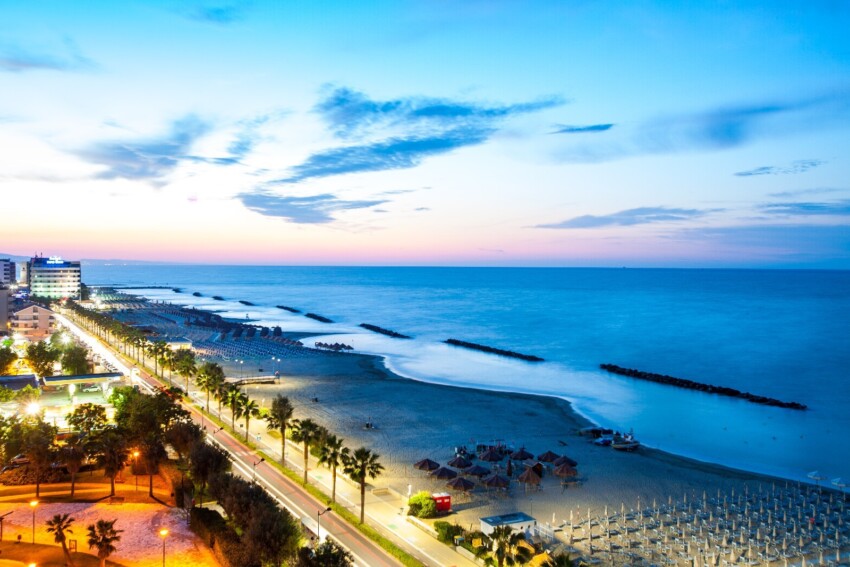
Famous for its stunning Silver Beach, Alba Adriatica is a charming coastal town in Abruzzo that attracts visitors year-round seeking relaxation, entertainment and excellent beaches.
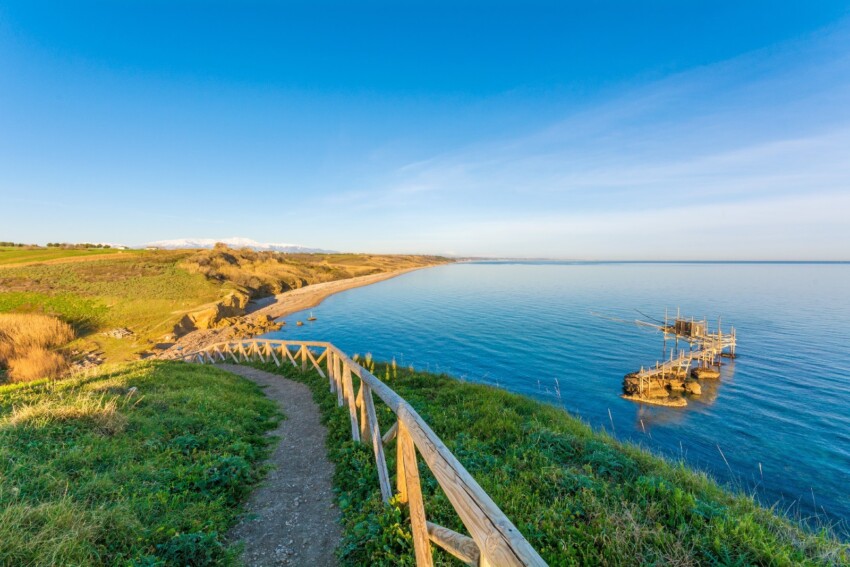
Less well-known than the beaches of the Riviera Romagna and the Apulian coast, the Abruzzo coastline proves to be an ideal destination for a seaside holiday. The Abruzzo shoreline not only offers splendid beaches, but also excellent weather, crystal-clear waters and facilities with all amenities. The region’s beaches are easily accessible from Italy’s major cities via motorway and rail connections, whilst Pescara airport provides international connections.
Abruzzo’s coastal towns cater to the needs of different visitors, from families with children to young people seeking entertainment, couples looking for relaxation to more active travellers. Here hidden coves alternate with large equipped beaches featuring beach clubs, whilst stretches of soft golden sand give way to pebbly shores. Worth remembering too is that many towns are famous not only for their stunning beaches but also for the historical heritage they have managed to preserve.
The Abruzzo coast can be ideally divided into three sections: the Sette Sorelle d’Abruzzo, the northernmost stretch of coast, the Costa Pescarese and the famous Costa dei Trabocchi, or the region’s southernmost coastal stretch.
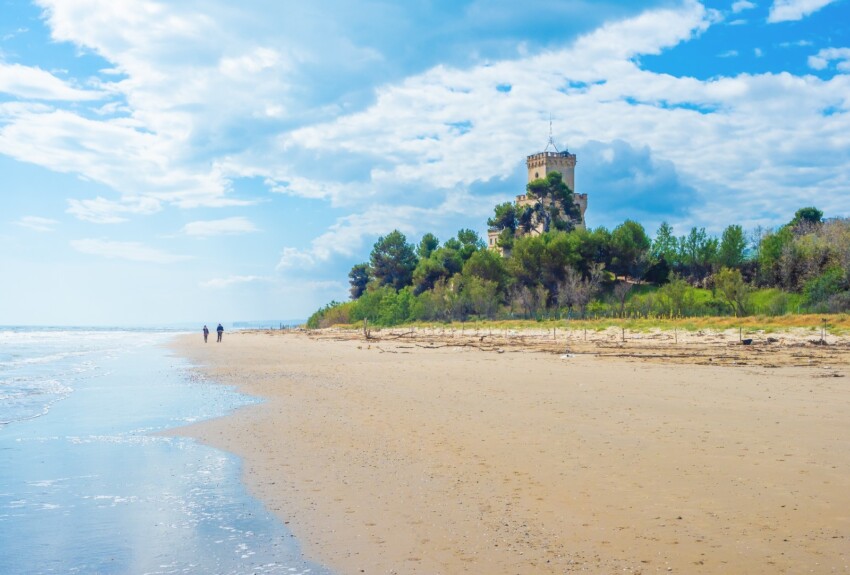
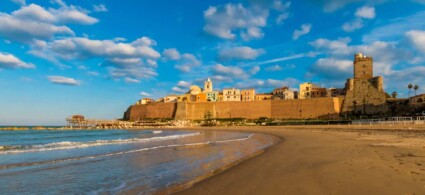
The Sette Sorelle are seven Abruzzo towns located along the Adriatic coast in the province of Teramo, distinguished by the beauty of their shorelines. Starting from the north, the first town you encounter at the border with the Marches is Martinsicuro, a modern beach resort nestled between the Adriatic Sea and the Val Vibrata. Besides boasting splendid beaches, excellent accommodation and crystal-clear waters, Martinsicuro also has a truly charming historic centre. The town’s symbol is the Torrione di Carlo V, erected in the 16th century to defend the coast from enemy raids, around which the entire settlement subsequently grew.
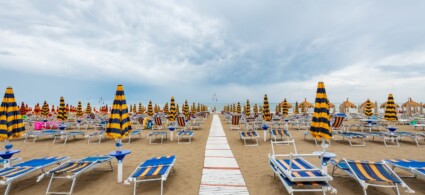
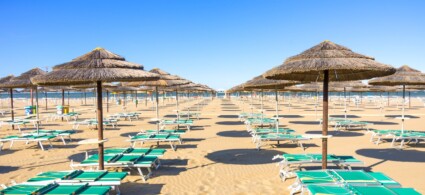
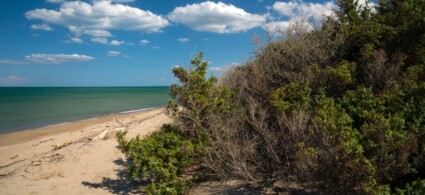
Heading south you’ll find Alba Adriatica, a town created by the separation from the municipality of Tortoreto during the mid-1950s. Alba is chiefly famous for its shoreline known as the Silver Beach, as its sand appears silvery in the sunlight. After Alba Adriatica comes Tortoreto Lido, a town that extends across territory bordered to the north by the Vibrata river and to the south by the Salinello. Like other coastal locations, Tortoreto comprises an older section perched on a hill and the lido where the beaches are found.
Just after Tortoreto is Giulianova, a town that in the late 19th century was home to one of the first beach clubs. This town too features a beautiful seafront where splendid beaches are located, and a hillside area where the old town centre stands. The towns of Martinsicuro, Alba Adriatica, Tortoreto and Giulianova are connected by a splendid cycle path called the Adriatic Cycle Path.
A few kilometres from Giulianova is Roseto degli Abruzzi, whose territory comprises the hamlet of Montepagano perched on a hill and the beach area that developed around the early 20th century at the foot of the hill. Its splendid beaches, crystal-clear waters and the presence of excellent facilities all make Roseto a highly popular summer destination. Finally, the last two towns on this stretch of coast are Pineto and Silvi.
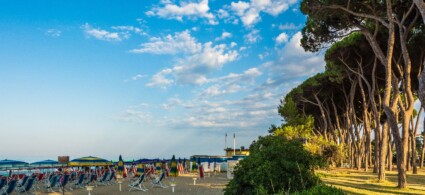
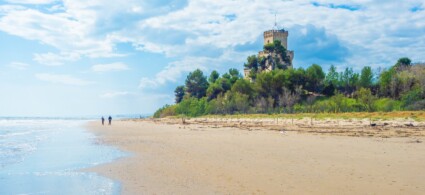
Pineto is so named because its beautiful shoreline is surrounded by a pine grove planted in the early 20th century. Between the azure sea and green trees lies the historic centre, which houses the Cerrano Tower, a fortress dating back to the 16th century. The seventh sister is Silvi Marina, also known as the “Pearl of the Adriatic” for its stunning beach and marvellous sea, considered among the finest on the Teramo coast. Silvi too has its oldest section perched on a height overlooking the sea, which appears to have medieval origins and is known as Silvi Paese or Silvi Alta. The modern town, meanwhile, extends at the foot of the hill along approximately 9 km of coastline, stretching from the mouth of the Cerrano stream to the Piomba stream.
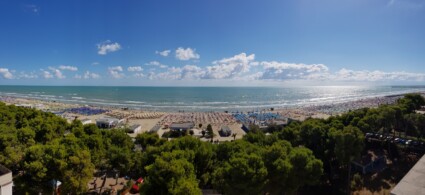
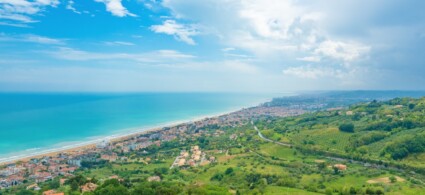
Beyond Teramo province lies the Pescara coast, which hosts three beautiful towns along the shoreline. The first place you encounter entering the Pescara coast is Montesilvano, a location featuring a long, sandy beach, calm waters with shallow seabed and all amenities. The town is famous for its strategic position, situated just kilometres from Pescara yet close to Abruzzo’s major parks, places offering breathtaking views. Montesilvano is thus a destination that combines seaside holidays, excursions and cultural experiences.
After Montesilvano comes the renowned town of Pescara, birthplace of Gabriele D’Annunzio. Pescara is a perfect destination in every season, thanks to its mild climate even in winter, numerous points of interest and stunning beaches. Pescara’s seafront, meanwhile, is among the finest in the region, connected to the north with Montesilvano and to the south with Francavilla al Mare; here you’ll find numerous equipped beaches as well as free beach areas. The entire seafront can be explored on foot and by bicycle thanks to a splendid cycle path.
The beach at Francavilla al Mare is a delightful seaside resort known since the second half of the 19th century, presenting itself as an ideal location for families seeking quiet beaches as well as for young people who enjoy water sports, entertainment and nightlife. This town’s shoreline stretches for approximately 8 kilometres and is characterised by fine, soft, golden sand. Free beach areas alternate with equipped beach clubs featuring numerous beach establishments. The town’s most historic part is known as the Civitella and hosts ancient churches and historic buildings. Francavilla was for years a meeting place and cultural exchange point for artists and writers, including Gabriele D’Annunzio, who gathered at the famous Convento Michetti.
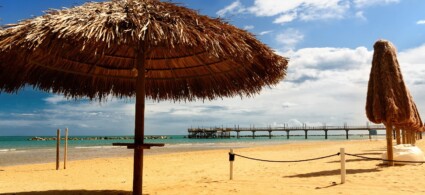
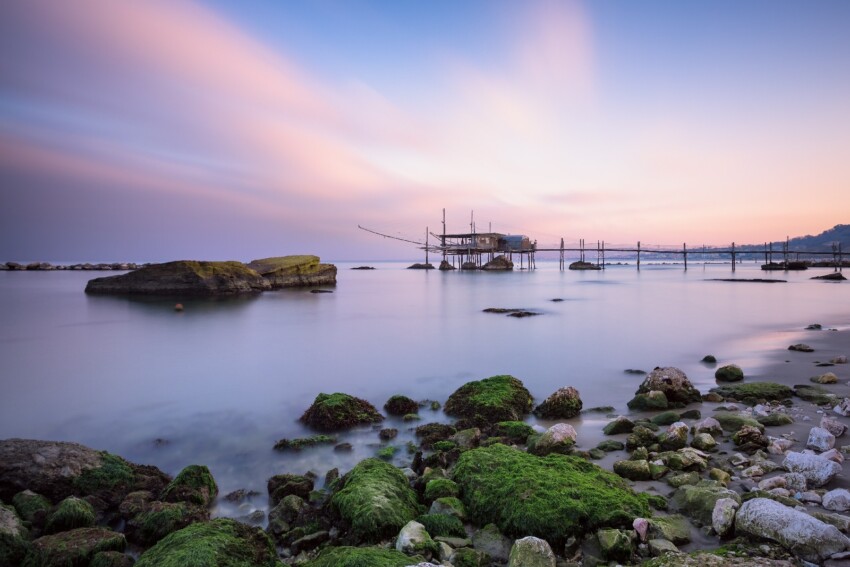
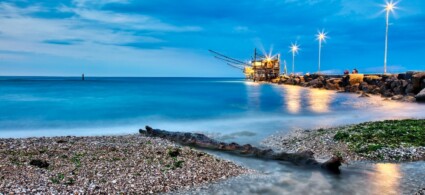
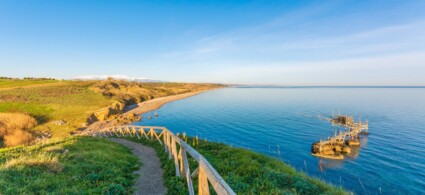
Between Francavilla al Mare and Ortona begins the so-called Costa dei Trabocchi, a stretch of Adriatic coast characterised by the presence of numerous trabocchi or trabucchi, special fishing machines built on wooden stilts. These structures enabled fishermen to fish without having to venture into open sea. Along the 40 km of coast there are approximately twenty trabocchi, but these are no longer used for their original purpose; whilst some have been abandoned, others have been converted into restaurants.
The first town encountered travelling along the Costa dei Trabocchi from the north is Ortona, a truly evocative location with a shoreline stretching approximately 20 km. At Ortona you’ll find wide, sandy beaches alternating with small coves and bays surrounded by rocks and vegetation. Don’t miss a visit to Lido Riccio, Lido dei Saraceni and the marvellous Punta dell’Acquabella where the sea appears turquoise. The historic centre of Ortona is also beautiful, with the Aragonese Castle built in the 15th century perched dramatically over the sea, now one of the town’s symbols. The area’s most famous trabocchi are those at San Giacomo and Punta Fornace.
Continuing on you’ll encounter the town of San Vito Chietino, which has an initial sandy beach stretch, whilst the second part of the coast is jagged and characterised by pebbles. At San Vito you’ll also find the oldest trabocco still in existence, that of Punta Turchino. The town is also notable for hosting the Belvedere Dannunziano, an hermitage perched over the Adriatic Sea frequented by Gabriele d’Annunzio, who wrote his work “The Triumph of Death” here.
Don’t miss a visit to the small town of Rocca San Giovanni, one of Italy’s loveliest villages, where you can find not only splendid beaches but also an ancient historic centre dating from the 14th century. Here sand beaches, pebble shores and small wild coves washed by turquoise waters coexist. Numerous trabocchi are present in this area such as Punta Cavalluccio, Sasso della Cajana, Punta Isolata, Valle Grotte and Punta Tufano.
The most populous town on the Costa dei Trabocchi is Vasto, a location situated in the eponymous gulf that stretches for approximately 20 km of coast. The town’s historic centre rises on a hill overlooking the sea, whilst lower down along the Adriatic coast lies Vasto Marina, the hamlet hosting a lovely seafront with sandy, wide and golden beaches. The area north of Vasto Port is occupied by the beautiful Punta Aderci Nature Reserve, which hosts beaches surrounded by unspoilt nature and the famous Punta Aderci and Grotta del Saraceno trabocchi; whilst further south lies Vasto Marina characterised by extensive sandy shores and excellent accommodation facilities.
The southernmost municipality of this distinctive stretch of coast is San Salvo, which features a stunning shoreline extending for approximately 2 km. The area north of the town has a Mediterranean Botanical Garden, whilst further south is a marina which in summer offers sea connections to the Tremiti Islands.
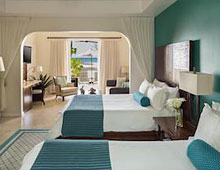 Hotel
Hotel 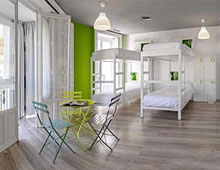 Budget accommodations
 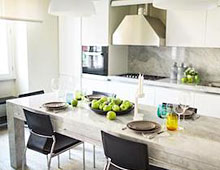 Apartments
  Family Hotel
 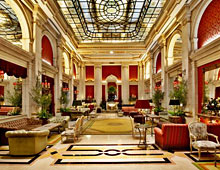 Luxury Hotel
  Resorts