Best Western Parco Paglia Hotel
Chieti - Via Erasmo Piaggio 17
Book now
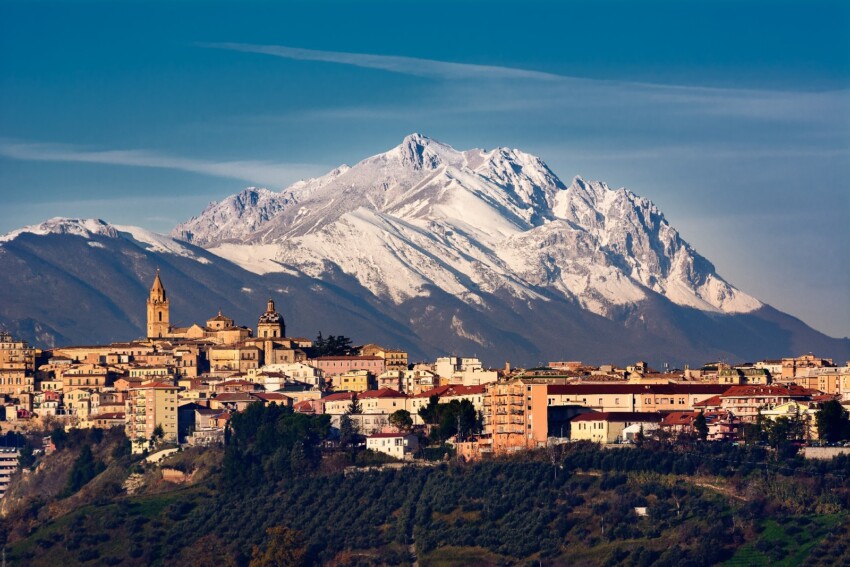
Regarded as one of Italy’s most ancient towns, Chieti is a city that boasts one of the finest artistic and archaeological heritage collections on the peninsula. Situated on a hilltop 330 metres above sea level, the city offers marvellous views of both the sea and the surrounding mountains, earning it the nickname “the Terrace of Abruzzo“.
According to ancient legend, this Abruzzo town was founded by the renowned warrior Achilles, who named it Teate in honour of his mother Thetis, a sea nymph. The city, proud of these noble and legendary origins, still displays the figure of Achilles armed with lance and shield on its coat of arms.
Despite not being featured on the itineraries of major tourist routes, Chieti is certainly worth discovering with its archaeological sites, centuries-old churches and museums. Thanks to its strategic position, moreover, the city is often considered the ideal base for visiting surrounding points of interest, such as Maiella National Park, and some of the most beautiful beaches in Abruzzo.
The city comprises two main districts: Chieti Alta, the older core where the historic centre is located, and Chieti Scalo, the more modern section situated in the lower area. The city’s historic centre is not particularly large and can be comfortably explored on foot. It’s wonderful to wander through the narrow streets lined with ancient monuments, historic shops, grand buildings, churches and piazzas well worth visiting. Getting lost in the streets of Chieti Alta also offers the opportunity to discover panoramic terraces that provide spectacular views over the surrounding landscape.
The main street in Chieti is Largo Gian Battista Vico, an elegant and dignified area where the Chamber of Commerce building faces onto the square. The building dates from the 1930s and features a blend of styles ranging from late Gothic to Renaissance elements, along with decorative details of fascist design, including an imperial eagle perched on the head of Mercury, god of commerce.
Also located here is Palazzo Fasoli, whose façade displays the typical Pompeian red colour, and despite the renovation work carried out in the 1930s, the rococo decorations that characterise the balconies remain visible.
Connected to Largo Gian Battista Vico is Corso Marrucino, Chieti’s main street, which leads to the beautiful Teatro Marrucino. The Teatro Marrucino, built in an elegant nineteenth-century style, stands on the site of a former deconsecrated church. The interior is finely decorated and is a true jewel of architecture.
Inside Villa Frigerj is the National Archaeological Museum of Abruzzo, which houses collections of artefacts dating from ancient pre-Roman and Roman civilisations of Abruzzo. Among the most important finds is the Warrior of Capestrano, a life-size statue dating from the 6th century BC that depicts a king of the Vestini, an ancient population of the region, dressed in typical military attire of the period. Among other displayed collections are the Guardiagrele stelae, part of a burial assemblage that has enabled scholars to study the Italic populations of this region before the arrival of the Romans.
Situated on a small hill outside the city walls, Villa Frigerj was built by Baron Ferrante Frigerj in the early nineteenth century and later sold to the municipality of Chieti. This splendid neoclassical villa boasts a marvellous garden that today serves as the city’s principal public park.
The park comprises several terraced levels featuring Italian-style gardens, fountains and walkways with small lakes and stone bridges. With tree-lined avenues, flower beds and numerous benches, this is certainly the perfect place for a lovely stroll amongst greenery or to enjoy a moment of relaxation.
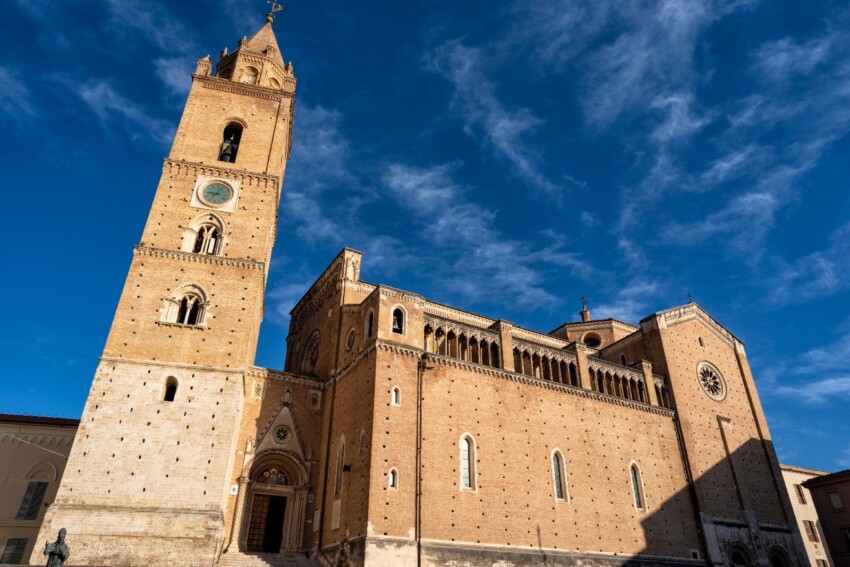
Considered Chieti’s most important church, the Cathedral of San Giustino was built in 1200 on the remains of a much earlier place of worship. The building has undergone various restoration works over time, resulting in a neo-Gothic exterior whilst the interior displays a style more akin to the Baroque.
The cathedral features a three-nave layout divided by columns that terminate in three apses, with the central nave covered by a barrel vault with lunettes. The presbytery is raised, and beneath it lies the crypt, which contains the relics of San Giustino and houses precious frescoes and paintings dating from the 14th-15th centuries.
The National Archaeological Museum ‘La Civitella’ stands at the summit of ancient Chieti’s acropolis, from where one can enjoy a beautiful view of the Majella massif. The Museum houses artefacts that recount the birth and development of the city through discoveries made in the area once inhabited by the Marrucini people. The Museum features three distinct exhibition routes, named “The Beginning of Urban History”, “From Rome to Yesterday” and “The Land of the Marrucini”, through which visitors can trace the earliest history of the city.
The Roman Amphitheatre of Chieti dates from the 1st century AD and is located within the ‘La Civitella’ Archaeological Park. Discovered along with other remains during archaeological excavations in the Civitella area, the amphitheatre was built along the eastern slopes of the hill and was directly connected to both city and extra-urban roads.
From the remains uncovered, the elliptical shape of the amphitheatre is still evident—the venue where gladiator combats took place. Built in an area close to the acropolis summit, excavations have also uncovered part of the wall that surrounded the arena and the honour tribune.
One of Chieti’s most beautiful points of interest, just steps from Largo Gian Battista Vico, are the remains of some Roman temples built in the 3rd century. These are three temples dedicated most probably to three deities such as Minerva, Jupiter and Juno.
The temples we can admire today were very likely built in an area already used for the veneration of divinities in the 5th-4th century BC, making this the oldest place of worship in Chieti.
In the following map you can see the location of the main places of interest mentioned in this article.
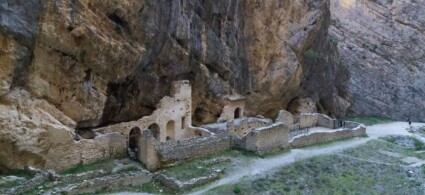
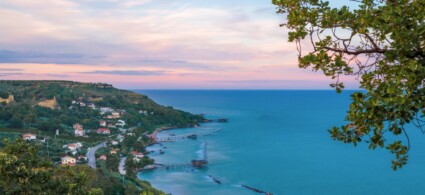
Chieti enjoys an excellent geographical position, being close to both the sea and the mountains of Maiella and Gran Sasso. For this reason, the city is often used as a base for visiting the numerous points of interest in the surrounding area.
From luxury hotels to bed and breakfasts, Chieti offers a range of accommodation facilities that meet every need and offer high standards of hospitality. For exploring the city centre, Chieti Alta with its beautiful historic centre remains the best area to stay, whilst those wanting convenient access to the motorway should consider staying in Chieti Scalo.
Chieti is easily accessible as it is served by the main transport networks of the Adriatic side in Central Italy. The city is also easily reached by car from major destinations both north and south of Italy. For those coming from the north, after taking the A14 motorway Bologna-Bari, you need to take the Pescara West-Chieti exit and then the SS 656 towards Chieti Centre. For those coming from Rome, you can first take the A24, then the A25, and exit towards Chieti-Pescara.
Chieti can also be reached by train via the Pescara-Rome railway line, which also stops at Chieti. Alternatively, several regional lines operate, connecting the city to other locations in the region, such as Teramo and Sulmona.
The nearest airport is Pescara Airport, known as Abruzzo International Airport, approximately 14 km from Chieti and connected to the city by buses of the TUA company (Trasporto Unico Abruzzese).
What's the weather at Chieti? Below are the temperatures and the weather forecast at Chieti for the next few days.
 Hotel
Hotel  Budget accommodations
  Apartments
  Family Hotel
 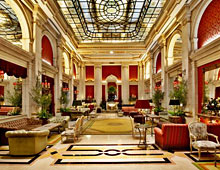 Luxury Hotel
  Resorts