Casa Bucciarelle
Casoli - Via Garibaldi
Book now
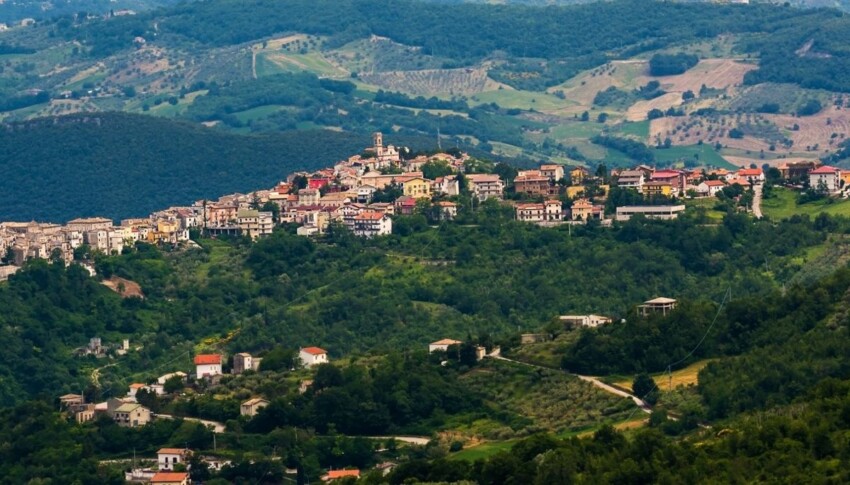
Casoli is a small municipality in the province of Chieti, situated at the foot of the Maiella massif, and has been part of the “I Borghi più belli d’Italia” (Italy’s Most Beautiful Villages) association since 2020. From its hilltop location, Casoli overlooks the Aventino Valley, one of Abruzzo’s most spectacular regions, particularly appealing for those seeking outdoor stays immersed in nature.
This urban centre emerged during the early medieval period when inhabitants of the Roman town of Cluviae relocated to the hills for protection against Saracen raids. Consequently, Casoli was originally called “Casulae,” meaning a cluster of small dwellings.
During the Second World War, the fascist regime chose Casoli as a location to intern “foreign Jews”. Between 1940 and 1943, the town received numerous prisoners who were confined in Palazzo Tilli and the former Municipal building.
Today, Casoli boasts a small, intimate town centre that developed around the parish church, whilst the surrounding area features Serranella Lake, Sant’Angelo Lake and the Aventino Valley.
Casoli is a captivating Abruzzo village that enchants visitors through its rich historical, architectural and natural heritage. Here you can visit the Ducal Castle and admire ancient archaeological remains, whilst also arranging numerous outdoor activities. The oldest nucleus of the town is compact and dates back to the 9th century. Over time, as the population grew, Casoli expanded and developed a more modern quarter.
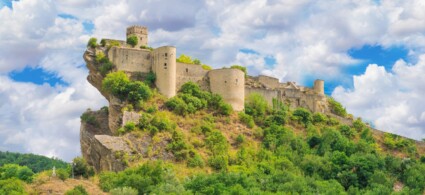
The Ducal Castle, also known as Castello di Masciantonio, is undoubtedly the town’s most iconic building. Originally constructed around a 9th-century watchtower, this fortress was enlarged and strengthened over time by various families, including the Orsini and d’Aquino.
By the mid-19th century, ownership passed to the Masciantonio family, who renamed it and gave the fortress a more aristocratic appearance. The Ducal Castle features an irregular rectangular layout, with the section facing the town containing the baronial apartments, whilst the rear housed guest rooms and servants’ quarters.
One of the most significant rooms is where Gabriele d’Annunzio stayed, leaving behind epigrams, philosophical maxims and poetic verses. Today, the Castle houses a Second World War museum and hosts events and temporary exhibitions.
Adjacent to Casoli Castle stands the Church of Santa Maria Maggiore, considered the town’s parish church. This religious building appears to have been constructed in the early medieval period but underwent numerous alterations that changed its original appearance.
Currently, the church features a neoclassical façade, whilst the interior was restored in the 1980s following an earthquake. Inside, Santa Maria Maggiore has a basilica layout with three naves and side chapels. The church preserves important artworks, including a precious altar in the left nave featuring a canvas by the Ortona-born painter Pasquale Bellonio and several pieces by Francesco Maria De Benedictis.
The Church of Santa Reparata was built around the mid-15th century as a cemetery chapel outside the town walls. As the town expanded, the building became incorporated into the urban perimeter. Despite restoration work and damage sustained during the Second World War, the church retains several original Renaissance architectural elements. Inside, the building features a three-nave basilica layout. You can admire a remarkable coffered ceiling carved and gilded in gold in 1603 by Venetian artist Vittorio Buzzacarino. Thanks to its outstanding ceiling and Romanesque portals, the church was designated a National Monument in 1902.
In the Torretta di Casoli locality, you can visit the Torretta di Prata, a structure originally designed as a watchtower to detect approaching enemies, though it later served as a hideout for local brigands during the 19th century. The building has a quadrangular layout with walls constructed from limestone, river pebbles and terracotta. Recently restored and opened to the public, the tower can be climbed via internal stairs accompanied by informative panels explaining the area’s history.
The Serranella Lake Controlled Nature Reserve is a protected natural area situated between the municipalities of Casoli, Altino and Sant’Eusanio del Sangro. Spanning approximately 300 hectares, the reserve is an oasis where the Sangro and Aventino rivers meet. Within its boundaries lie numerous hiking trails to explore on foot, whilst younger visitors can enjoy a small zoo featuring mammals and reptiles.
Casoli is a very small town with limited accommodation options. The area mainly offers small but welcoming bed and breakfasts and farmhouses. We recommend also checking availability in larger nearby towns such as Chieti or Ortona. These towns offer a wider range of accommodation at various price points.
Casoli is easily reached by car. From Chieti, travel along the SS81 to reach Casoli, whilst from Pescara, first travel along the SS 656 Val Pescara-Chieti and then along the SS81.
 Hotel
Hotel  Budget accommodations
  Apartments
  Family Hotel
  Luxury Hotel
  Resorts