Torre della Loggia
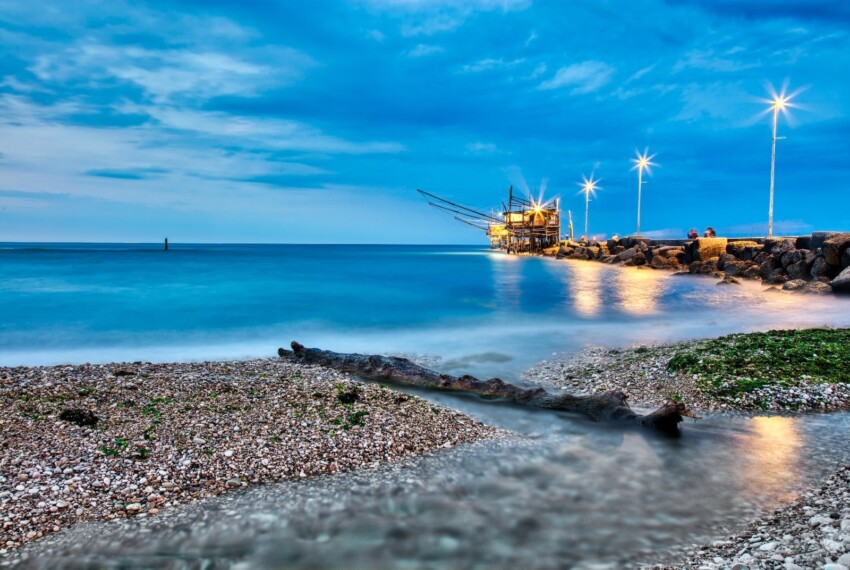
Ancient fishing instruments that tell the story of a people, the trabocchi characterise the Chieti coast, Abruzzo’s most southerly shoreline, and form part of the region’s traditional heritage. Built along beaches and anchored to rocks or skerries, trabocchi (or trabucchi) are ingenious wooden constructions that were used for fishing.
The trabocco consists of a wooden platform extending towards the sea with two (or more) long arms, known as antennae, to which a close-meshed net called a trabocchetto is attached. An intricate system of winches allowed the net to be lowered into the water and then hauled up with the catch.
Considered one of the world’s oldest fishing methods, the origins of trabocchi appear to date back to Phoenician times. However, one of the first documents confirming the presence of trabocchi on this stretch of coast dates from the 15th century and is a religious work recounting the life of Fra Pietro da Morrone, who later became Pope Celestine V.
The name trabocco is thought to derive from the Latin “trabs”, meaning “beam, wood”, referring to the numerous wooden beams used in their construction. Trabocchi were indeed built with Aleppo pine wood, a type of timber that is not only very common along this coastline but also highly resistant.
Trabocchi allowed fishing without having to venture out to sea in a boat and for some fishermen were also a home to live in. Described in Gabriele D’Annunzio‘s work “Il Trionfo della Morte” as “machines that seemed to have a life of their own”, trabocchi are now one of Abruzzo’s symbols.
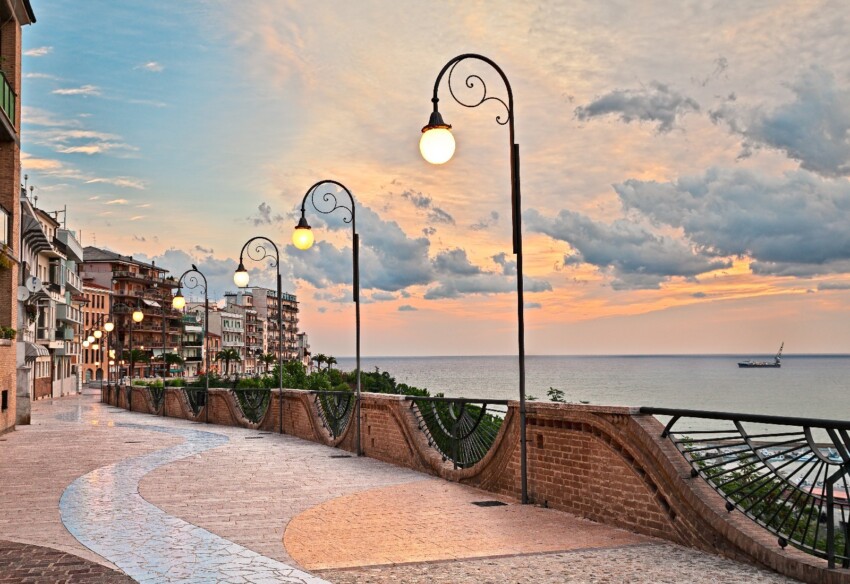
A town on the Abruzzo coast hosting magnificent beaches, Ortona is considered the first place you’ll encounter when exploring the Costa dei Trabocchi from the north. Its shoreline stretches for approximately 20 km and boasts expansive golden sandy beaches as well as small bays with more rugged settings. Crystal-clear and pristine waters characterise this section of coastline.
Among the most beautiful beaches not to miss are Lido Riccio and Lido dei Saraceni, two splendid sandy stretches, while further south you’ll find Punta Ferruccio, a charming pebble beach, and Punta dell’Acquabella, a beach famous for its gorgeous waters. Ortona is still home to several trabocchi that can be admired by driving along State Road 16, a route that hugs the coastline and offers magnificent views of the shore.
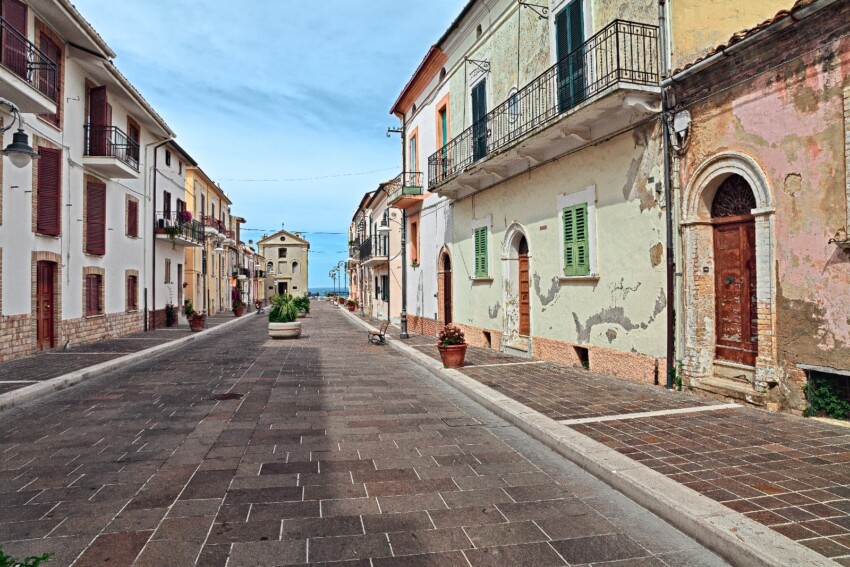
A small medieval town, San Vito Chietino retains a historic centre characterised by ancient churches, the remains of defensive walls and several viewpoints offering stunning vistas. This stretch of coast is renowned for being highly jagged and home to the beautiful “Promontorio del Turchino“, where the clean, crystalline seawater takes on turquoise hues.
Here, fine sandy beaches alternate with rocky bays and pebble-strewn shores. The town held special meaning for Gabriele D’Annunzio, who lived here for a period at the Eremo delle Portelle, also known as the Eremo Dannunziano, situated on a headland overlooking the sea and representing one of the town’s most enchanting locations. It is said that D’Annunzio wrote his work “Il Trionfo della Morte” here.
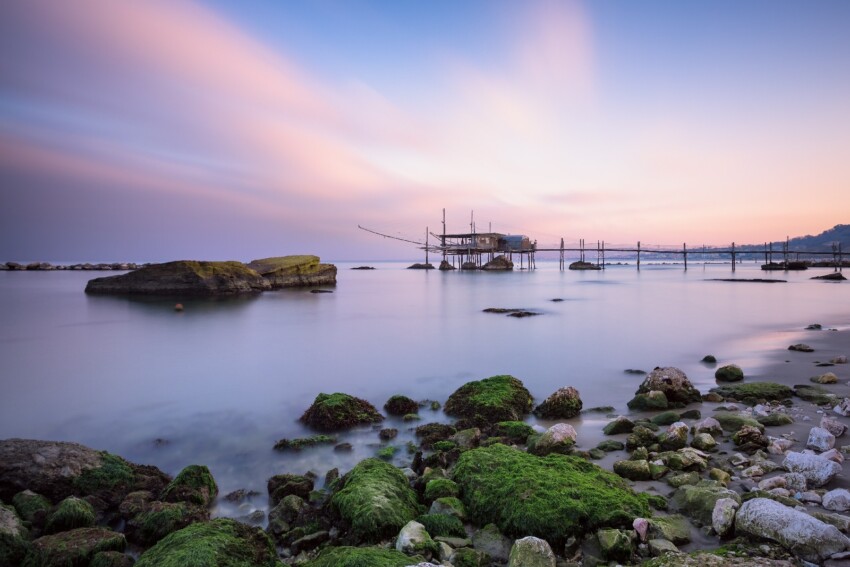
Perched on a rocky promontory at 155 metres altitude, Rocca San Giovanni is a town that belongs to the “I Borghi più belli d’Italia” (Italy’s Prettiest Villages) club. Surrounded by cultivated fields, olive groves and vineyards, Rocca San Giovanni consists of an older urban nucleus at the summit of the hill and an area that developed later along the coast where the beaches are now located.
Rocca San Giovanni boasts excellent coastal stretches that have repeatedly earned the Blue Flag award, with beaches characterised by pebbles and rocks alternating with fine sandy shores. Among the principal beaches are “la Foce“, a predominantly pebbly shoreline, and “Cavalluccio”, a fine sandy beach where you’ll find a large rock stack called lo scoglione.
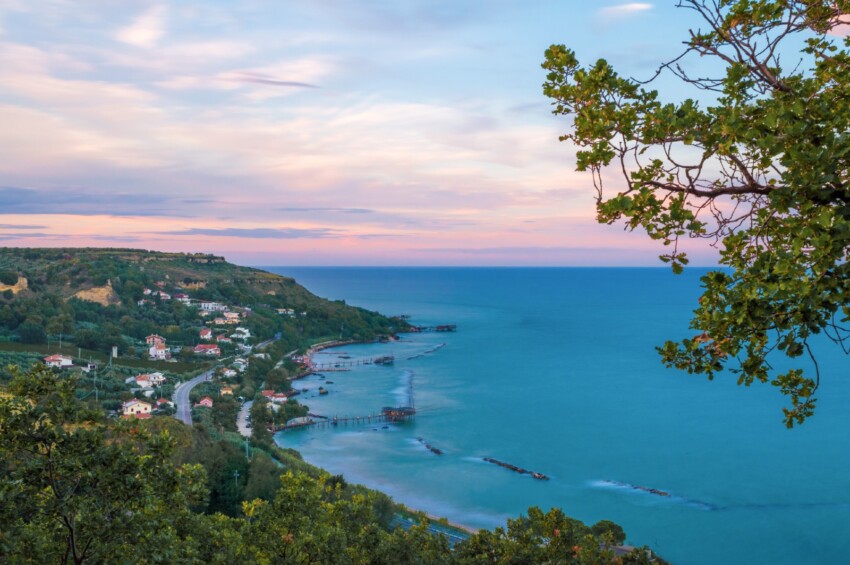
Like many other coastal towns, Fossacesia stands out for having a very ancient historic centre located on a hill at 142 metres altitude and a hamlet, known as Fossacesia Marina, that spreads along the coast. Its historic centre boasts several points of interest, including the Abbey of San Giovanni in Venere, dating from the 11th century and considered one of the region’s most important religious complexes.
The Fossacesia shoreline sits within a small bay called “Golfo di Venere”. Some of its beaches, characterised by wild surroundings, are stretches of white pebbles sloping into crystalline waters, whilst other sections feature sandy beaches equipped with various lidos.
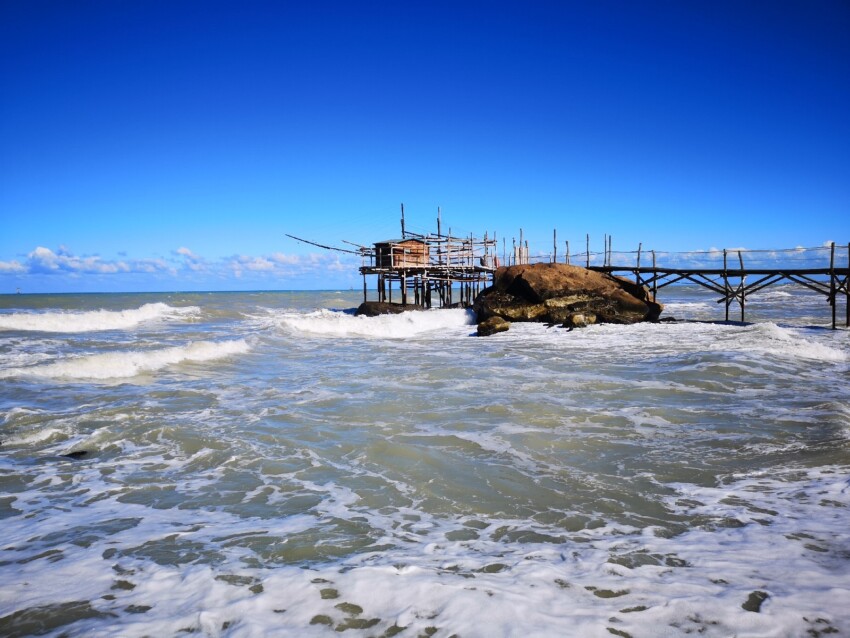
Torino di Sangro is an enchanting location on the Abruzzo coast with a gorgeous shoreline extending some six kilometres. The town centre sits on a hill whilst a hamlet called Marina has developed along the seafront.
The oldest part of the village preserves 16th-century churches, such as the Church of San Salvatore and the one dedicated to Madonna di Loreto, as well as a British military cemetery built in 1946 in commemoration of the Battle of Sangro, where many Allied forces lost their lives.
The locality is known for its beautiful sandy beaches such as “Le Morge”, which features a sandy shore, and the one in “Costa Verde” with a pebble coastline. Torino di Sangro is also home to the Lecceta Regional Nature Reserve, which spans approximately 180 hectares and hosts a wide variety of flora and fauna.
Located just a few kilometres from the city of Vasto, the town of Casalbordino sits on a hill at 200 metres altitude between the rivers Osento and Sinello. The town retains its medieval historic centre with an ancient tower and the Church of San Salvatore dating from the 18th century.
The more modern part of the town is that which developed along the beaches, where you’ll now find a wide, sandy beach resort with countless accommodation facilities. From Casalbordino you can also reach the beautiful rocky headland of Punta Aderci, which is also home to the namesake Nature Reserve.
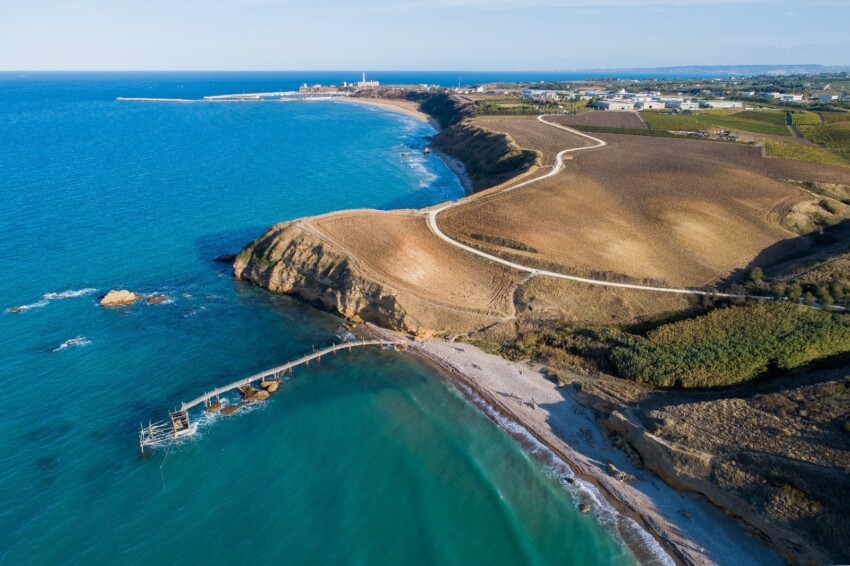
Located within the municipality of Vasto, Punta Aderci is a headland hosting the Punta Aderci Regional Nature Reserve, a beautiful natural environment stretching from the border with the municipality of Casalbordino to Punta Penna beach.
Punta Aderci is home to some of Italy’s most beautiful and renowned beaches, characterised by truly spectacular natural scenery. The northernmost part of the reserve comprises pebble beaches, whilst the southern section features Punta Penna beach, a long stretch of golden sand.
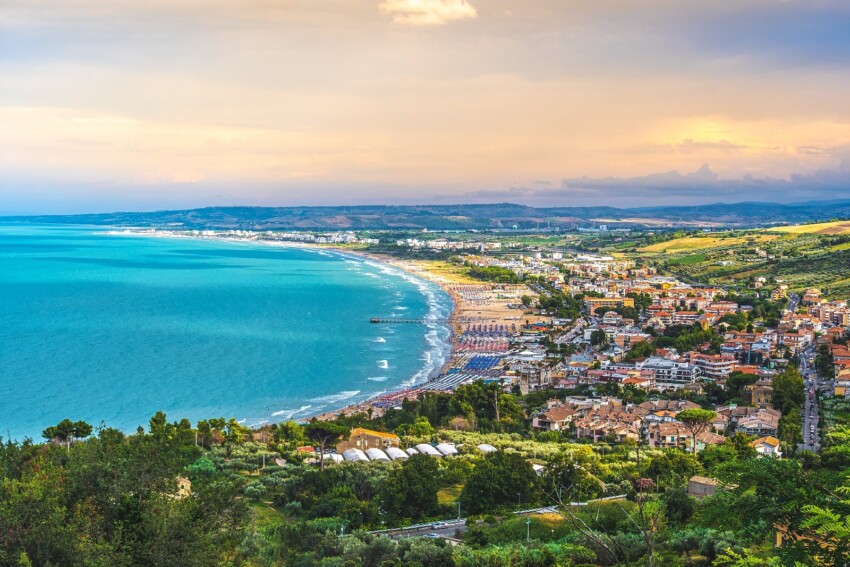
Vasto is a town in the southern part of the Abruzzo coast, its territory divided between Vasto Vecchia and Vasto Marina. Vasto Vecchia is the town’s oldest nucleus, situated on a hill at 144 metres altitude from where you can enjoy splendid coastal views. The town has truly ancient origins, born from the union of the Roman quarter “Guasto d’Aymone” with “Guasto Gisone”, a 9th-century district of medieval-Norman origin.
The beach area is known as Vasto Marina and is a popular summer seaside resort, not only for the beauty of its beaches but also for water quality. Completing this lovely town’s offer are excellent accommodation facilities, including hotels, beach clubs, restaurants and campsites.
Vasto is a truly versatile town suited to everyone. Those seeking relaxation can spend wonderful days on the beach, hiking enthusiasts can reach the beautiful Punta Aderci Reserve, whilst those who wish can enjoy shopping along the characteristic streets of its centre.
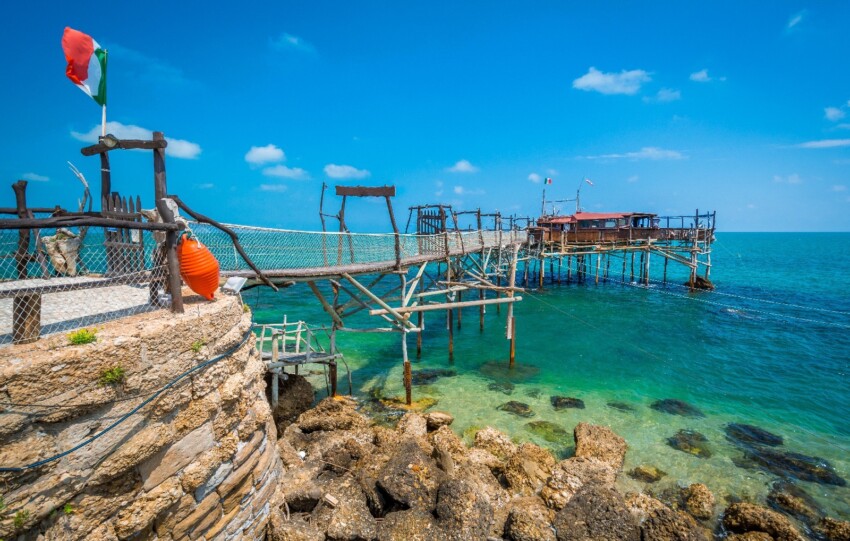
The stretch of coast from Ortona to Vasto, known as the “Costa dei Trabocchi“, extends for approximately 40 km and features numerous trabocchi. Some of these, respecting their original design, have been restored and converted into restaurants whilst others are open for visits.
Starting from the north, among the trabocchi you can find at Ortona is the Trabocco Mucchiola9, which now houses an excellent restaurant where you can dine surrounded by breathtaking nature and the sound of waves in the background. Moving along the coast we find San Vito Chietino, the town that is home to the coast’s oldest trabocco, the Trabocco Turchino10. The trabocco has undergone numerous restoration works that have sought to preserve its originality. Trabocco Turchino is open for tourist visits and can also be used to host exhibitions, events or wedding celebrations.
Rocca San Giovanni too is a town hosting three fascinating trabocchi such as the Trabocco Punta Cavalluccio11, the Trabocco Punta Torre12 and the Trabocco Spezzacatena13, which were founded and still belong to the Verì family, the oldest among traboccanti (trabocco keepers). The trabocchi now host restaurants serving dishes from the local gastronomic tradition. Another Rocca San Giovanni trabocco is the Trabocco Punta Isolata14, which houses a restaurant created by Mauro D’Antonio.
Moving towards Fossacesia we find the wonderful Trabocco Pesce Palombo15 where you can taste excellent fish dishes. At Torino di Sangro, however, you’ll find only the Trabocco Le Morge16, which was built in the early 20th century by D’Orazio Ginesio, who managed it for a long time with his sons. After being abandoned, the trabocco was taken over by the municipality, which carried out restoration work to make it visitable.
Finally, the town of Vasto is home to the Trabocco di Punta Aderci17, set within a truly wonderful environmental context, and the Trabocco Cungarelle18, built in 1938 by the Verì family for Luigi Ialacci, who used it until 1955. After being abandoned and falling into disuse, the trabocco was purchased by Luca Conti together with brothers Luca and Mirko Di Nanno, who restored it and converted it into a restaurant.
In the following map you can see the location of the main places of interest mentioned in this article.
 Hotel
Hotel  Budget accommodations
  Apartments
  Family Hotel
  Luxury Hotel
  Resorts