B&B La Casa Di Giò
Lanciano - Via della Pace 9
Book now
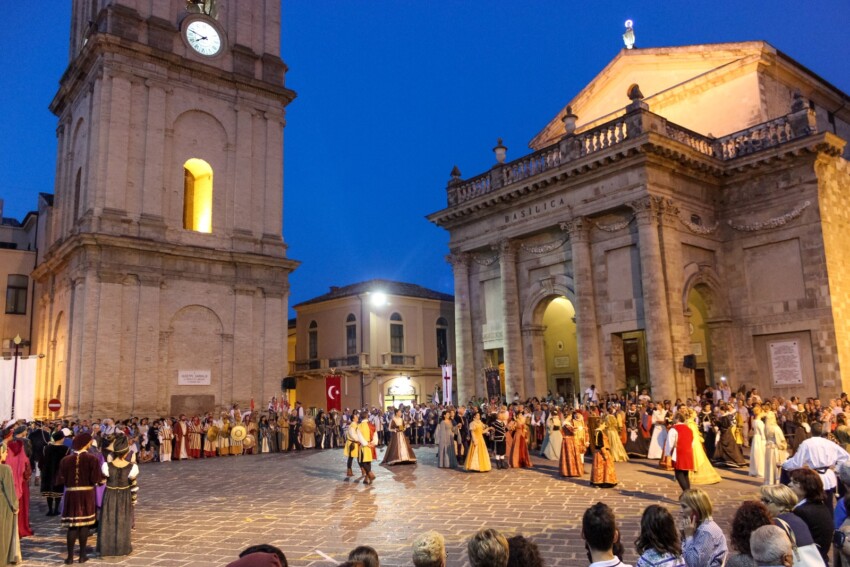
Also known as “the village of Miracles”, Lanciano is a medieval town nestled between the Adriatic Sea and the Maiella National Park. The city is particularly renowned not only for its striking historic centre but also as a destination for religious pilgrimage to the Sanctuary of the Eucharistic Miracle of Lanciano.
According to legend, the city was founded in 1179 BC by Solima, a Trojan who arrived in Italy with Aeneas following the destruction of Troy. Lanciano sits on a hilltop but just a few kilometres from the sea, near an ancient trade route that connected Puglia with northern Italy. Both in pre-Roman and Roman times, Lanciano was a town that enjoyed considerable prosperity thanks to commercial exchanges and the organisation of fairs known as “nundinae”. The city continued to develop throughout the medieval period, when Lanciano became notable for important trade fairs and commercial activities owing to its proximity to the port of Ortona.
Over the centuries, Lanciano evolved into one of Abruzzo’s wealthiest and most populated towns, distinguished by the presence of monumental palaces, residences inhabited by prominent merchant families, and ancient churches housing important works of art. Today, this town boasts a well-maintained historic centre that preserves a truly unique heritage of historical, architectural and religious significance.
The oldest part of Lanciano developed across three hills, whilst in the flat area below, the modern part of the city was built in the early twentieth century. The historic centre of Lanciano has its heart in Piazza Plebiscito, around which four districts unfold: Lanciano Vecchio, Civitanova, Sacca and Borgo. The city is easily explored on foot, and it’s delightful to wander through narrow streets lined with historic shops, stately palaces, monuments and churches that tell the story of the town.
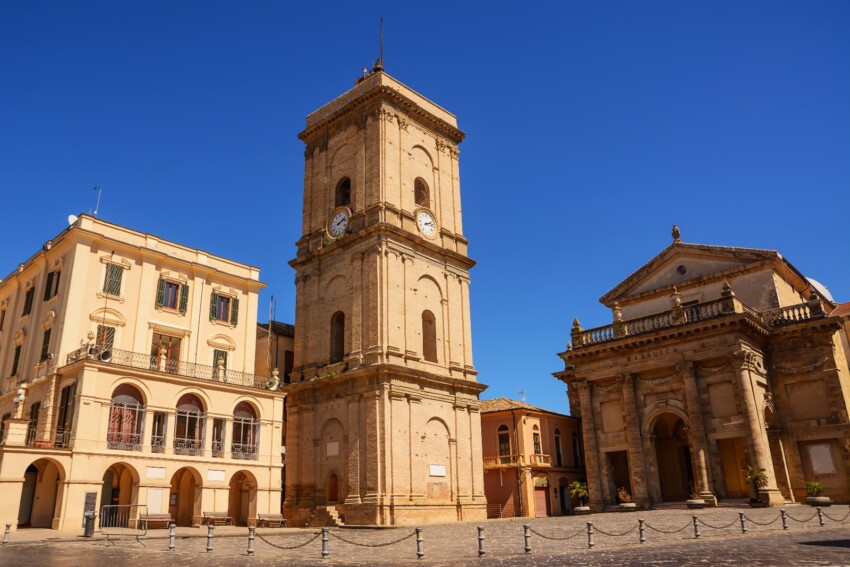
The city’s symbol is undoubtedly the Church of Santa Maria Maggiore, considered one of the region’s most important monuments for its excellent state of preservation.
Situated in the Civitanova district, the church was built in the thirteenth century in the Burgundian-Cistercian architectural style, but was redesigned in the mid-sixteenth century according to Baroque taste (with the addition of two side aisles). Externally, you can still admire the expansion work carried out in different periods, as a main façade, a Romanesque façade and a sixteenth-century façade coexist.
The interior of the building has been reworked and restored to the original Burgundian style with three aisles separated by columns topped with cross vaults. Inside are housed works of considerable value, including the Cross by Nicola da Guardiagrele (1432), the reliquary of the body of Saint Donato as a child martyr, and the polyptych of the Madonna and Child by Girolamo Galizzi.
In the eleventh century, during restoration work on the Bridge of Diocletian, an ancient statue of the Madonna and Child was discovered in Piazza del Plebiscito, which became known as the Madonna of the Bridge. A chapel was built to house this icon, which was enlarged in the fourteenth century to become a church.
In the eighteenth century, however, the building was completely reconstructed and given the layout we can admire today. The cathedral features a neoclassical design by Carlo Fantoni, with notable internal works including frescoes by Giacinto Diano. To the left of the church stands the bell tower, 37 metres high and constructed between 1610 and 1614. The interior consists of a single nave, surrounded by Corinthian half-columns, and features a monumental dome rebuilt in the 1960s. Positioned at the centre of the high altar in a niche is the statue of the Madonna of the Bridge.
The Church of San Francesco d’Assisi is famous for housing the relics of the Eucharistic Miracle of Lanciano. The story tells that around the eighth century, during a Mass in what was then the Church of San Legonziano, a miracle occurred: the host and wine were transformed into flesh and blood. For this reason, the city of Lanciano welcomes thousands of pilgrims each year who come here on pilgrimage.
The church is located in the Borgo district and was built in 1258 on the site of a previous place of worship dedicated to Saints Legonziano and Domiziano. The interior features a single nave with a barrel vault decorated with Baroque frescoes, a valuable eighteenth-century organ and finely decorated side altars. The high altar houses the relics of the first Eucharistic Miracle of Lanciano.
Along Corso dei Frentani, in the Lanciano Vecchia district, a complex perfectly preserving fourteenth-century medieval shops remains standing. The square-plan building housed shops on the lower level that were once used for commerce, whilst the upper part contained the residential area. Access was provided by three arches characterised by finely decorated capitals and an inscription bearing the owner’s name, Nicola De Rubeis.
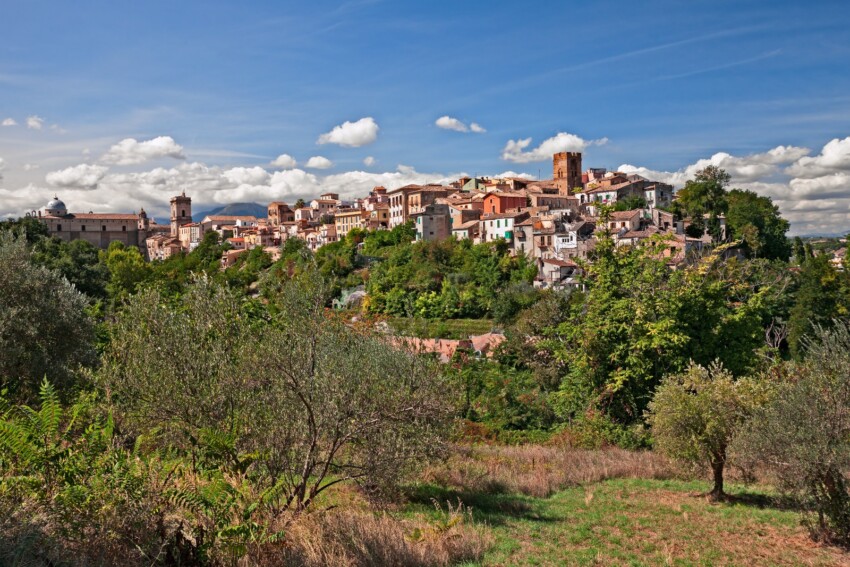
From the twelfth century onwards, the city of Lanciano was equipped with defensive walls that expanded over time. From the eighteenth century, the walls began to lose their purpose, and were largely demolished along with the nine historic gates that provided access to the city. Today, of the original access points, only Porta San Biagio, located in the Lanciano Vecchia district, remains standing, along with sections of the walls in the Civitanova and Lanciano Vecchia districts.
Along the southern defensive walls stand two Montanare towers dating from the Norman period and built for surveillance purposes.
Restored during the Aragonese reign, the Montanare towers comprise a lookout tower built within the walls and a more massive corner tower positioned outside. Their name may derive from the fact that the towers offered a magnificent view of the surrounding mountains, particularly the Majella massif and Gran Sasso.
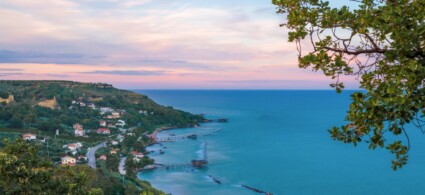
Lanciano boasts an excellent geographical location, being close to both the sea and the mountains of Maiella and Gran Sasso. For this reason, the town is often used as a base for visiting the numerous points of interest in the surrounding area.
From luxury hotels to welcoming bed and breakfasts, Lanciano offers a wide range of accommodation to suit the needs of different types of tourists.
Those coming from the north can reach Lanciano by car via the A14 Adriatic Motorway, exiting at the Lanciano junction. The town centre is approximately 7 km from the exit. From L’Aquila, you first need to take the A24, then the A14, again exiting at Lanciano. From Rome, you should first take the A24, then the A25 and finally the A14 to Lanciano.
The nearest airport is Pescara Airport, known as the Abruzzo International Airport, approximately 48 km from Lanciano. Those preferring to travel by public transport can reach Lanciano via the San Vito Chietino – Lanciano railway station, located on the Adriatic railway line and offering connections to major coastal cities. Various urban and long-distance bus services also connect Lanciano to major centres throughout Abruzzo and the rest of Italy.
What's the weather at Lanciano? Below are the temperatures and the weather forecast at Lanciano for the next few days.
Lanciano is a town in Chieti province, situated in the heart of the Val di Sangro valley. The town lies less than 50 km from Chieti, approximately 160 km from L'Aquila and 245 km from Rome.
 Hotel
Hotel  Budget accommodations
  Apartments
  Family Hotel
  Luxury Hotel
  Resorts