Hotel Della Piana
Avezzano - km.112 Via Tiburtina Valeria, 700
Book now
Located in the Conca del Fucino, within the wider Marsica area, Avezzano is the perfect destination for those seeking to combine a holiday rich in history and nature. The town sits at an altitude of around 670 metres, positioned conveniently close to the region’s principal parks, and boasts monuments of considerable significance. Avezzano has a remarkably ancient history, seemingly inhabited as far back as the Palaeolithic period. However, it was during Roman rule that the city gained prominence, thanks to the impressive hydraulic engineering project commissioned around 41 AD by Emperor Claudius.
The Emperor undertook the draining of Lake Fucino using underground tunnels (known as the Claudius Tunnels) that served as a subterranean outlet from Monte Salviano. Unfortunately, during the medieval period the work fell into neglect, the tunnels became obstructed and the lake’s waters returned to their natural level. The definitive draining only took place in the 19th century, thanks to the efforts of Prince Alessandro Torlonia.
Many of the symbols of the town’s history were lost in two tragic events that struck Avezzano in the 20th century. The first was the devastating Marsica earthquake that occurred on 13 January 1915 and was classified as one of Italy’s major seismic events. Secondly, in 1944 the town suffered severe damage from Anglo-American bombing raids during the Second World War.
Avezzano is a popular destination for those who enjoy hiking, walking or simply spending time outdoors. The town and surrounding areas are home to the Monte Silvano regional nature reserve, Villa Torlonia and the Pineta at Borgo Pineta.
Its historic centre can be explored on foot, allowing you to soak up the town’s atmosphere whilst browsing shops selling local crafts and regional food and wine specialities. The rebuilding that followed the Second World War bombing raids gives Avezzano a rather modern feel, though some historic monuments and ancient archaeological sites have survived to the present day.
The Cathedral of the Marsi stands in Piazza Risorgimento, the town’s main square, displaying a neo-Renaissance style with a tall bell tower on a square base. Dedicated to San Bartolomeo, Avezzano’s patron saint, the religious building was consecrated in 1942 at the behest of Bishop Pio Marcello Bagnoli following the 1915 earthquake.
Inside the cathedral features stunning mosaics and an impressive organ. Unfortunately the building suffered severe damage during the 1944 bombing raids and the travertine façade is a product of later reconstruction.
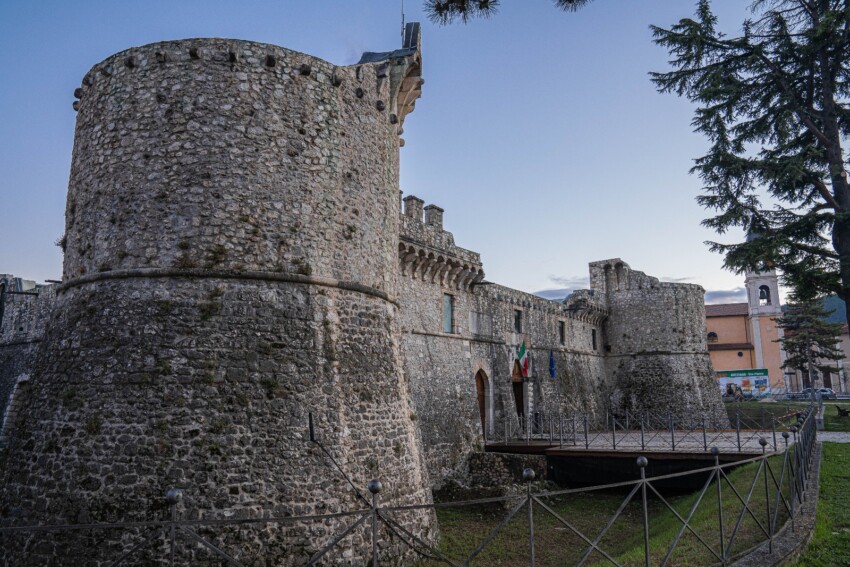
The Orsini-Colonna Castle, also known as Avezzano Castle, is one of the town’s principal attractions. Towards the end of the 12th century, Gentile di Palearia, lord of these lands, had a square-based watch tower built in this area. In 1363 the fortification was captured by Francesco I del Balzo, who erected a castle with a simple style, featuring an internal keep surrounded by a square defensive wall.
Towards the end of the 15th century the complex passed into the hands of the Orsini family, and it was Gentile Virginio Orsini who ordered renovation and extension works that gave the fortress a Renaissance style. In 1546 Marcantonio Colonna further enlarged the castle and transformed it into a proper fortified palace. Today the fortress still retains its defensive character with a square footprint and four circular corner towers equipped with gun ports. The building now houses the Modern Art Picture Gallery and serves as a venue for cultural events and exhibitions.
At approximately 1000 metres altitude on Monte Salviano stands the Sanctuary of the Madonna of Pietraquaria, patroness of Avezzano alongside San Bartolomeo. The Sanctuary is believed to have been originally erected in the 13th century but following abandonment was rebuilt in 1614. Inside the building features a Latin cross floor plan and a single nave housing three altars.
To one side of the sanctuary stands a bell tower with a square base whilst on the other side there is a convent of Capuchin friars and pilgrim facilities. Adjacent to the convent is the Domus Mariae, a building constructed in the 1950s for spiritual retreats, managed by the Benedictine sisters of charity.
A wonderful testament to Roman engineering prowess, the Tunnels of Emperor Claudius are an essential stop on any visit to Avezzano. The tunnels were originally constructed between 41 and 52 AD to regulate Lake Fucino’s water level and protect nearby settlements from frequent flooding. The original work comprised 32 vertical shafts and 6 sloped tunnels. Today parts of the tunnels can be visited via engaging guided tours.
Avezzano’s location makes it an ideal base for exploring several nearby towns. In summer, the town attracts hiking enthusiasts, whilst in the winter months it appeals to skiing enthusiasts thanks to its proximity to major ski resorts.
For these reasons, the town offers a wide range of accommodation to satisfy all visitor needs. Beyond traditional hotels, Avezzano boasts numerous guesthouses housed in renovated old mountain cottages that have been converted to welcome visitors and tourists.
Avezzano is easily accessible by car from the main cities of central Italy. From Rome, take the A24 motorway towards L’Aquila until the Avezzano Centro exit, then follow the State Road 690.
From L’Aquila take the A24 towards Rome-Pescara until the Tornimparte exit, then the A25 until Avezzano. If you’re coming from Naples, take the A1 first, then the A3 as far as Cassino station; from there continue on the SR509 and then on State Road 690 Avezzano-Sora.
Avezzano also has a railway station on the Rome–Pescara line, offering connections to several towns including Celano, Sulmona and Chieti; you can also take the Avezzano–Roccasecca line from here, which connects the town to various Abruzzo and Lazio towns such as Sora and Cassino. Avezzano is also connected by bus lines run by the Abruzzo-based TUA company to several towns in the region including L’Aquila, Pescasseroli and Rocca di Mezzo.
What's the weather at Avezzano? Below are the temperatures and the weather forecast at Avezzano for the next few days.
Avezzano is a town in inland Abruzzo situated within the Fucino basin in the Marsica region. The town lies approximately 56 km from L'Aquila, 106 km from Rome and 177 km from Naples.
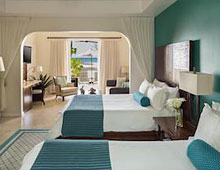 Hotel
Hotel 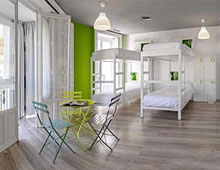 Budget accommodations
  Apartments
  Family Hotel
 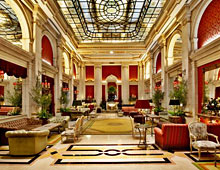 Luxury Hotel
 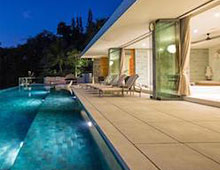 Resorts