B&B Il Marchese Del Grillo
Sulmona - Via Corfinio 62
Book now
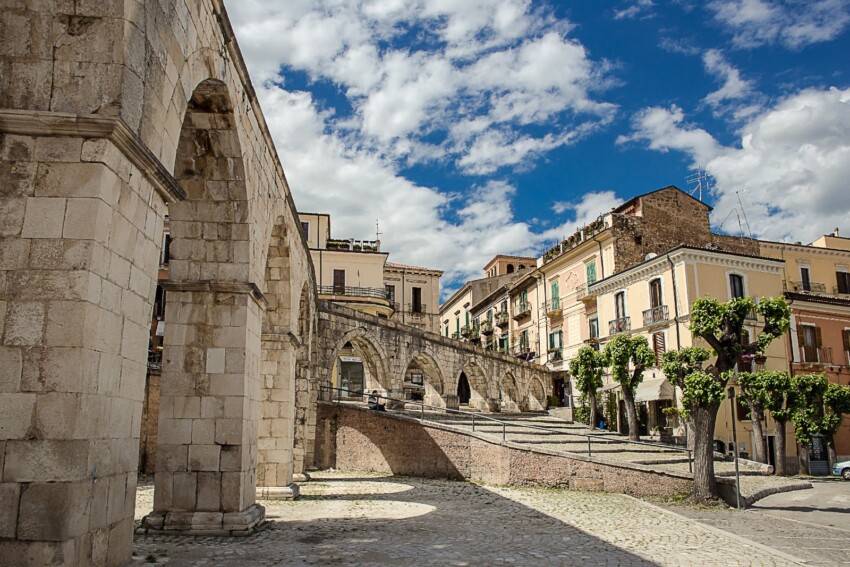
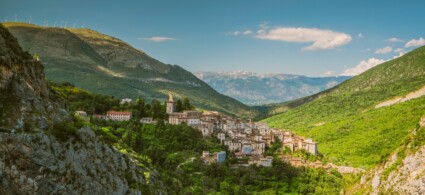
Famous since antiquity as the birthplace of Roman poet Publius Ovidius Naso, Sulmona is an elegant yet vibrant town nestled in the heart of the expansive Conca Peligna, a plateau situated at approximately 350 metres above sea level.
Located in central Abruzzo, Sulmona has evolved from a small medieval village into a picturesque town surrounded by the verdant landscape of the Maiella National Park. The town centre boasts an extensive architectural, historical and cultural heritage, whilst the surrounding areas are ideal for outdoor enthusiasts, offering numerous hiking trails, walking routes and cycling paths.
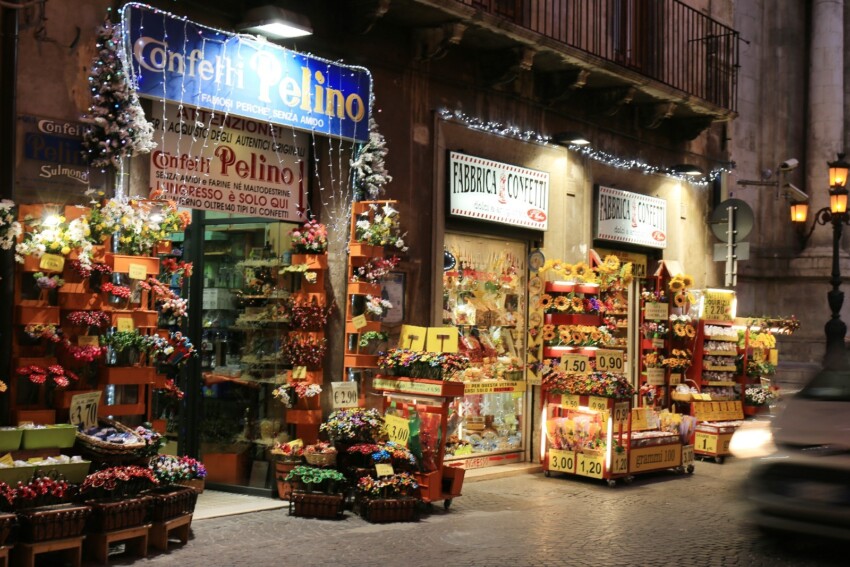
Ancient churches, noble palaces, and fortified walls that safeguard Roman architectural treasures: this is Sulmona, a town whose impressive monumental heritage built in various styles has long earned it the epithet “the Siena of Abruzzo”. Beyond its historical significance, Sulmona is internationally renowned for its delightful confetti, a confectionery speciality of the region for centuries.
Tucked amongst some of the Apennines’ highest peaks, Sulmona is a town boasting numerous sites of historical interest alongside a rich natural heritage. The city of Sulmona developed around the 1st century BC during the Roman period when it was given a definitive urban layout and when the forum and principal public temples were constructed.
Sulmona’s street plan derives from the Roman era, and the town’s current main thoroughfare, Corso Ovidio, was built over the original Roman cardo. This central street leads into the expansive Piazza Garibaldi, where the celebrated aqueduct commissioned by Manfred of Swabia stands.
The town was originally defended by fortification walls featuring seven gateways that granted access to the centre. In the 13th century, during Swabian rule, exponential population growth necessitated an expansion of the town centre, leading to the construction of a second fortification wall to accommodate the new residential area. It was during this period that Porta Napoli was built, named after the fact that the gateway stands on the road connecting Sulmona to Naples, which at that time was the capital of the Kingdom.
Originally, the second defensive circuit had eight gates, though only six survive to the present day, and Porta Napoli is undoubtedly the most monumental. The gate stands at the southern entrance to the historic centre and provides access to Sulmona’s main street, Corso Ovidio. Porta Napoli features a rectangular plan, with the lower section characterised by rough-hewn stonework whilst the upper area displays smooth masonry and houses a window whose supporting brackets bear Roman-era relief carvings depicting hunting scenes and sacrificial rites.
The Church of Santa Maria della Tomba takes its name from the tradition that it was erected above a pagan burial site, hence the name “della Tomba”; according to other legends, the building was constructed atop the house of poet Ovidius. In reality, since the church is dedicated to the Virgin Assumed into Heaven, the title Santa Maria della Tomba is shorthand for “Santa Maria from the Tomb Assumed into Heaven”. The earliest historical references to this complex, considered one of Sulmona’s most important religious buildings, date to the 13th-14th century when it lent its name to an entire district.
Over the centuries the church underwent numerous restoration works and various transformations that altered its original appearance; the most recent intervention occurred following the earthquake that struck L’Aquila. Overlooking Piazza del Plebiscito, the religious edifice features a façade in Romanesque-Gothic style with a Gothic portal housing the coat of arms of the Aragon family and crowned by a 15th-century rose window. The interior follows a Latin cross plan with three aisles; the presbytery features a semicircular apse and a timber coffered ceiling.
Like Porta Napoli, Porta Sant’Antonio Abate was constructed later when the need arose to build a second fortification wall to encompass the new urban settlement created by demographic expansion. The upper section of the gate was originally used as a Guard House barracks but eventually became the private residence of Domenico Granata, manager of the former city paper mill, who had the Granata family coat of arms erected above the gate’s arch. The outer arch appears to date from the late 13th century whilst the inner arch is from a later period and seems to have been built using lower-quality materials.
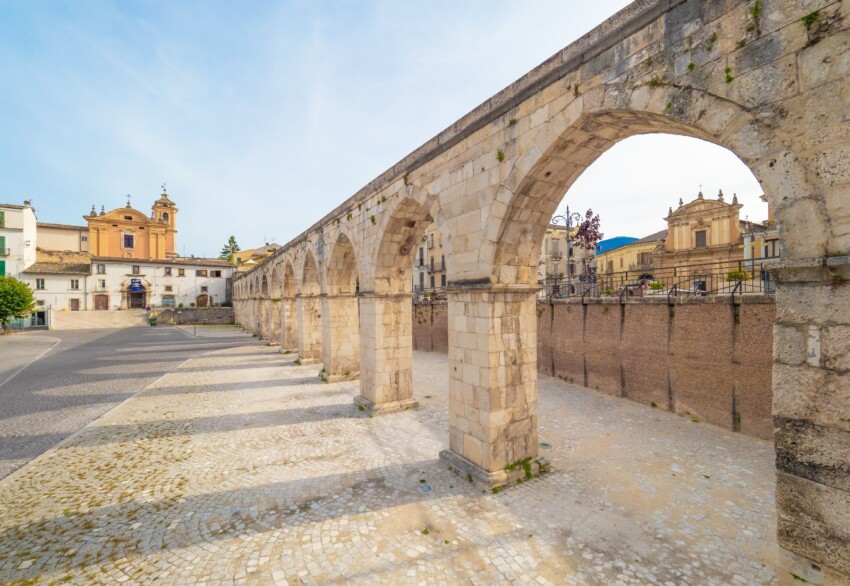
The medieval aqueduct stands along the western edge of Piazza Garibaldi and was constructed in 1256 by King Manfred of Swabia. Stretching approximately one hundred metres, this structure represents not only Sulmona’s economic and demographic growth during that period but also its significant importance as the seat of the Justiciary and home to one of the Kingdom of Sicily’s most important annual fairs, established to promote commercial trade.
In order to ensure the town’s water supply, Manfred of Swabia built this aqueduct to facilitate the flow of water from the River Gizio. The aqueduct, composed of ogival arches supported by robust pillars of local limestone, fed local mills, served artisan workshops and supplied water to the town’s fountains.
Walking along Corso Ovidio leads to Piazza Garibaldi, also known as Piazza Maggiore, the main square of Sulmona where the market was once held. The piazza has truly vast dimensions and is home to the famous medieval aqueduct dating from the Swabian period, and the Fontana del Vecchio, one of Sulmona’s oldest fountains, named after the bearded statue carved upon it, which is associated with Solimo, the city’s founder.
The square hosts several ancient buildings including the Church of San Filippo Neri, the monastic Church of Santa Chiara d’Assisi, the Church of San Rocco, Palazzo Anelli, and at the centre of the piazza stands a fountain created by master craftsman Felice di Cicco.
Publius Ovidius Naso (43 BC–18 AD) was a Roman poet from Sulmona, famous especially for the epic-mythological poem The Metamorphoses. For this reason, a statue dedicated to Ovidius stands in Sulmona’s Piazza XX Settembre, created by Roman sculptor Ettore Ferrari.
The statue was unveiled in 1925 in the presence of the King, and on its base is a plaque bearing verses from the Tristia, one of the Roman poet’s final works.
This is quite possibly Sulmona’s most important complex, comprising the Church of the SS. Annunziata and its adjacent palace. The medieval church has been damaged by numerous earthquakes and consequently undergone extensive restoration; the adjoining building, constructed in 1320 by the lay confraternity of the Compenitenti (or della Penitenza), was originally a hospital dedicated to charitable purposes.
The church today presents a Baroque style with an interior divided into 3 aisles and 3 apses, whilst the adjacent building currently houses the Civic Museum.
Following the length of Corso Ovidio leads to a small municipal park where one can stroll through greenery along tree-lined avenues and reach the Cathedral of San Panfilo. The Cathedral stands outside the historic centre and is dedicated to San Panfilo, Sulmona’s patron saint, whose relics are carried in procession every year on 28 April.
According to tradition the religious building was constructed in the 8th century atop the ruins of a previous pagan temple. However, the church underwent numerous restoration and reconstruction works over the years, also as a result of the various earthquakes affecting the area. Currently the exterior features a façade with a horizontal cornice, divided into two levels, whilst the interior is divided into 3 aisles and 3 semicircular apses.
The crypt represents the most ancient part of the church and houses the altar containing the relics of San Panfilo, a saint venerated in the town because he protected Sulmona from the plague that struck the Kingdom of Naples in 1656.
In the following map you can see the location of the main places of interest mentioned in this article.
Hospitality and warmth are defining characteristics of this town, which offers various types of accommodation to its visitors. From hotels to bed and breakfasts, from holiday homes to farm stays, Sulmona boasts a truly extensive range of facilities.
Depending on the type of stay you wish to enjoy, Sulmona allows you to choose accommodation in the historic centre to be close to the main points of interest, or a property situated amidst the green of the surrounding hills.
Sulmona can be easily reached by car from Italy’s major cities. Those travelling from the north can take the A14 towards Pescara, then continue on the A24 towards Rome-L’Aquila-Avezzano. After taking the Pratola Peligna-Sulmona exit, continue along State Road 17 towards the town of Sulmona. From Rome, take the A25 towards Pescara until the Pratola Peligna-Sulmona exit, then continue on State Road 17.
Alternatively, the town can be reached by train thanks to numerous rail connections linking Sulmona to Pescara, Rome, Isernia, L’Aquila and many other towns in central and southern Italy. The nearest airport is Abruzzo Airport located in Pescara, approximately 65 km from Sulmona, whilst Rome Fiumicino Airport is approximately 200 km away.
What's the weather at Sulmona? Below are the temperatures and the weather forecast at Sulmona for the next few days.
 Hotel
Hotel  Budget accommodations
  Apartments
  Family Hotel
  Luxury Hotel
  Resorts