Gran Sasso and Monti della Laga National Park
Covering an area of approximately 150,000 hectares, Gran Sasso and Monti della Laga National Park is a perfect destination for a stay centred on history, nature and relaxation.
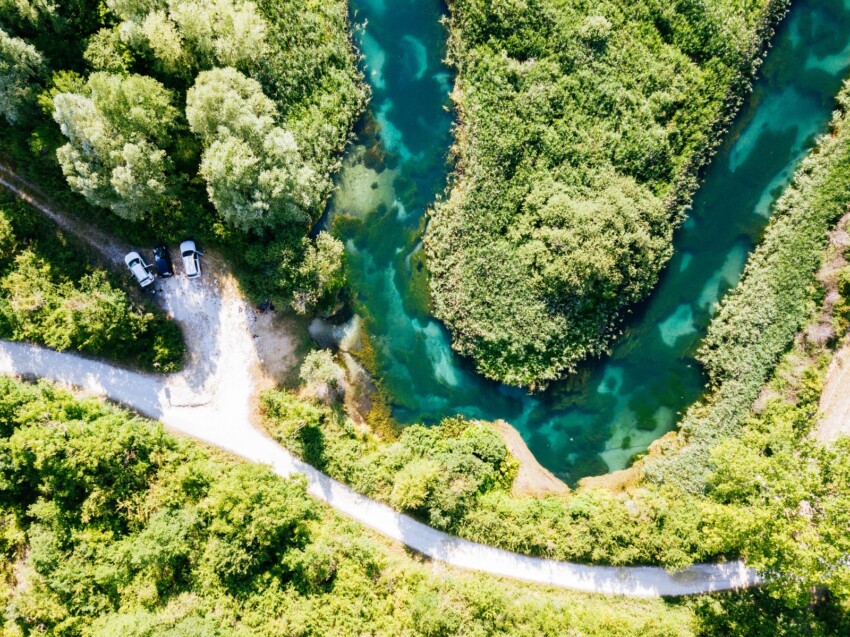
Abruzzo is considered the green lung of the Mediterranean and thanks to its three National Parks (Abruzzo, Maiella and Gran Sasso), the Sirente Velino Regional Park and more than thirty nature reserves, it is one of Europe’s greenest regions. Each park holds a long history that can be discovered by visiting ancient villages and is characterised by particular plant and animal species and geological stratification.
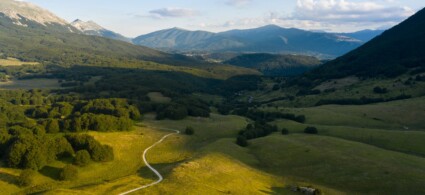
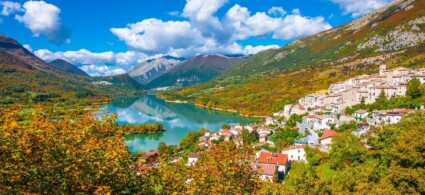
Abruzzo’s natural heritage, however, also comprises mountain ranges, magnificent lakes and verdant hills rich in vineyards and olive groves. Many of Abruzzo’s lakes attract enthusiasts of water sports such as windsurfing, canoeing or diving, whilst the high Apennine peaks draw fans of hiking and trekking. The variety of the Abruzzo landscape makes this region a highly sought-after destination capable of meeting the needs of different types of tourists.
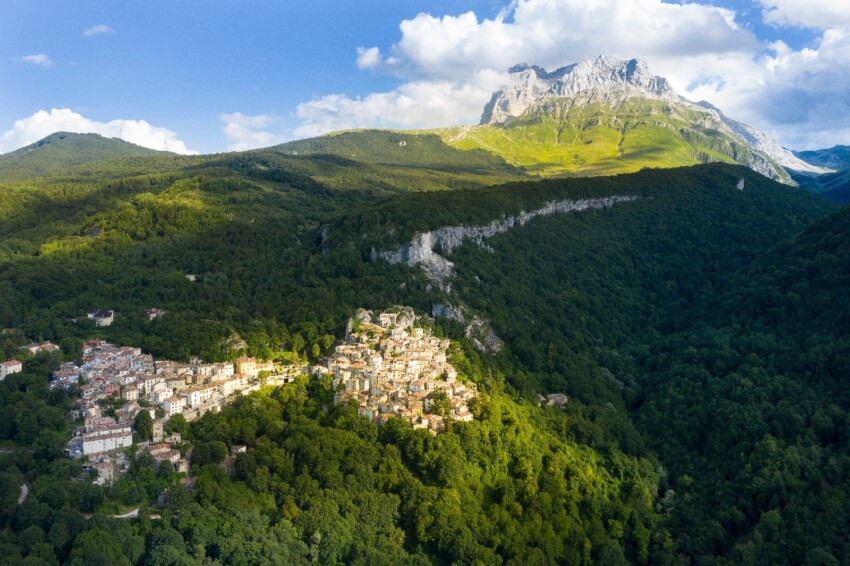
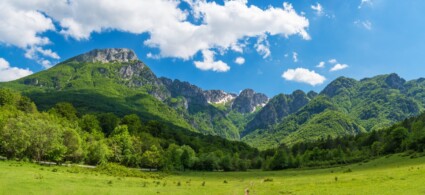
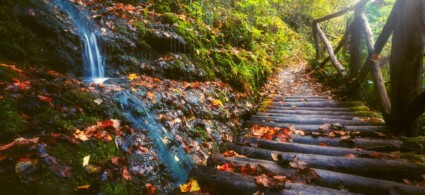
The Gran Sasso and Monti della Laga National Park is one of Italy’s largest protected nature reserves and is one of three national parks in Abruzzo. Covering an area of 150,000 hectares, the Park protects a largely mountainous territory characterised by numerous peaks exceeding 2,000 metres in altitude. The mountain ranges present include the Monti Gemelli, the Monti della Laga and the Gran Sasso d’Italia chain, where it is possible to undertake numerous hikes and walks surrounded by greenery. Among the most famous itineraries is the Ippovia del Gran Sasso, a trail of approximately 320 km that develops around the Gran Sasso massif and can be walked, ridden on horseback or cycled.
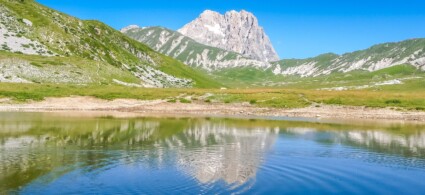
In the heart of the Gran Sasso Massif is also the Campo Imperatore plateau, which is also known as the “Little Tibet” for its splendid landscapes. Here you will find the highest peaks of the Apennines, such as Corno Grande (2,912 metres) and Monte Aquila (2,494 metres), and one of central Italy’s most modern and well-equipped ski resorts.
Within the Park’s territory are also forty Abruzzo towns that preserve a truly unique historical and architectural heritage, with many being part of the “Most Beautiful Villages in Italy” association. The variety of landscapes in the Park allows for the presence of more than 2,000 plant species and various animal species including the Marsican brown bear.
The Abruzzo National Park was founded in 1923 and is therefore considered one of Italy’s oldest parks. Covering an area of approximately 50,000 hectares, the Park contains 25 municipalities (located between the regions of Abruzzo, Lazio and Molise) and various environments rich in vegetation that attract numerous visitors in every season of the year. Furthermore, the beech forests over 500 years old, located between the municipalities of Lecce nei Marsi, Opi, Pescasseroli and Villavallelonga, were recognised in 2017 as UNESCO World Heritage Sites. Abruzzo National Park also plays an important role in protecting certain wildlife species such as the wolf, the Apennine chamois and the Marsican brown bear.
The Maiella National Park (or Majella) comprises the great Maiella massif, the Morrone mountains, the Monti Pizi and the Monte Porrara group. Most of its territory extends above 2,000 metres and the highest peak is Monte Amaro at 2,793 metres altitude. The Park is considered a true natural oasis where it is possible to walk countless routes on foot, by bike or on horseback and admire rare plant and animal species.
The Sirente Velino Regional Nature Park is renowned among winter sports enthusiasts for its ski resorts at Ovindoli and Campo Felice. The park covers more than 50,000 hectares in the province of L’Aquila and includes approximately 22 municipalities that preserve a truly ancient historical and cultural heritage. Within the park are found numerous animal species such as the Marsican brown bear, roe deer, red deer, porcupine, fox, wildcat and wild boar, whilst among birds are notable the golden eagle, the marsh harrier, the raven, the peregrine falcon and the green woodpecker.
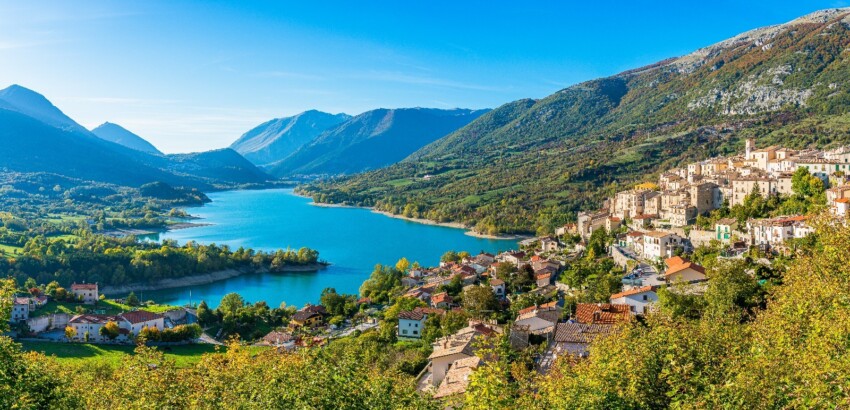
Enriching Abruzzo’s natural heritage are also numerous lakes and artificial reservoirs, created by the damming of river waters, which are the perfect destination for those who love practising water sports.
Among Abruzzo’s most famous lakes is certainly Lake Barrea, a body of water located within the Abruzzo, Lazio and Molise National Park and which hosts three delightful villages along its shores: Barrea, Villetta Barrea and Civitella Alfedena. The network of trails surrounding the lake makes it the ideal destination for those who love outdoor activities.
Another lake not to miss during a stay in Abruzzo is Lake Scanno, which is considered the region’s largest natural lake. Nestled between the peaks of the Monti Marsicani, the lake was formed by a landslide from Monte Genzana that interrupted the course of the Tasso river. The lake has received the Blue Flag award and is therefore completely suitable for bathing, whilst all around it hosts a series of trails that can be walked or cycled.
Formed by the damming of the Rio Fucino, Lake Campotosto is an artificial reservoir protected by a State Nature Reserve and is located within the Gran Sasso and Monti della Laga National Park. The lake is often chosen as a destination by fishing, canoeing, windsurfing enthusiasts and, given the extensive network of trails surrounding it, is ideal for those wishing to go hiking or cycling.
In the Sangro valley is found, instead, Lake Bomba, which was formed following the damming of the Sangro river. The lake is navigable and is therefore ideal for those wishing to practise canoeing, windsurfing or water skiing. Along its shores are found characteristic villages such as Bomba, Colledimezzo, Pietraferrazzana, Pennadomo.
A short distance from the Stiffe Caves it is possible to visit the small Lake Sinizzo, which is also called the “beach of L’Aquila” for its wonderful bathing waters that in summer attract many people wanting to escape the summer heat of the cities. Around the lake, in addition to numerous trails, there are picnic areas, a children’s playground and a small kiosk.
Finally, there is Lake Capodacqua, which is also nicknamed “Atlantis of Abruzzo” for the presence of numerous remains on the lake bed that appeal to diving enthusiasts from around the world. This small artificial lake is located within the territory of Capestrano at the foot of Monte Scarafano at an altitude of 340 metres.
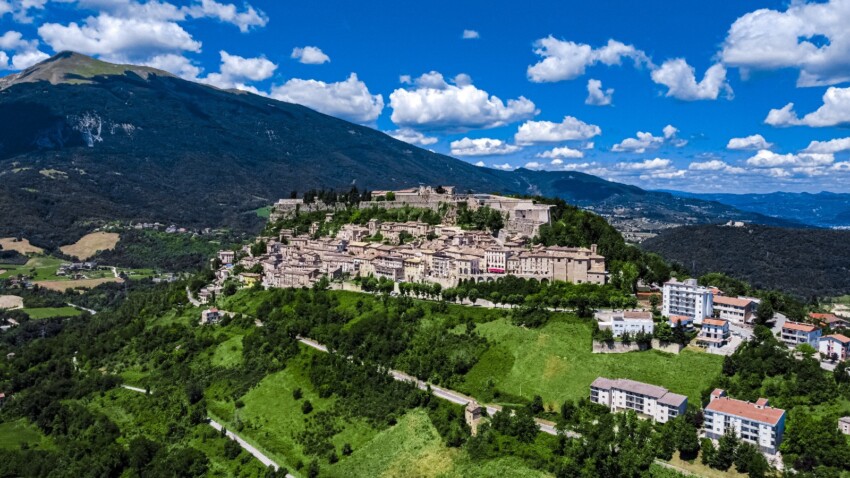
Abruzzo, excluding the narrow strip of land extending along the coast, is composed largely of mountainous terrain and to a small extent of hillside terrain.
In particular in the provinces of Teramo, Pescara and Chieti, there are verdant hills that host vineyards and olive groves and small perched villages. These are ideal locations for those wishing to spend a stay in nature whilst sampling typical Abruzzo produce.
 Hotel
Hotel  Budget accommodations
  Apartments
  Family Hotel
  Luxury Hotel
  Resorts