Hotel Maja
Pescara - Viale Riviera, 201
Book now
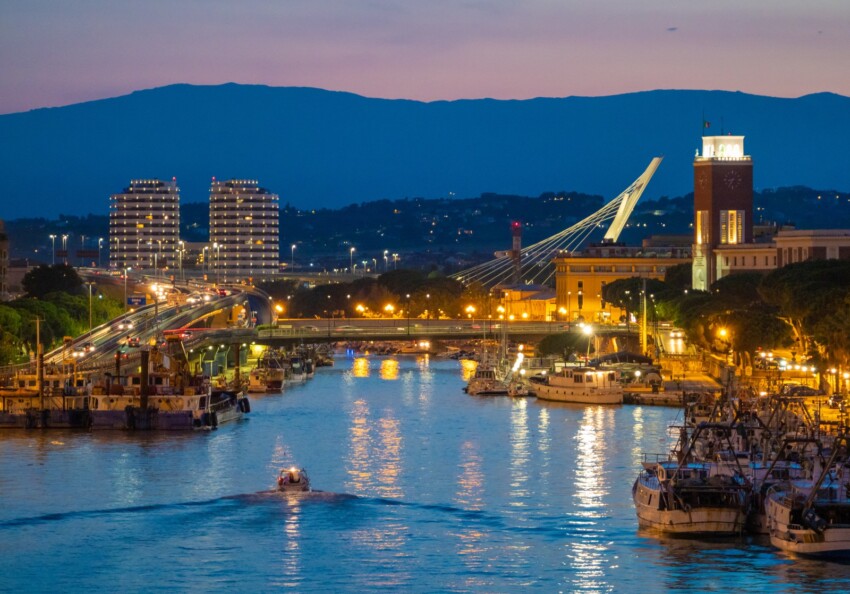
Known as the birthplace of Gabriele D’Annunzio and Ennio Flaiano, Pescara is a vibrant and dynamic city that absolutely deserves exploration. Although situated along the Adriatic coast, Pescara is a destination you can visit throughout the year thanks to its excellent climate and numerous points of interest that make it the ideal destination for those seeking a stay combining history, nature and relaxation.
Washed by the Adriatic Sea on one side and surrounded by the Abruzzo mountains on the other, Pescara presents itself as a city with a thousand-year history capable of captivating every visitor thanks to its distinctive character, which over the years has successfully managed to blend and harmonise the old and new, the past and present.
Originally known as Aternum, the city changed its name around the year 1000 when it became “Piscaria” in reference to the abundance of fish in this area. Pescara has always been a highly coveted city thanks to its strategic position along the coast, which saw it first serve as a defensive bulwark of the Kingdom of Naples and, from the second half of the nineteenth century onwards, become an important commercial hub.
Located near the mouth of the Aterno River, Pescara offers beautiful beaches, historic buildings, centuries-old churches and monuments that appeal to all types of visitor. Pescara as we know it today was created at the beginning of the twentieth century through the merger with the municipality of Castellamare Adriatica, a locality that occupied territory north of the Aterno-Pescara River. This Abruzzo city now presents itself as suited to everyone, regardless of interests or age.
The oldest core of the city, known as Old Pescara, is represented by the Piazza Unione area, so called because there was once the only bridge here that connected and linked ancient Pescara to the city of Castellammare. During the day this is a very lively and colourful pedestrian area that alternates ancient fishermen’s dwellings with modern buildings rebuilt after the Second World War bombings.
Thanks to the presence of bars, restaurants and venues, this becomes a very animated area frequented throughout the evening, making it the heart of Pescara’s nightlife scene.
Piazza della Rinascita is also known by locals as Piazza Salotto because it has become a place where people meet friends for a chat or a drink. This pedestrian area is full of restaurants, bars, shops where you can sample local dishes or purchase typical products.
In the southern part of the square there is also a sculpture of an Elephant by Vicentino Michetti, and in spring we recommend strolling along Via Milano, where you’ll find a wonderful wisteria planted in 1930 by the Di Biase family and miraculously surviving the Second World War bombings.
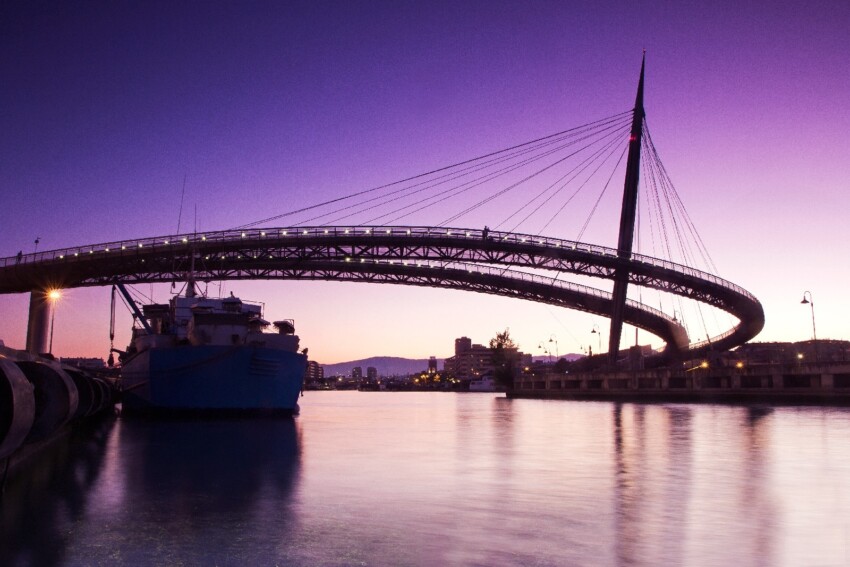
Considered one of the city’s symbols, the Ponte del Mare was inaugurated in 2009 with the aim of connecting the two shores of Pescara. Stretching 466 metres and characterised by a sinuous form, the Ponte del Mare is accessible both on foot and by bicycle, offering magnificent views over Pescara’s harbour, the coast, and also the Majella and Gran Sasso massifs. At night its entire curved outline is illuminated by colour-changing LED lights, creating a truly evocative sight.
This work is considered Italy’s largest cycle-pedestrian bridge and is an integral part of the Adriatic Cycleway project, an interregional cycle path running along the Adriatic coast which, once completed, will connect Friuli Venezia Giulia to Puglia.
Also known as “D’Annunzio’s city”, Pescara is the birthplace of the poet and the place where the writer spent his childhood. It was in this building, constructed in the late eighteenth century and restructured in the mid-nineteenth century, that poet Gabriele D’Annunzio was born on 12 March 1863.
Already during the Fascist era the decision was made to protect the house as a building of “important historical interest” and to include it among “national monuments”. The building suffered extensive bombing damage during the Second World War, necessitating restoration work in the post-war period.
In the 1960s, thanks to the initiative of the “d’Annunzio Foundation”, the first exhibition route was created. Currently the museum is set up on the first floor of the house and consists of nine rooms where a period of D’Annunzio’s life is recounted through documents, manuscripts, photographs and objects.
Pescara’s Cathedral, known as the Cathedral of San Cetteo or Temple of Reconciliation, was completed in 1938 thanks also to the will and financial contribution of writer Gabriele D’Annunzio. Built on the remains of an earlier eighteenth-century church, the Cathedral externally follows the style of the Fascist period whilst the interior preserves precious artistic works.
The façade is in white stone, very simple, with three rose windows above three doors and a statue of the saint in the central position. Internally, the building features a rectangular floor plan with three naves and houses works of great value such as the Ecstasy of Saint Francis by Guercino. Here too is buried the mother of D’Annunzio, Luisa De Benedictis D’Annunzio.
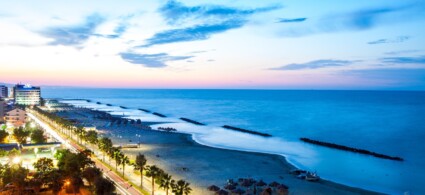
A lively and bustling city, Pescara is also known for its beautiful seafront which during the day hosts bathing establishments where you can relax in the sun, whilst in the evening it comes alive thanks to numerous restaurants, bars and venues.
This stretch of coast runs south from Pescara to Francavilla al Mare, whilst to the north it connects with Montesilvano. The entire seafront can be travelled by car, on foot or by bicycle, thanks to a convenient and scenic cycle path.
Not far from the Ponte del Mare is the Museum of the Sea, a place suitable for both adults and children. The museum not only recounts the decisive role the sea played in the development of this area but also displays images and reconstructions of objects and equipment once used by fishermen.
Some rooms offer an in-depth exploration of the sea and its inhabitants, displaying remains of sea turtles, shells and skeletons of large cetaceans, such as the fin whale and the sperm whale.
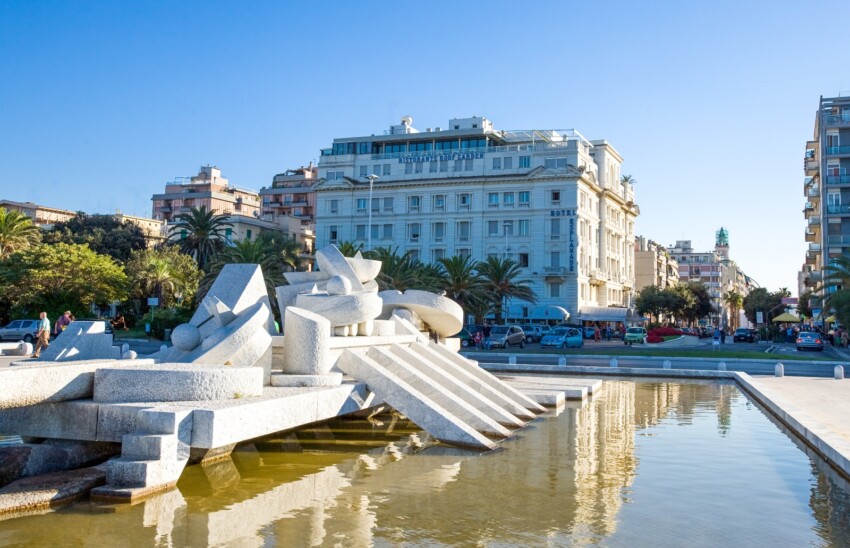
Built in 1987 by sculptor Pietro Cascella at the request of the municipality, which wanted to enhance the seafront area, The Landing at the Ship is a magnificent sculpture in travertine marble.
This work has a fairly simple but striking form and represents a galley, that is, an ancient rowing vessel. The significance of the work is twofold: on one hand, it recalls the close relationship the city has always had with the sea, on the other, it evokes the Pescara prisoners forced to work as rowers on Spanish ships in the nineteenth century.
Known since the eighth century, the Pineta Dannunziana (or d’Avalos) is a nature reserve located in the southern area of the city and named after the D’Avalos family who owned the area until the nineteenth century. The main characteristic of this pine forest is the presence of three species of pine: Aleppo Pine, Maritime Pine and Stone Pine. In the twentieth century, numerous famous personalities, such as the renowned poet and writer Gabriele D’Annunzio, began to meet amongst these pines, so much so that it became known as the “pineta dannunziana”.
The Reserve extends over an area of approximately 53 hectares and within it are now typical plants of the Mediterranean scrubland, a small lake and the monumental theatre dedicated to Gabriele d’Annunzio, where during the summer months theatrical performances, events and exhibitions of various kinds take place.
It’s possible to stroll freely along the paths or participate in guided tours and educational workshops that help you learn more about the flora and fauna present within the pine forest.
Trabocchi are old wooden platforms found all along the Abruzzo coast that were once used for fishing. These structures resemble pile dwellings and consist of two arms to which a net was attached to catch fish, making it unnecessary to venture out to sea in a boat to fish.
Now the trabocchi are no longer used for fishing and have lost their original function. Some of these structures have been refurbished and have been transformed into venues where you can enjoy excellent seafood whilst admiring wonderful panoramic views.
In the following map you can see the location of the main places of interest mentioned in this article.
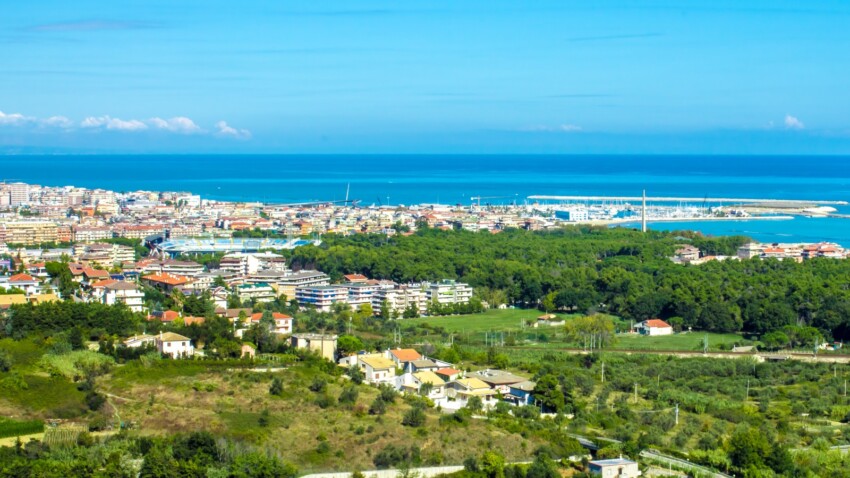
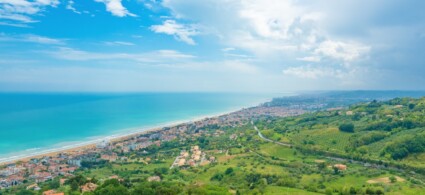
Along the Pescara coast are some of Abruzzo’s most beautiful beaches, characterised by wide sandy shores and crystal-clear waters with often shallow seabeds, ideal also for families with children.
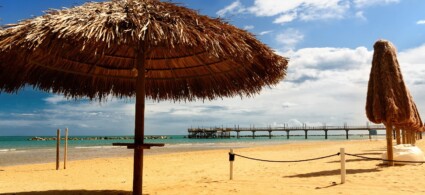
Pescara’s city beach is the lido frequented by both locals and tourists and located close to the city centre. It’s not a wild or secluded beach, but a long stretch of golden sand. Several bathing establishments make this stretch of coast well-equipped with all services and comforts for both adults and children, whilst restaurants and bars open until late evening, making Pescara a location also suited to those who enjoy nightlife and entertainment. Those who love water sports can have fun here with various activities such as sailing, kitesurfing, water skiing or windsurfing.
Nearby are also Silvi Marina beach which has received Blue Flag recognition for its beautiful waters, Pineto beach characterised by a 10-kilometre sandy shoreline and Francavilla al Mare beach, considered the beginning of the suggestive Trabocchi Coast.
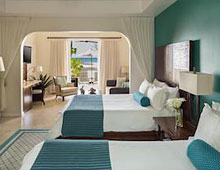
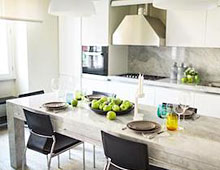
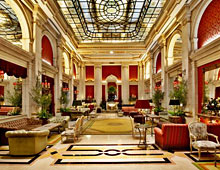
Pescara offers a wide choice of accommodation from star hotels to B&Bs, from apartments to holiday homes. The Centre area is definitely the best place to stay as from there you can reach on foot many of the points of interest as well as the beach. In particular, we recommend areas near Corso Umberto and those near Via Piave, from which you can easily access both the heart of the city and the seafront.
Usually the seafront area is more in demand in summer when prices can be higher compared to the hilly areas which, being further away, require using a bike, car or bus to reach the beach.
Pescara’s location makes it an easily accessible city from anywhere in Italy. By car, coming from the north you should follow the A14 Adriatic Motorway in the direction of Ancona, exiting at Pescara Nord, while those coming from Rome should take the A25 Rome-Pescara motorway and exit at Pescara/Chieti. Those coming from the south should follow the A14 Adriatic Motorway in the direction of Pescara and exit at Pescara Ovest/Chieti.
Pescara is also home to the International Abruzzo Airport located just a few kilometres from the city centre and offering connections with major Italian cities as well as several European cities. From Pescara airport you can quickly reach the centre either via various bus routes (ARPA, GTM and SATA companies) or by convenient taxi, or by booking a car rental.
Pescara is also easily reached by train as the railway station is located in the centre and the city is well connected with other Italian locations such as Ancona, Sulmona, Rome, Teramo and Vasto.
What's the weather at Pescara? Below are the temperatures and the weather forecast at Pescara for the next few days.

 Hotel
Hotel 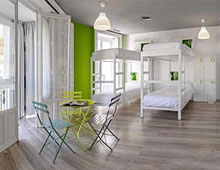 Budget accommodations
  Apartments
  Family Hotel
  Luxury Hotel
  Resorts