Hotel Gran Sasso & SPA
Teramo - Via Vinciguerra 12
Book now
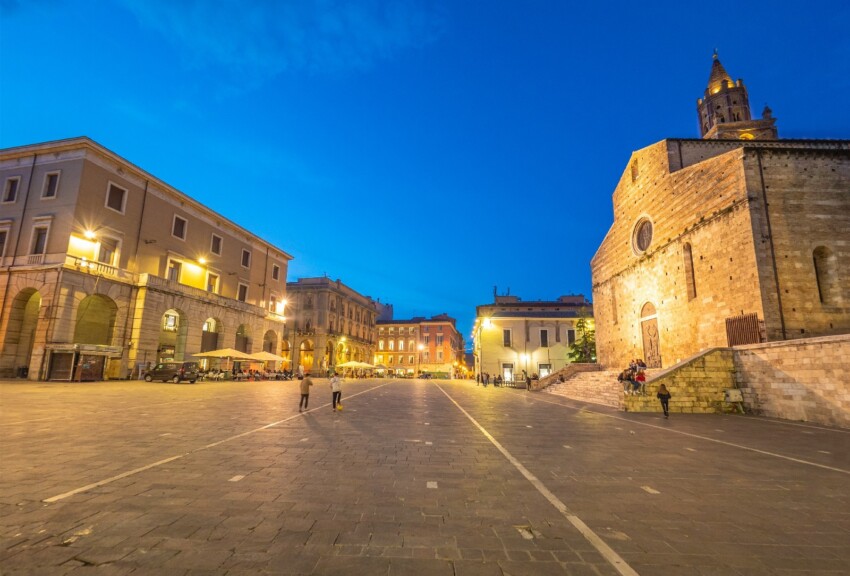
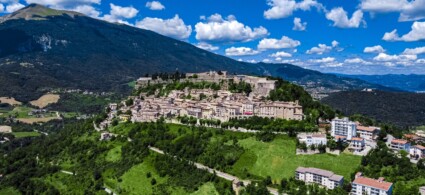
A city with truly ancient origins, Teramo sits nestled between the Adriatic Sea and the Gran Sasso in an area surrounded by olive groves and vineyards, making it one of Abruzzo’s most beautiful towns. From the 8th century BC to the 5th century BC, before Roman rule, this area was known as Aprutium, from which the modern term Abruzzo is derived.
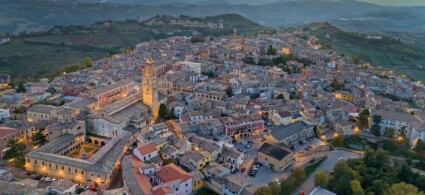
An important historical and cultural hub, Teramo is located in the northernmost part of the region on a hillside where the River Tordino and the Vezzola stream meet, so much so that the Romans called it “Interamnia Urbs”, meaning “the city between two rivers”. Exploring Teramo’s historic centre means embarking on a journey through time discovering the peoples and cultures that shaped this area’s history, whilst all around the city you’ll find trails and pathways immersed in green landscapes.
Thanks to its stunning natural scenery and important artistic and cultural heritage, Teramo reveals itself as an intriguing destination that is also wonderfully relaxing, making it perfect for those seeking a trip combining history and nature.
The River Tordino and Vezzola stream encircle the city and its beautiful historic centre, which is divided into four historic quarters – San Giorgio, San Leonardo, Santo Spirito and Santa Maria a Bitetto – characterised by narrow, cobbled alleyways.
The historic centre is comfortably explored on foot and is packed with churches, remains from the Roman period and palaces dating from various eras.
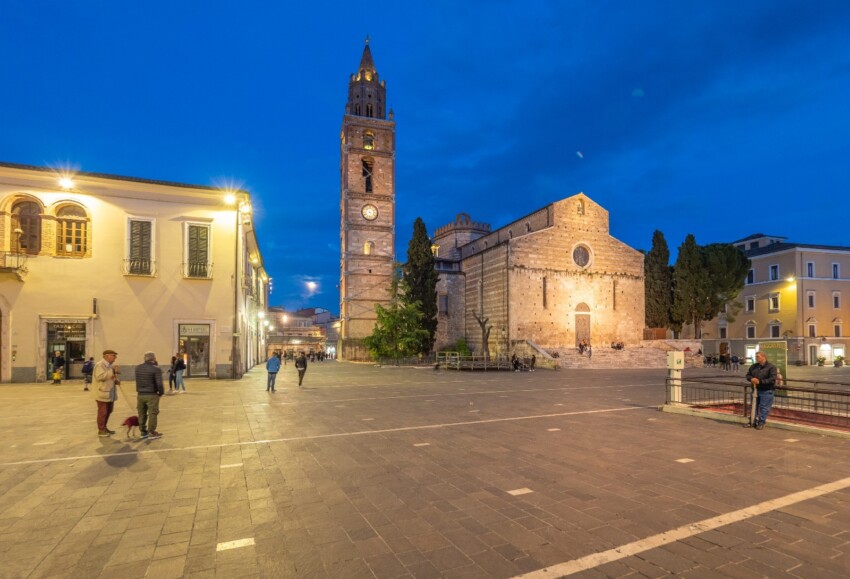
The Cathedral of Santa Maria Assunta, also known as Teramo’s Duomo, dates back to the 12th century, although the building has undergone several restoration projects. The Cathedral’s façade displays a blend of two architectural styles: the lower section is Romanesque whilst the upper part is Gothic.
Inside, the building features three naves and is divided into three stylistic periods: Romanesque dating from the 13th century, Gothic from the 14th century, and the Chapel of the New Sacristy dating from the early 18th century. The cathedral also houses several artistic masterpieces, including the precious silver antependium by Nicola da Guardiagrele which adorns the high altar, and a polyptych by the Venetian artist Jacobello del Fiore.
To the right of the cathedral stands the bell tower, approximately 50 metres tall and constructed in stages: the lower section was built between the 12th and 13th centuries, the middle section in the 14th century, and finally the octagonal crown was added in the 15th century. Works in the early 2000s brought to light, after nearly 300 years, the crypt of San Berardo inside the building, which is now open to the public.
Piazza Martiri della Libertà is considered the true heart and core of Teramo’s historic centre. Many of the city’s historic buildings overlook the square, including the Cathedral, the Bishop’s Palace and Palazzo Costantini with its beautiful arcades. Throughout the year, the square hosts the city’s most important events and festivities, such as the characteristic Christmas markets. Regarded by many as a great meeting place, you’ll find numerous bars and cafés here where you can relax, as well as various shops for shopping.
Located in Piazza Orsini, the Fountain of the Two Lions was built towards the end of the 19th century by sculptor Pasquale Morgante with the aim of beautifying the Town Hall’s loggia. The artwork depicts two lions surrounded by rocks, with an oval basin in the centre that collects the water flowing from the lions themselves.
The fountain carries profound symbolic meaning, as the water flowing from the two lions represents the Tordino and Vezzola rivers that surround the entire historic centre, whilst the area around the city is surrounded by unspoilt nature. Above the fountain are the city’s coat of arms and a plaque in memory of those who died in the Second World War.
Also worth visiting in the historic centre is the church of Sant’Anna dei Pompetti, formerly known as the Church of San Getulio, which sits against the Roman bastion of Torre Bruciata. What we can admire today is what has survived of the body of the ancient cathedral of Santa Maria Aprutiensis.
The original structure in this area was a Roman house on whose ruins the ancient cathedral of Santa Maria was later built, which recent archaeological excavations reveal was large and featured a rectangular plan with three naves. Unfortunately, a fire set by the Normans around the mid-12th century destroyed much of the ancient cathedral.
Considered Teramo’s only early medieval building, the current church is smaller than the old cathedral and is entirely built of stone and brick. From the previous structure, you can still admire a 12th-century fresco depicting two angels holding a clipeus, inside which appears the blessing hand of God. The other frescoes inside date from the 12th to 14th centuries.
There is no reliable information about the church’s origins, but it appears the 14th century was when friars following the rule of Sant’Agostino decided to build a monastic complex with an attached church. Towards the end of the 18th century, however, the Bourbon king Ferdinand IV decreed the suppression of the monastery and decided to convert the structure into a prison. The Church of Sant’Agostino was therefore demolished and later rebuilt in the 19th century. For these reasons, the façade displays typical elements of the style prevalent in the 19th century, as can be seen in the rose window and the various mouldings.
The building has a single nave plan, whilst above the entrance door on the counter-façade is an organ dating from the second half of the 18th century. Inside the church are also works of great value, including an 18th-century canvas depicting the Madonna della Cintola surrounded by Augustinian saints (among which Sant’Agostino, San Gregorio and Santa Monica stand out).
In Teramo’s historic centre, not far from the Cathedral, you can also see the remains of a Roman Theatre built around the 2nd century AD. The remains of the architectural complex are situated between 2 and 3 metres below the current street level and reveal tiers of semicircular shape that could accommodate around three thousand spectators, whilst the cavea had a diameter of roughly 78 metres. The perimeter of the outer façade was most likely composed of two superimposed orders of arcades.
The Roman Amphitheatre of Teramo appears to date from the 1st century AD and is located not far from the Roman Theatre. The ancient floor of the arena was situated at least six metres below the current ground level. The structure’s plan was elliptical with a perimeter of 208 metres, a major axis of 74 metres and a minor axis of 56 metres.
Unfortunately, the significance of this structure was long underestimated, and less than half of the amphitheatre’s elliptical perimeter survives, as the seminary was built right there in the 18th century. In the medieval period, both the amphitheatre and the Roman theatre served as quarries for materials used to build other city buildings such as, for example, the Cathedral, where internally visible stones can still be seen that were taken from the amphitheatre.
Castello Della Monica stands within its namesake village on the small hill of San Venanzio, not far from the city centre. This complex is a 19th-century reconstruction of a small medieval-style village. Completed by Teramo-born artist Gennaro Della Monica, after whom the entire village was later named, the castle itself is here surrounded by several buildings.
Just as in the Middle Ages, the Castle represents the main nucleus of the area and it is necessary to cross a mock drawbridge with a control tower and an arch to enter the building. The structure has a rectangular plan and the façade is divided into three sections by pilaster strips, with the lower section housing a Romanesque-Gothic portal with a lunette adorned by a bas-relief. The interior, meanwhile, is rich with decorations and works of art inspired by Gothic castles and English and French cathedrals.
Along the banks of the two watercourses that encircle the city, the Tordino and Vezzola River Park has been created, a place where you can take walks, practise sports or simply relax amongst greenery. The two areas of the park are connected by a circular path that can be walked or cycled. The park is popular with both locals and tourists.
In the following map you can see the location of the main places of interest mentioned in this article.
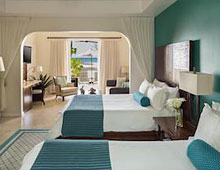
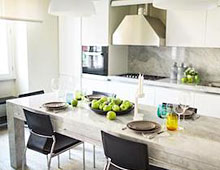
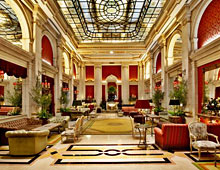
Teramo is a very interesting town that can be visited even during a relaxing weekend break. The city offers a wide choice of accommodation, including hotels, B&Bs and holiday homes, and is able to meet the needs of all travellers.
Staying in Teramo’s historic centre allows you not only to reach the main points of interest on foot but also to sleep in an area rich in shops and restaurants. For those wishing to spend a stay surrounded by nature, we instead recommend opting for one of the facilities outside the centre, nestled amongst olive groves and vineyards.
Teramo is easily accessible by car from various cities in both northern and southern Italy. Bologna is approximately 343 km away, and from there you can reach Teramo by taking the A14 (the Adriatic Motorway) and then taking the Teramo-Giulianova-Mosciano exit. From Rome, you can take the A24 towards Teramo until the Teramo Ovest exit, whilst from Bari you need to take the A14, heading towards Bologna, until the Teramo-Giulianova-Mosciano exit.
The city also has a railway station that connects it to most localities in the region, such as Pescara, Montesilvano and Roseto degli Abruzzi. Finally, the regional bus company TUA and other operators such as Flixbus connect Teramo to other cities including L’Aquila, Pescara and Rome. The nearest airports are Pescara, approximately 74km away, and Rome, about 200km away.
What's the weather at Teramo? Below are the temperatures and the weather forecast at Teramo for the next few days.
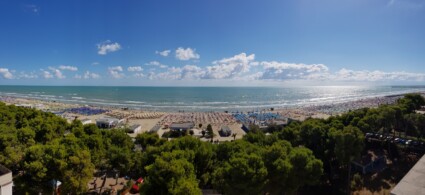
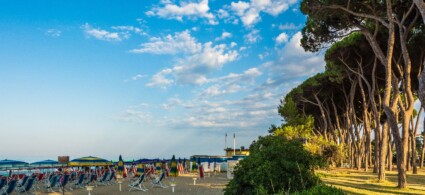
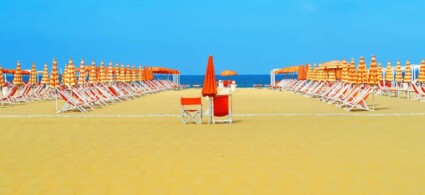
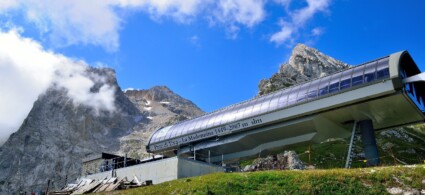
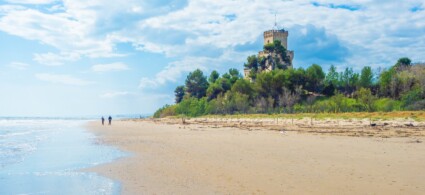
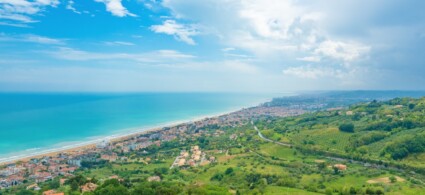
Teramo is ideally positioned between the Adriatic coast, less than 30 km away, and the Gran Sasso massif. The city lies just 30 km from Roseto degli Abruzzi, 58 km from L'Aquila and under 60 km from San Benedetto del Tronto.
 Hotel
Hotel 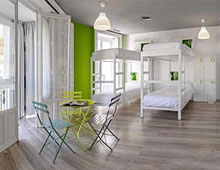 Budget accommodations
  Apartments
  Family Hotel
  Luxury Hotel
  Resorts