B&B La Canfora
Atri - via dei Formali 23
Book now
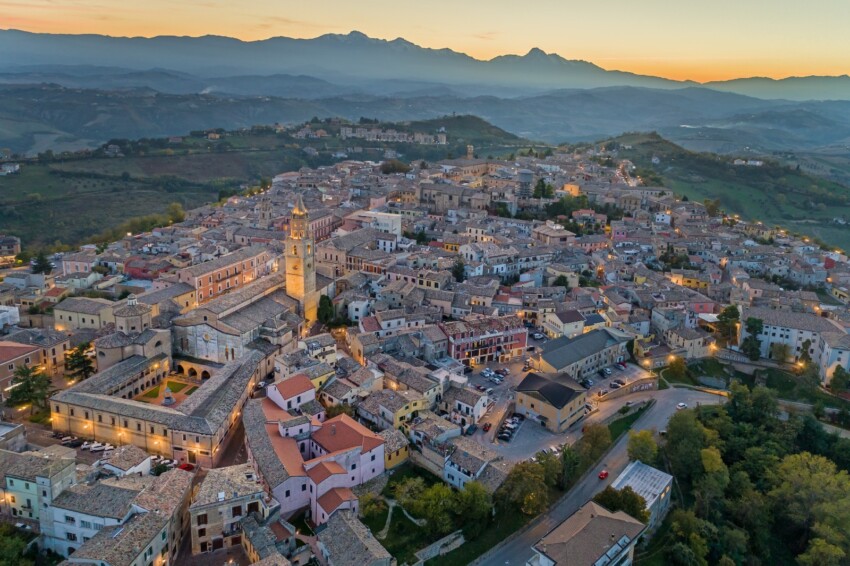
A town with truly ancient origins, Atri stands on a hilltop at 442 metres above sea level in the Terre del Cerrano area. The town sits nestled between the Adriatic Sea and the Gran Sasso massif and emerges as one of Abruzzo’s most important historical centres. Atri boasts a lengthy history – the town was already considered an important commercial hub during the Etruscan age. During the Roman period, Atri was known by the name “Hatria” and according to some sources, Emperor Hadrian is believed to have been born in this very town.
Towards the end of the 14th century, the town became the property of the Count of San Flaviano Antonio Acquaviva and capital of the famous Duchy of Atri. The Acquaviva family dominated these lands until the mid-18th century, when the town came under the control of the Kingdom of Naples.
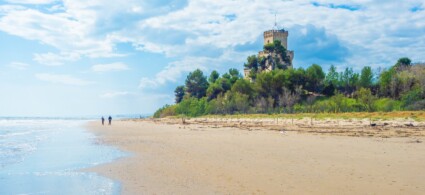
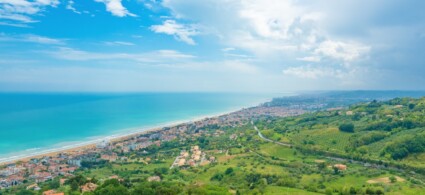
Beyond preserving a truly unique historical and architectural heritage, Atri sits close to important seaside destinations, such as Roseto and Silvi Marina, and not far from the region’s principal parks. All these details make this town the perfect base for exploring the surrounding territories as well. It’s worth noting that Atri has long been renowned for liquorice production, a tradition that appears to date back to Roman times. Tasting Atri liquorice is something you absolutely must do, purchasing it from one of the historic shops in the town centre.
The characteristic village of Atri today presents itself with a compact historic centre that has managed to preserve much of its medieval character. Here you can admire numerous artistic and architectural treasures along with truly evocative views of the surrounding areas.
The town is characterised by the presence of numerous churches, historic palaces and museums. Among the most interesting buildings are the Palazzo dei Duchi Acquaviva, the medieval fortress of Capo d’Atri, the remains of the Roman Theatre and the Municipal Theatre. The richness of Atri’s historical, cultural and artistic heritage bears witness to the great importance the town once held. Among the most characteristic neighbourhoods are Capo d’Atri, Santa Maria and San Giovanni, where you can walk along incredibly narrow streets that allow passage for only one person at a time.
The Santa Maria Assunta Co-Cathedral Basilica was built between the 13th and 14th centuries in place of the Ecclesia de Sancta Maria de Hatria, dating back to the 9th century. This first religious building had in turn been erected on the site where a temple to Hercules once stood.
The façade features a large doorway topped by a rose window and a niche containing a statue of the Madonna and Child. The interior is divided into three naves and preserves important 15th-century frescoes executed by local artists, a 16th-century baptistry and a series of Renaissance chapels.
Adjacent to the Santa Maria Assunta Co-Cathedral, on the southern side, stands the Church of Santa Reparata, whose construction dates to 1355. In the 18th century the religious building underwent major alterations that gave it a baroque style. Currently the Church presents itself externally with a doorway topped by a niche containing a statue of Santa Reparata, the town’s patroness.
The interior features a single nave and displays ornate baroque decorations and, on an altar, statues of the Virgin of Sorrows and the Dead Christ. The most prized item, however, is the large wooden baldachin created by Carlo Riccione in the late 17th century.
[/place]
Also known as the Ducal Palace, the Palazzo dei Duchi Acquaviva was erected in 1395 and for nearly four centuries served as the residence of the Acquaviva d’Aragona family, dukes of Atri. The original complex constructed here was built on the remains of Roman buildings and was then restructured and enlarged several times over the centuries.
Now the palace is home to the Municipal offices and still preserves within it a 16th-century Nativity and some sarcophagus-style coverings, whilst externally a small tower stands out, which was rebuilt in the early 20th century in a medieval style.
Since ancient times, the town of Atri has always been provided with town walls serving to protect the village centre. In the 13th century the historic centre was very probably larger than it is today, with Atri boasting 13 entrance gates and two small fortresses. Towards the end of the 14th century, however, the urban area shrank, forcing the walls to be rebuilt and the number of gates reduced to seven.
The Porta di San Domenico4 is the only one of the seven town gates still standing and takes its name from the church to which it is attached. The gate was built of brick in the mid-16th century, taking as its model the 14th-century gates with their pointed arch.
The Calanchi d’Atri guided nature reserve is a protected natural area covering approximately 380 hectares within the municipality of Atri and is managed by the WWF. The area hosts a wide variety of both animal and plant species.
From a flora perspective, you can find wild gladiolus, capers and liquorice, whilst among the animals you may encounter birds of prey, foxes, moles, hedgehogs, the field lizard, the green lizard and the emerald toad. Here you can walk along beautiful trails either independently or accompanied by expert guides.
In the following map you can see the location of the main places of interest mentioned in this article.
Besides boasting a magnificent historical and archaeological heritage, Atri enjoys an excellent geographical position given its proximity to both the sea and parks. For this reason, the town often serves as a base for visiting the many points of interest in the surrounding area.
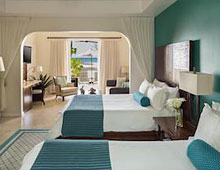
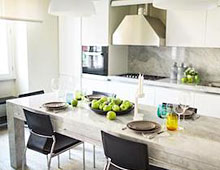
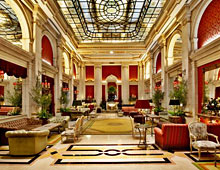
From hotels to bed and breakfasts, Atri is able to offer a wide range of accommodation that meets every requirement and meets high hospitality standards. To visit the town’s main attractions, it’s best to stay in Atri’s historic centre, whilst those wanting to stay closer to nature can sleep near the Calanchi Nature Reserve.
Atri is easily accessible by car from the north via the A14 motorway in the direction of Taranto as far as the Atri-Pineto exit; from here continue along the SP28 road heading towards Pineto. Those coming from Pescara can take the A14 motorway as well, but in the direction of Ancona as far as the Pineto exit. From Rome, you first need to take the A24 and then the A25 towards Chieti-Pescara and, finally, join the A14 as far as the Atri-Pineto exit.
The town of Atri is served by the Pineto-Atri railway station, which is approximately 10 km from the centre. This railway line provides connections to coastal towns such as Pescara, Teramo, Giulianova, and Roseto degli Abruzzi. Bus connections are also available to major Abruzzo towns such as Roseto degli Abruzzi and Pescara, as well as to Rome.
What's the weather at Atri? Below are the temperatures and the weather forecast at Atri for the next few days.
Atri is located in the province of Teramo within the Terre del Cerrano region. The town is 22 km from Roseto degli Abruzzi, 75 km from L'Aquila and 190 km from Rome.
 Hotel
Hotel 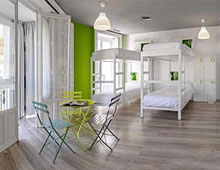 Budget accommodations
  Apartments
  Family Hotel
  Luxury Hotel
  Resorts