Hotel Edelweiss
Pescasseroli - Viale Colli Dell'Oro 10
Book now
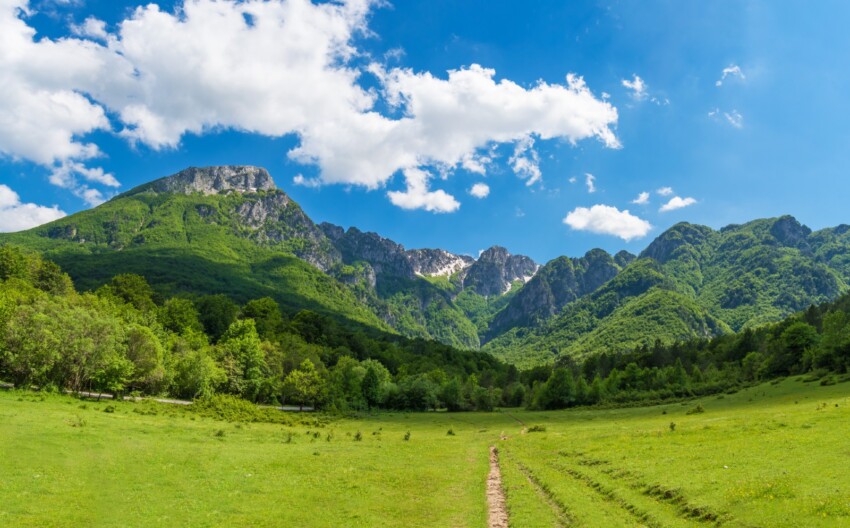
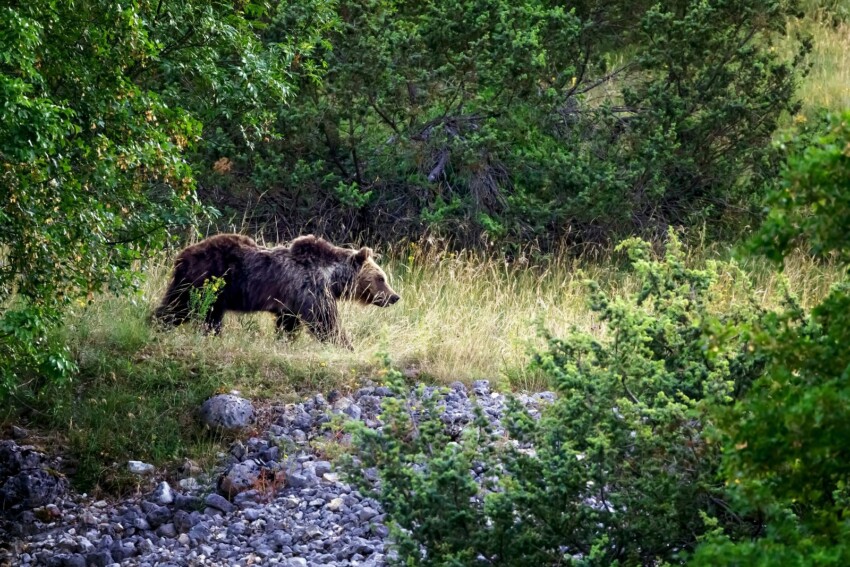
The Abruzzo National Park ranks alongside the Maiella National Park and the Gran Sasso and Monti della Laga National Park as one of Abruzzo’s nationally acclaimed parks, renowned internationally for their natural heritage. In particular, Abruzzo National Park plays an active role in protecting wildlife species such as wolves, Apennine chamois and Marsican brown bears.
Founded on 11 January 1923, it is considered one of Italy’s oldest parks and with its landscapes rich in vegetation and rare beauty, it attracts countless visitors throughout the year. Spanning approximately 50,000 hectares in the heart of the central Apennines, the Park actually extends across the regions of Lazio and Molise, encompassing 25 municipalities in total. In 2017, the beech forests over 500 years old, found among the municipalities of Lecce nei Marsi, Opi, Pescasseroli and Villavallelonga, were recognised as a UNESCO World Heritage Site.
Its truly spectacular natural heritage, the terrain’s configuration, the climate and the small villages that have developed in this area make Abruzzo National Park an ideal destination in every season. Here, you can enjoy various activities such as hiking, horse riding, cycle touring, birdwatching as well as cross-country skiing and alpine skiing at the different ski resorts available.
The park includes twelve Abruzzo municipalities located in the province of L’Aquila, which boast a truly unique historical and architectural heritage, with several of them receiving the Orange Flag award from the Touring Club Italiano.
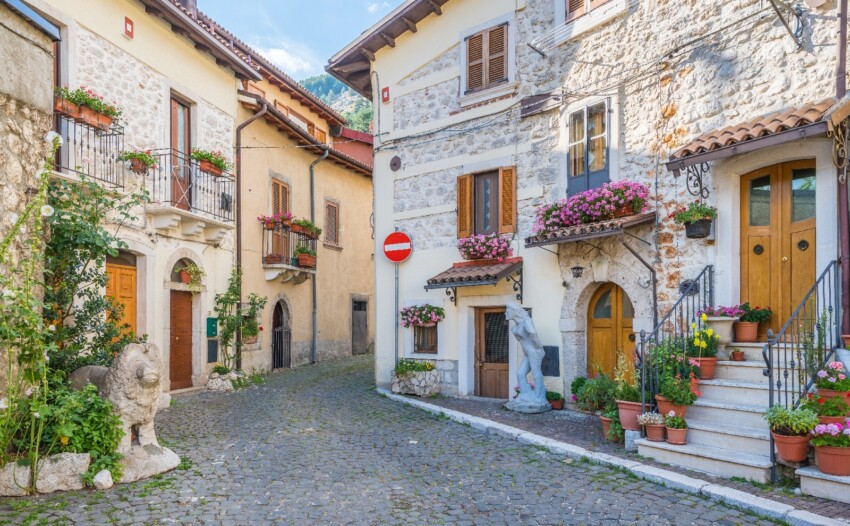
Considered the heart of the Park territory is the town of Pescasseroli, a place that was the birthplace of philosopher Benedetto Croce and which features several points of interest. From the Abbey of Saints Peter and Paul dating back to the 12th century to the Natural History Museum and wildlife park, where specimens of animals born in captivity or injured by traps are cared for and rehabilitated.
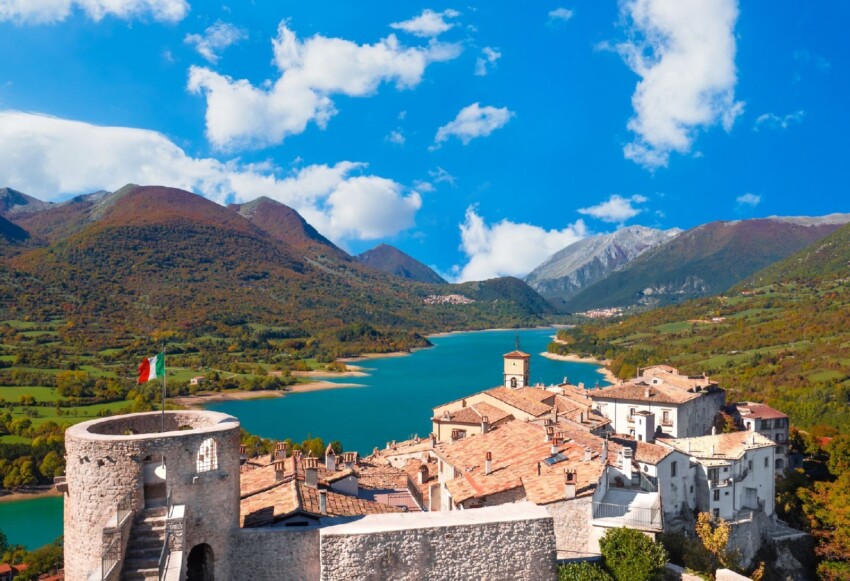
The itinerary through the Abruzzo villages of the park continues through the villages of Barrea2, Villetta Barrea3 and Civitella Alfedena4, three villages steeped in history situated along the shores of Lake Barrea, a stunning artificial lake that, being suitable for swimming in summer, attracts many tourists.
Near here you’ll also find the town of Alfedena5, a picturesque village where the walls of the medieval castle and the Norman Tower with a rectangular floor plan dating back to the 10th century have been remarkably preserved. Furthermore, the town’s position offers a splendid view over Lake Montagna Spaccata.
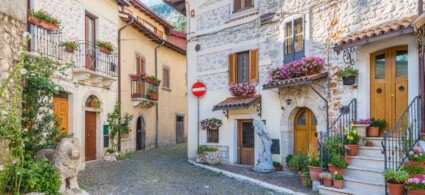
In the Rosa Ditch basin at approximately 1000 metres altitude sits Villavallelonga, a town that still retains its medieval historic centre with narrow, cobbled streets and vertically built houses. A stop at the Bear Museum and wildlife area is a must, where you can admire specimens of bears and deer.
In the lush Val Fondillo valley lies the ancient medieval village of Opi, perched on a rocky spur at 1250 metres altitude, surrounded by the peaks of the Monti Marsicani mountains. In addition to being part of the “Most Beautiful Villages in Italy” club, the town is also a site of archaeological finds. Here, both remains of a necropolis dating to between the 7th–5th centuries BC and Palaeolithic artefacts have been discovered. Don’t miss a visit to the Abruzzo Chamois Museum.
In the Giovenco Valley sits the small village of Bisegna, strategically positioned to control the valley, which has always been one of the most important access routes to the Marsica area. The historic centre is still well preserved and winds around two streets. The first is located in the upper area and is known as Via di Sopra, where you’ll find structures such as the medieval tower and baronial mansion, whilst the other is Via di Sotto, located in the lower nucleus and characterised by narrow, winding lanes and steep staircases.
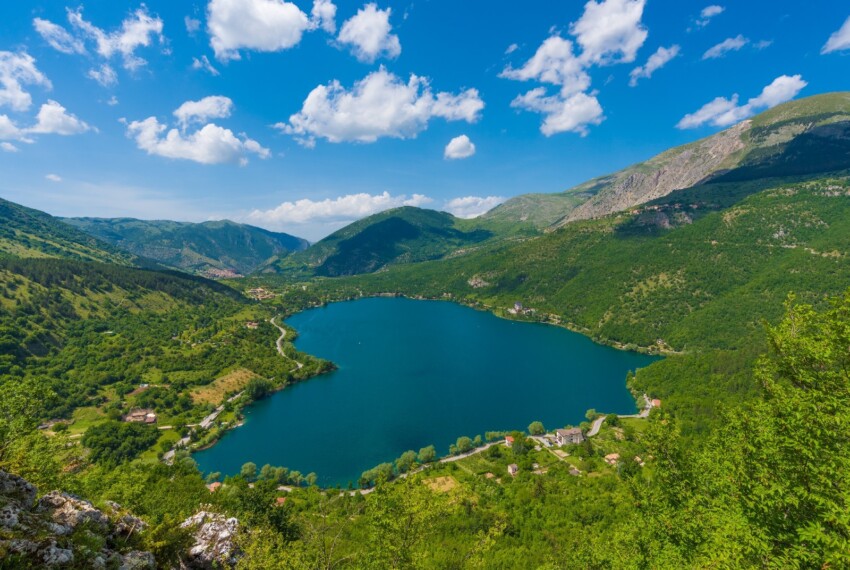
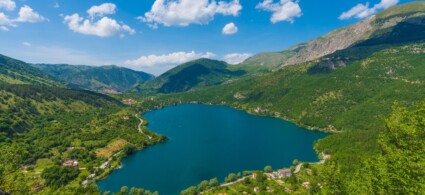
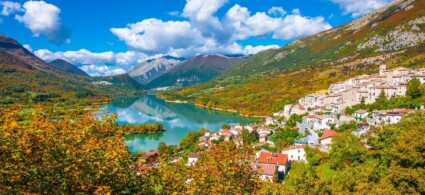
On the border with Bisegna lies Scanno, situated at 1050 metres altitude on a slope of Montagna Grande and also known as “the photographers’ town”, because its landscapes have captivated famous photographers such as Henri Cartier-Bresson. At the foot of the town is Lake Scanno, a body of water created by an ancient landslide. Its medieval historic centre houses the Church of Santa Maria della Valle, dating back to the 13th century, and a series of intricate alleyways where you’ll find decorated doorways, noble mansions and ancient arches.
Among the park’s villages are also Gioia dei Marsi, Lecce nei Marsi and Ortona dei Marsi, towns that once lay in the territory of the Marsi, an ancient Italic people who inhabited the area around Lake Fucino. Gioia dei Marsi is characterised by a very evocative historic centre surrounded by truly marvellous natural scenery. Don’t miss a visit to the Tower of Sperone, built in the 13th century, and the town’s Gioia Vecchia district.
Lecce nei Marsi is a small village characterised by ancient and distinctive charm, presenting itself as the perfect destination for those seeking a stay focused on archaeology, history and nature, thanks to the presence of the remains of Litium Castle and its fortified centre.
Ortona dei Marsi, finally, presents itself as a very characteristic town, surrounded by various terrains hosting fruit trees, including apple trees that produce the famous “limoncella apples”. Among the main points of interest are the Medieval Tower and the Church of San Giovanni Battista.
In the following map you can see the location of the main places of interest mentioned in this article.
In most of the towns located within the National Park there are visitor centres, which are information centres where you can obtain informational material about the park and organise hiking routes. These facilities can host museum areas and botanical gardens and educational and thematic activities are also organised here.
The Pescasseroli Visitor Centre houses an information centre that provides guidance for all visitors interested in discovering the Park’s trails, as well as a Natural History Museum dedicated to the flora and fauna of Abruzzo National Park. Other sites of interest include the Botanical Garden and Apennine arboretum where you can admire specimens of Apennine flora and the Wildlife Park, home to specimens of the Park’s main fauna that have been found injured and are cared for at this facility.
The Civitella Alfedena visitor centre hosts not only an information office but also the beautiful Apennine Wolf Museum and the Apennine Wolf Wildlife Area. These facilities aim to raise awareness of the Apennine wolf species that inhabits the park; within the wildlife area it is also possible to admire some specimens in a semi-free state.
In the splendid village of Villavallelonga stands the Bear Visitor Centre, which aims to provide information not only about the Park but particularly about the Marsican Brown Bear, considered one of the Park’s symbols.
Next to the Bear Museum, which provides information about this plantigrade and also features special sections for children, you’ll find the Wildlife Area and Nature Trail where a path leads to an area that hosts a Marsican Brown Bear specimen in a semi-free state.
The village of Bisegna is home to the North entrance of Abruzzo, Lazio and Molise National Park. Here you’ll find a recently renovated Service Centre from which a trail departs, developing through the splendid Giovenco Valley and designed to showcase four plant species typical of this territory: beech, maple, apple and pine.
The centre is also available to organise educational and informative activities, as well as provide support with booking excursions and hiring mountain bikes.
With over 150 hiking routes covering a total distance of more than 750 km, the Park offers an extensive network of trails of varying difficulty, crisscrossing throughout its territory. In addition to routes you can walk, there are trails available for horse riding or mountain biking. There are also Nature Trails, easy or moderately challenging routes suitable for adults and children, starting from small villages and allowing you to discover truly wonderful landscapes.
Among the most recommended trails is the one departing from Barrea’s centre and reaching Lago Vivo (1591 metres altitude), allowing you to walk surrounded by the peaks of Tartaro, Altare and Petroso. Another very scenic route departs from Civitella Alfedena and reaches Rifugio di Forca Resuni (1952 metres) crossing the Val di Rose. In July and August access is limited to a set number, so it’s necessary to contact the Park Authority offices in Civitella Alfedena or Pescasseroli in advance.
In the Alto Sangro area, finally, one of the most panoramic excursions is undoubtedly the route ascending Val Fondillo, a path with approximately 600 metres of positive elevation gain. The starting point is Val Fondillo (Opi) and the endpoint is Valico Passaggio dell’Orso, where you walk surrounded by the peaks of Monte Amaro and Monte Marsicano.
If you want to fully enjoy the beauties and opportunities of the Park, the recommendation is to stay in one of the main towns located within the Park such as Pescasseroli, Civitella Alfedena or Barrea.
These towns, in fact, offer a good range of accommodation facilities from hotels to B&Bs, from high-altitude mountain huts to campsites. Numerous are the localities and villages that have managed to combine unique historical heritage with the protection and enhancement of natural heritage.
Those wishing to visit the Park for the day can choose to stay in one of the towns located outside it, which are a perfect starting point, such as Avezzano, Sulmona or Castel di Sangro.
Abruzzo National Park is easily accessible by car for those coming from major Italian cities. From Ancona, you need to take the A14 first, then the A25 until the Celano or Pescina exit, then continue on the SS 83 Marsicana towards Bisegna, Pescasseroli or Gioia dei Marsi.
Coming from Rome, you must take the A24 motorway, then the A25, and exit at Celano or Pescina, then continue on the SS 83 Marsicana to your desired location. Those arriving from Naples should take the A1 motorway until the Caianello exit, then continue towards Venafro and Alfedena.
Those wishing to reach the Park by train can do so by arriving at the railway stations of Avezzano (Rome-Pescara line) or Castel di Sangro (Sulmona-Castel di Sangro line) and then continuing from there by buses of the Abruzzo TUA company.
In summer, the Sangritana company organises the “Parks Coaches“, coach services from Rome to Abruzzo National Park, touching various municipalities.
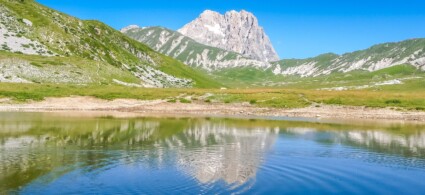
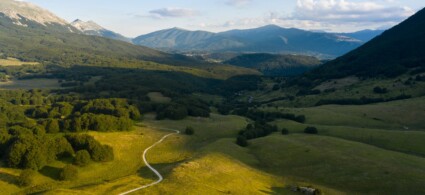
The Abruzzo, Lazio and Molise National Park is located mostly in Abruzzo territory, though smaller sections extend into the provinces of Frosinone and Isernia. Nestled amongst the peaks of the Apennines, the Park sprawls primarily across the Upper Sangro region, surrounded by the Marsican Mountains and the valleys of the Gizio and Tasso-Sagittario rivers, which separate it from the Majella Park.
 Hotel
Hotel  Budget accommodations
  Apartments
  Family Hotel
  Luxury Hotel
  Resorts