Hotel Nido dell'Aquila
Assergi - loc. Fonte Cerreto
Book now
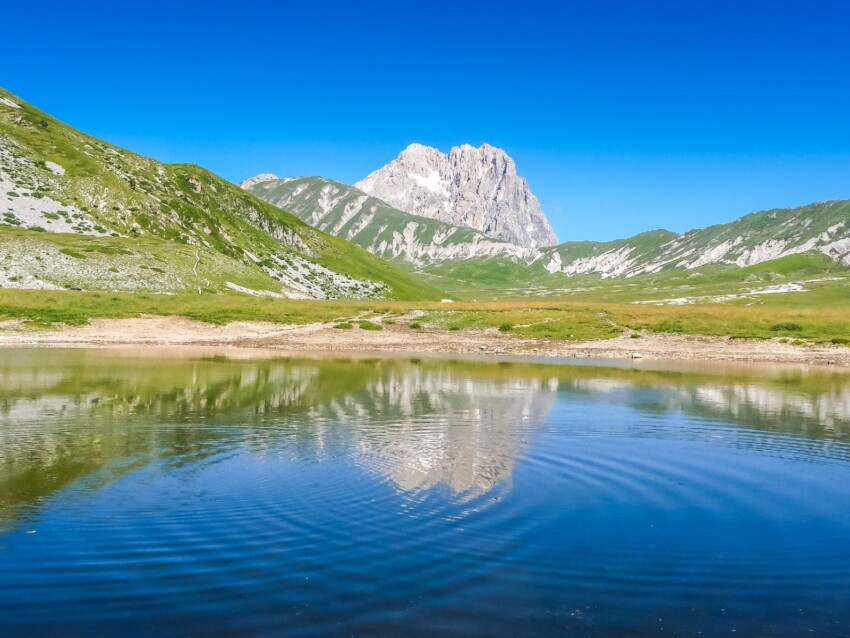
The Gran Sasso and Monti della Laga National Park is one of three national parks in Abruzzo and one of Italy’s largest protected natural reserves. The Park’s environmental, tourism and cultural project aims not only to safeguard the natural beauty of this area but also to protect and enhance a heritage made up of centuries-old traditions.
Within the Park, the landscape is largely mountainous, with more than twenty peaks exceeding 2,000 metres in altitude, and is characterised by the presence of three mountain ranges: the Monti Gemelli, the Monti della Laga and the Gran Sasso d’Italia chain. The Park’s geographical position, its relief features and the variety of landscapes bring remarkable richness in terms of both flora and fauna.
The Park’s size has led to the creation of 11 environmental tourism and cultural districts, areas within which tourism activity enhancement and coordination projects can be activated. Forests cover approximately half of the Park’s mountainous territory, featuring numerous types of woodland including holm oaks, oak trees, poplars, chestnuts, beeches and birches, which in different seasons of the year create landscapes of wonderful colours.
The agricultural landscape of Gran Sasso presents itself as an ancient and diverse landscape with roots in the Italic period. In particular, the southern slope of Gran Sasso not only features extensive pastoral areas but also the presence of open fields, saffron cultivation, olive groves and vineyards.
Natural aspects are not the Park’s only beauty, which is distinguished by the existence of a perfect blend between nature and urban settlements. Within the park, there are several fortified villages and towns which, thanks to their architectural and cultural peculiarities and their gastronomic and folklore traditions, are truly unique destinations.
The Gran Sasso and Monti della Laga National Park encompasses a truly vast and diverse landscape. From the high peaks of the Gran Sasso massif to the green woodlands of the Monti della Laga, from the Calderone glacier to the long stretches of pastureland, the Park is a territory that, thanks to its beauty, captivates tourists, visitors and outdoor enthusiasts throughout the year.
The Park is distinguished by the presence of people who have managed to create perfect harmony with the nature of these areas and by the presence of numerous villages of medieval origin that have preserved their historical character. In terms of vegetation, the Park boasts more than 2,000 plant species living in different environments, whilst regarding fauna, you will find Abruzzo chamois, deer, roe deer and the Apennine wolf, as well as many rare birds of prey such as the golden eagle, the eagle owl and the peregrine falcon.
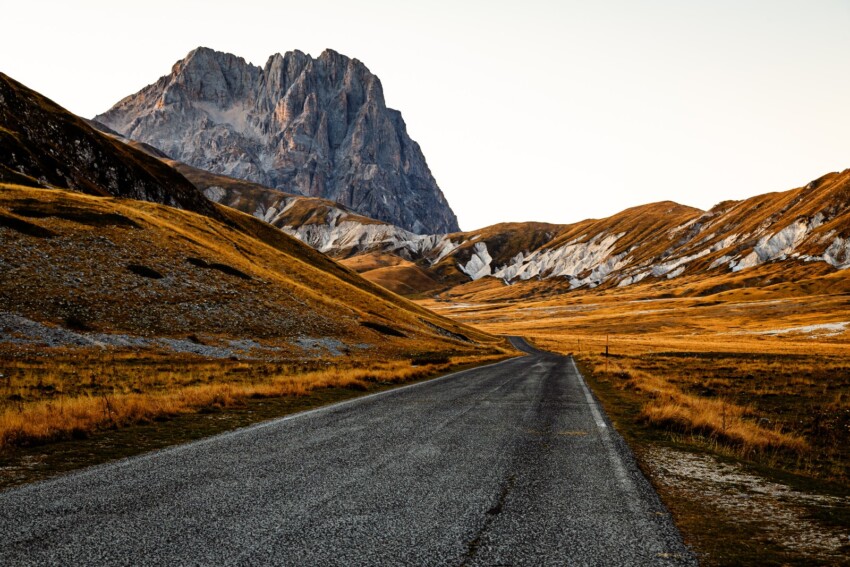
Gran Sasso d’Italia is the highest mountain range in the Apennines and is located on the border between the provinces of L’Aquila, Teramo and Pescara. The highest peak is Corno Grande, which at 2,912 metres altitude and with its four summits (Vetta Occidentale, Torrione Cambi, Vetta Centrale and Vetta Orientale) protects and surrounds the Calderone basin. This cold basin is home to the so-called Calderone glacier, Europe’s southernmost glacier.
Among the other highest peaks are Corno Piccolo, Pizzo Intermesoli and Monte Corvo. In addition to hosting several climbing routes on rock, snow or ice, this massif is characterised by the presence of numerous trails of varying difficulty and length that allow you to admire the beautiful landscapes this land offers.
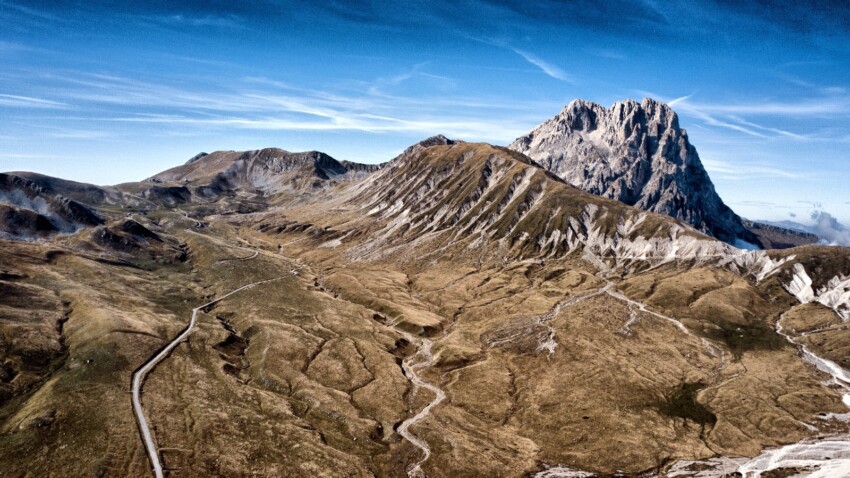
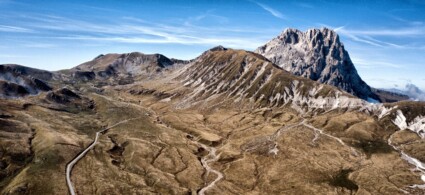
Known as the “little Tibet”, Campo Imperatore sits at 1,800 metres altitude at the foot of the mighty Gran Sasso. The plateau is considered the most extensive in the Apennine area and is a place characterised by wonderful landscapes and breathtaking views.
Amongst grazing animals, canyons, small lakes and gentle hills, Campo Imperatore presents itself as a truly special destination in every season of the year. This place is considered the home of outdoor activities, as with walking routes, cycling and horse riding trails and many other possibilities, it is a true mecca for many enthusiasts.
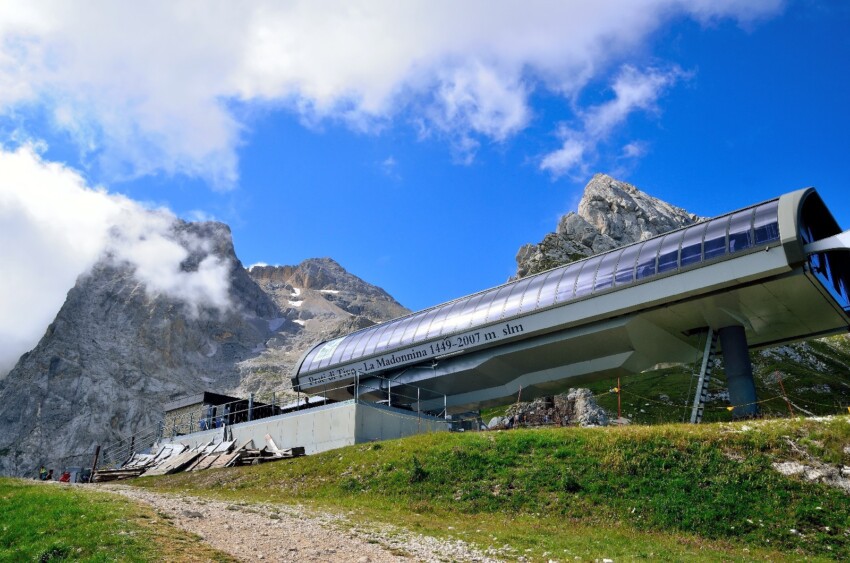
Pietracamela3 is a small medieval village located on the slopes of Corno Piccolo. Listed in the “Most Beautiful Villages in Italy” club, Pietracamela is a town that developed around the 12th century following invasions that prompted Abruzzo’s populations to build villages at the foot of the mountains in difficult-to-access locations.
Pietracamela is an unmissable destination precisely for the incomparable beauty of its surroundings, and from the town several hiking trails depart, such as those leading to the springs of the Rio Arno, the Madonnina del Gran Sasso or Rifugio Franchetti. From the town centre you can also easily reach the renowned ski resort of Prati di Tivo.
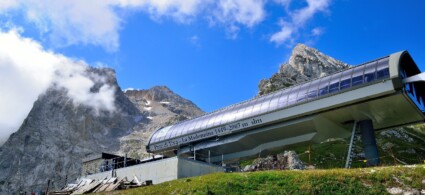
Prati di Tivo4 is a hamlet of Pietracamela located at approximately 1,450 metres altitude. This tourist destination is distinguished as the largest ski resort in Teramo province. Prati di Tivo is very popular both in summer, for its numerous outdoor activities, and in winter, when skiing enthusiasts can enjoy 20 km of downhill slopes that wind at the foot of Corno Piccolo.
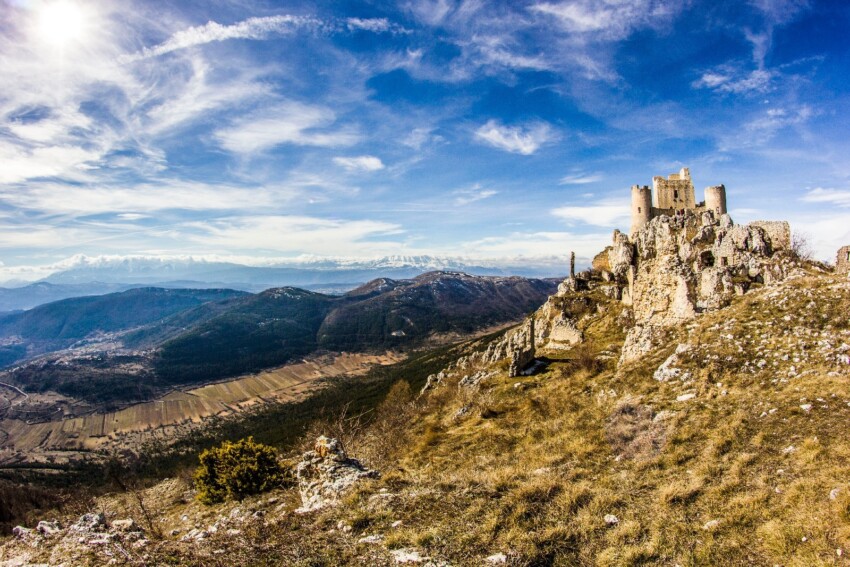
An evocative and enchanting fortress located at 1,460 metres altitude, Rocca Calascio is certainly a must-see stop during a visit to discover the Park.
Rocca Calascio, a hamlet of the municipality of Calascio, houses an ancient defensive structure with a square plan and circular towers at the corners with a square keep in the centre.
Given its position overlooking the entire Tirino valley and the Piana di Navelli, the fortress has always served an important defensive and surveillance function. Today, Rocca Calascio is particularly appreciated for its history and the breathtaking landscapes it offers, so much so that some film directors have chosen this location to shoot film scenes such as “Ladyhawke”, “The Name of the Rose” starring Sean Connery and “My Friends”.
Fonte Vetica is a location within the municipality of Castel del Monte and sits at 1,632 metres altitude at the eastern end of Campo Imperatore. The area is famous for the presence of numerous hiking routes and because here you’ll find the “butchers’ zone“, an area that hosts refreshment points selling cold meats, cheeses, fresh meat and local products which you can then cook in specially equipped areas.
Among all these refreshment points, the most famous is certainly the Ristoro Mucciante, a mountain refuge that sells local specialities and which, thanks to the presence of specially equipped areas, gives visitors the opportunity to prepare and enjoy the products they’ve purchased. The refuge welcomes during the fine season not only hikers and campers but also motorhome users and motorcyclists who come here for the scenery, the company and excellent food.
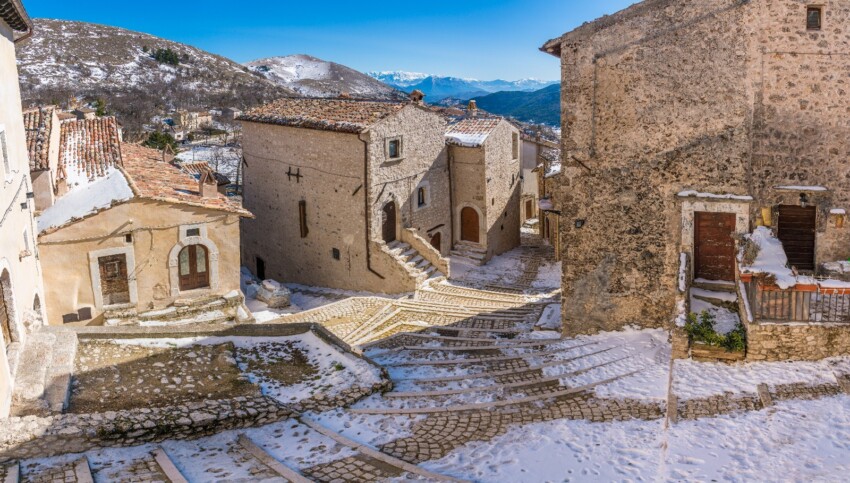
A small medieval village perched on a hilltop at 1,251 metres altitude, Santo Stefano di Sessanio is certainly the most enchanting destination in Gran Sasso National Park. Built entirely in white limestone, Santo Stefano preserves a small fortified historic centre of incredible beauty.
The charm of this place captivated Swedish entrepreneur Daniele Kihlgren, who created the “diffuse hotel” project Sextantio here. Staying in Santo Stefano is indeed like stepping back in time, as Kihlgren has acquired some of the abandoned dwellings and, preserving the village’s aesthetics, has renovated them, converting them into hotels or hospitality facilities.
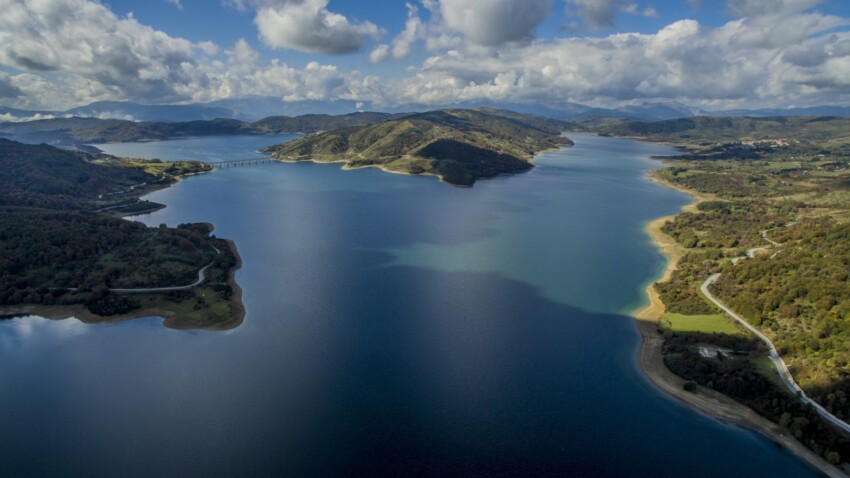
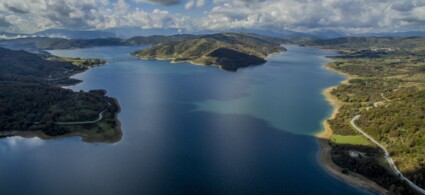
Campotosto Lake, situated at 1,313 metres altitude, is Abruzzo’s largest artificial basin and nestles between the northern slope of Gran Sasso d’Italia, the Monti della Laga and the Monti dell’Alto Aterno. Surrounded by lush vegetation, the lake plays a very important role for birdlife which finds its ideal habitat here in different seasons of the year.
During migration periods in particular, this expanse of water hosts thousands of waterbirds such as the grey heron, the great crested grebe, the mallard and the great crested grebe. The lake also attracts many tourists and sports enthusiasts who come to this location to pursue various activities such as windsurfing, canoeing, cycle touring, fishing and trekking.
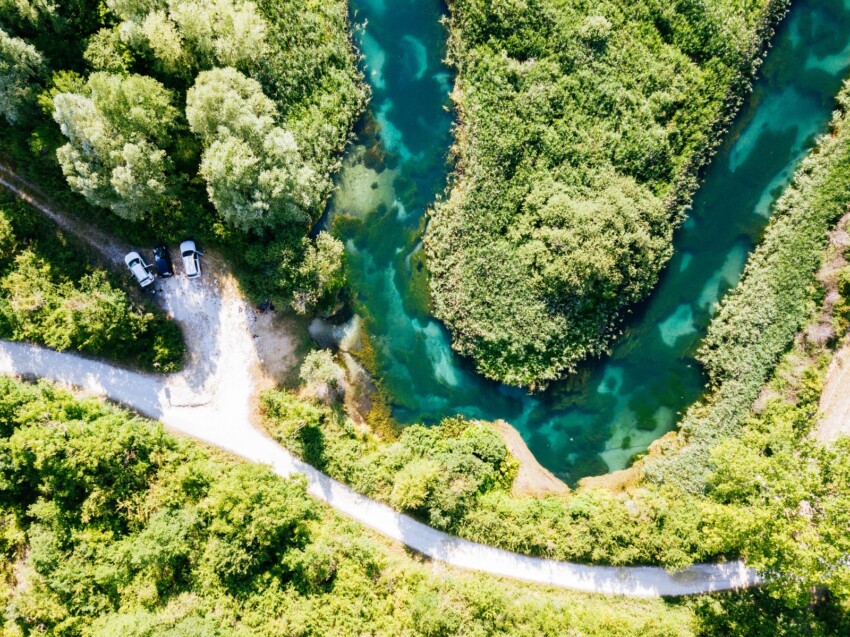
The Tirino Valley is a place immersed in the green of nature that rises around the course of the Tirino river, one of Italy’s most beautiful and clean waterways. The Valley, located at approximately 350 metres altitude, is framed by important massifs such as the heights of Rocca Calascio, Castel del Monte and Serra di Navelli.
Known mainly for its natural beauty, the Tirino Valley is an excellent location for hiking enthusiasts who can follow routes on foot, by bike or on horseback, whilst on the crystal-clear waters of the Tirino river you can practise canoeing or sport fishing. Beyond this, the valley also features sites of historical and archaeological interest such as the Piccolomini castle in Capestrano, the Capestrano archaeological area and the Castle of the Dukes of Cantelmo in Bussi.
The Valle delle Cento Cascate (or Cento Fonti di Cesacàstina) takes its name from the large number of small waterfalls present in this area. In the Monti della Laga range, amongst forests of ancient beech trees and wild flowers, the Valley owes its fame to the various springs which, fed by the Fosso dell’Acero stream, gush forth from Monte Gorzano and form hundreds of splendid waterfalls.
This is an area frequented by various animal species such as wolves, deer, foxes, and also the golden eagle which has been nesting in these places for years.
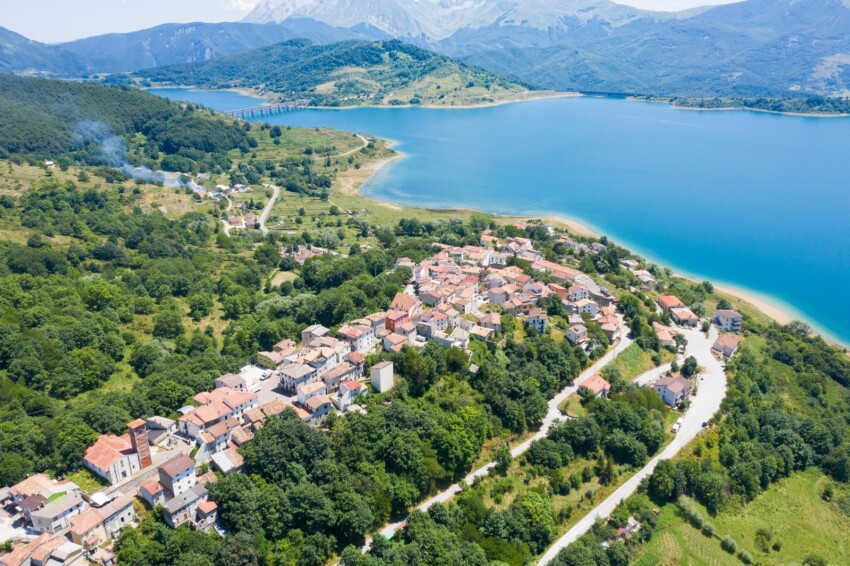
The Park encompasses forty Abruzzo municipalities, ranging from small villages to larger towns. These settlements boast a truly unique historical and architectural heritage, with many recognised as part of the “Most Beautiful Villages in Italy” club.
L’Aquila, a city steeped in ancient history that has managed to preserve much of its medieval urban layout, is not only Abruzzo’s regional capital but also the principal base for exploring Gran Sasso National Park. Although only part of L’Aquila’s territory lies within the Park, the city is unmissable when visiting this area.
L’Aquila is part of the Strada Maestra District, considered the heart of the Park, where the Gran Sasso massif meets the Monti della Laga range. Another essential destination is Campotosto, a celebrated village on the border between Abruzzo, Marche and Lazio, renowned for Lake Campotosto, Abruzzo’s largest artificial lake.
The itinerary continues through Barisciano, a medieval hamlet perched at 940 metres altitude, which, thanks to its position, is dubbed the “Gateway to Gran Sasso National Park”. Other ancient historic centres on the Gran Sasso are Calascio and Santo Stefano di Sessanio. Calascio is famous for its hamlet of Rocca Calascio, standing at 1,460 metres and hosting the remains of a fortress built around the 14th century. Santo Stefano di Sessanio, meanwhile, is a truly enchanting village recognised within the Most Beautiful Villages in Italy club. Built between the 11th and 12th centuries, this hamlet has preserved its medieval urban structure, harmoniously integrated with the surrounding landscape.
Castel del Monte is also listed among Italy’s most beautiful villages and has perfectly maintained its original character and several ancient buildings, including the Church of S. Marco and the imposing square tower, the city’s true symbol.
The village tour continues through two peaceful L’Aquila hamlets, Carapelle Calvisio and Castelvecchio Calvisio, distinguished not only for their charm but also for the peace and serenity they exude.
The Park’s area, once a borderland between the Papal States and the Kingdom of Naples, is known as the District of Two Kingdoms and hosts numerous locations combining architectural beauty with striking natural environments. Civitella del Tronto stands out, renowned for its architectural heritage and the Salinello Gorges.
Worth mentioning are the charming villages of Campli, with ancient origins, Torricella Sicura and Valle Castellana, boasting scenic wonders and pristine locations. Finally, at the foot of Corno Piccolo sits Pietracamela, a village founded in the 11th century, characterised by a small stone settlement nestled entirely within nature. Its priceless asset is undoubtedly the spectacular view of Gran Sasso visible from here.
In the following map you can see the location of the main places of interest mentioned in this article.
Many towns within Gran Sasso National Park host facilities dedicated to visitor reception, where guests can access information materials about the park and hiking routes. These facilities include museums, visitor centres or information points.
In L’Aquila province, you’ll find the Santo Stefano di Sessanio Visitor Centre, offering fascinating insights into the Baronia Lands, and the Antiquarium in Assergi, housing artefacts from the area dating to the Palaeolithic, Neolithic and Bronze Age. The same province also features the Flower Museum in Barisciano, showcasing the Park’s botanical richness and diversity, the Wood Museum in Arischia and the Fortifications Museum in Calascio.
In Teramo province, you’ll discover the Sant’Angelo Cave Museum in Civitella del Tronto and the Ecomuseum of Castellano Lands in Valle Castellana, which explores the natural heritage and historical-artistic legacy of the Park’s northernmost section, bordering the Sibillini Mountains.
The town of Arsita hosts the Wolf Museum, whilst Farindola features the Chamois Museum. Isola del Gran Sasso is home to the Water Museum, Pietracamela to the Mountaineering Museum, and Bussi sul Tirino to the Tirino River Visitor Centre.
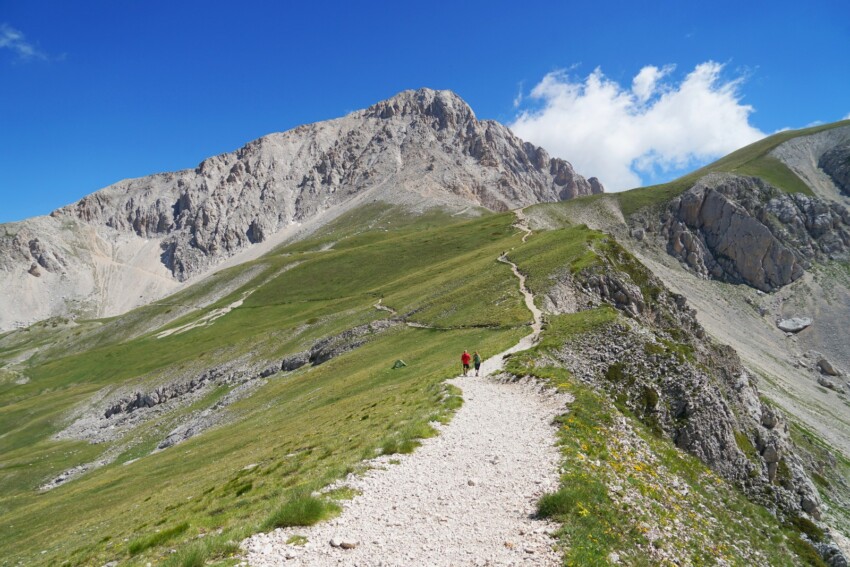
Gran Sasso National Park features numerous hiking routes suitable for walking, horse riding or mountain biking, as well as wine and gastronomy itineraries and cultural tours. One of the most renowned is undoubtedly the Gran Sasso Bridle Path, a circular hiking trail encircling the Gran Sasso d’Italia massif, spanning approximately 320 km. This experience can be completed on foot, horseback or mountain bike.
The Sentiero Italia CAI is another celebrated long-distance hiking route prized by trekking enthusiasts, crossing the Italian peninsula from north to south. Stretching over 7,000 kilometres, Sentiero Italia is considered one of the world’s longest trekking routes and traverses Gran Sasso National Park across 14 stages, alternating visits to ancient villages with stunning natural environments such as peaks, lakes and crystal-clear rivers.
Equally abundant are scenic walks leading to medieval villages, ancient hermitages, water mills, waterfalls and necropolises, alongside itineraries exploring this historic region’s gastronomic and agricultural excellence.
To fully experience this environment’s atmosphere, we recommend staying within Gran Sasso National Park. Numerous towns and localities offer extensive accommodation choices including hotels, B&Bs and campsites.
Those seeking a cultural stay can choose facilities in small villages like Santo Stefano di Sessanio, Barisciano, Rocca Calascio or Civitella del Tronto. L’Aquila, distinguished by its historical, cultural and architectural heritage, makes an excellent base for exploring Gran Sasso National Park and numerous other points of interest.
Those preferring a nature-focused stay can opt for localities surrounded by greenery and tranquillity, hosting excellent hotels, hostels, campsites and mountain refuges.
Those wishing to visit the Park as a day trip can choose accommodation in towns outside the Park but equally accessible, such as Pescara, Chieti, Teramo and many others.
To reach Gran Sasso and Monti della Laga National Park, driving is undoubtedly the best option. Directions vary depending on which locality you’re heading to.
From the north, you can take the A14 Adriatica Motorway and exit at San Benedetto del Tronto, Giulianova/Teramo or Pescara Nord. Those using the A24 Motorway can take the Assergi exit, whilst those on the A25 can exit at Castiglione a Casauria.
Buses from local transport (the Abruzzo-based TUA company) connect various regional destinations, whilst other operators like Flixbus and Gaspari Bus link major Abruzzo cities with other Italian locations including Rome, Bologna and Naples. Several Park towns also have railway stations, such as L’Aquila, situated along the Terni–L’Aquila–Sulmona railway line.
The Gran Sasso and Monti della Laga National Park lies nestled in the heart of the Apennines and spans an area of approximately 150,000 hectares, predominantly across Abruzzo territory, with smaller portions extending into the Lazio and Marche regions. Bordered by the Majella Park and the Abruzzo National Park, the park stretches across the provinces of Teramo, L'Aquila, Pescara, Rieti and Ascoli Piceno.
 Hotel
Hotel  Budget accommodations
  Apartments
  Family Hotel
  Luxury Hotel
  Resorts