Pacentro Dimora del Castello
Pacentro - 22 Via Largo delle Aie
Book now
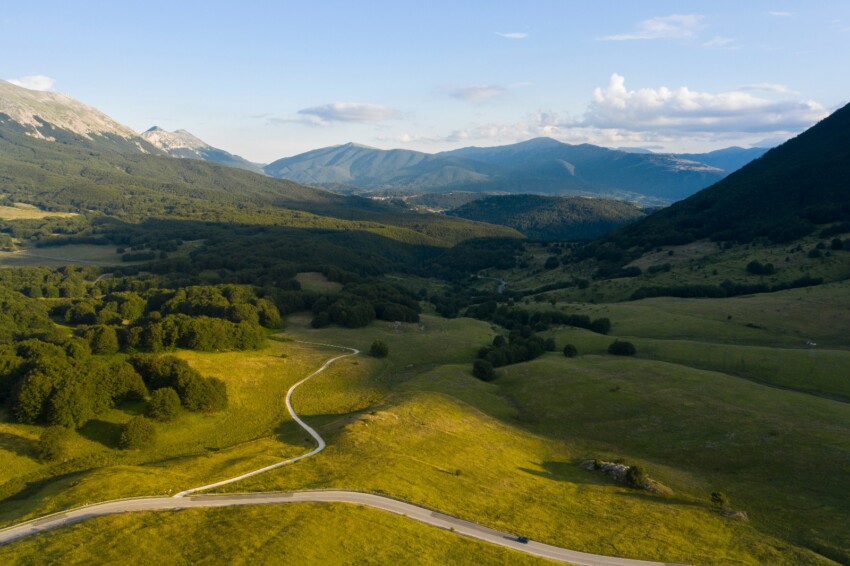
The Maiella National Park (or Majella) is considered one of Abruzzo’s green lungs – a natural oasis featuring diverse plant species, rare animals, towering peaks and countless trails to explore on foot, by bike or on horseback.
Established in 1991, the Park encompasses the vast Maiella massif, the Morrone mountains, the Pizi peaks and the Monte Porrara range; over half its territory sits above 2,000 metres, with the highest summit being Monte Amaro1 at 2,793 metres altitude.
Most of the Park’s peaks, however, have a rounded appearance and are not particularly steep – characteristics that make them accessible even to less experienced hikers, though you should still be prepared for long, arduous climbs. Your efforts are rewarded with panoramic views that stretch from the Gargano to the Conero.
Within the Maiella Park territory there are seven state nature reserves, and botanists have recorded over 2,100 plant species, several of which were first discovered here. The Park is also the ideal habitat for numerous animal species, some extremely rare. Its multiple ecosystems support more than 150 animal species, including the Apennine wolf, the Abruzzo chamois, the golden eagle, red deer, the Marsican brown bear and the rare Kentish plover.
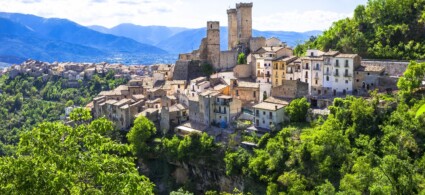
Among hilltop villages, small hamlets, abbeys and hermitages built in isolated locations, Maiella National Park also preserves numerous sites of great interest that will captivate all lovers of history, art and archaeology.
The Park is a destination for every season. During the summer months you can hike and enjoy outdoor activities on foot, mountain bike or horseback, while in winter Maiella Park becomes a paradise for skiers. It boasts 5 ski resorts offering alpine skiing, cross-country skiing and snowboarding.
Given the vast expanse of the Park and its many points of interest, it’s genuinely difficult to compile a definitive list of things to see: this entire area deserves to be visited and explored. This wonderful zone not only hosts breathtaking landscapes but also special, characteristic villages rich in history and culture, with many settlements that are genuine gems nestled among the mountains.
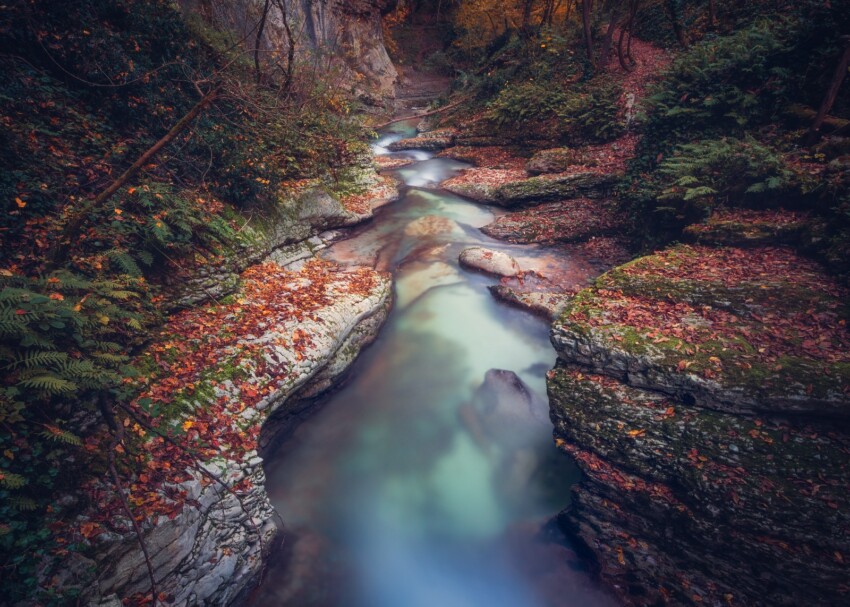
Nestled in the beautiful setting of Valle dell’Orfento, Caramanico Terme is renowned for its splendid thermal spa. The town boasts two mineral waters: one sulphurous and anti-inflammatory, the other oligomineral and diuretic. Visitors from across Italy come to Caramanico Terme not only for therapeutic and preventative treatments but also for its wellness facilities offering massages, physiotherapy and thermal beauty treatments.
Caramanico is also ideal for those who love hiking and trekking, with numerous trails through the countryside departing from here leading to the Valle dell’Orfento.
Considered the Park’s second massif after Maiella, the Morrone Massif features highly varied environments characterised by beech forests, meadows, rocky terrain and pastures. Separated from the Maiella range by San Leonardo Pass, its main peak reaches 2,061 metres altitude.
On a terrace of Monte Morrone stand the remains of a Roman sanctuary dedicated to Hercules Curinus, whilst two caves served as hermitages for prayer under Pope Celestine V, also known as Saint Peter of Morrone. The Morrone mountain is crossed by numerous trails, including the Park Trail and the Spirit Trail, which wind along high routes and enable visits to the hermitages of Saint Onofrio and Saint Peter.
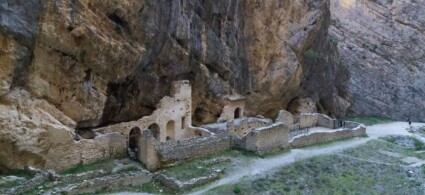
The Hermitage of Saint Onofrio of Morrone, dating from the thirteenth century, comprises a small chapel and residential quarters. The church has a rectangular layout with a fifteenth-century wooden ceiling, and the left wall features fifteenth-century frescoes. The hermitage’s oldest section consists of a small oratory and two rooms identified as the cells of friars Peter of Morrone and Robert of Salle.
The hermitage is reached via the Trail S (or Spirit Trail), which passes through all the eremitic places of worship on Maiella. In July 1294, papal envoys climbed the massif to reach the hermitage and announce to Friar Peter of Morrone his election as Pope.
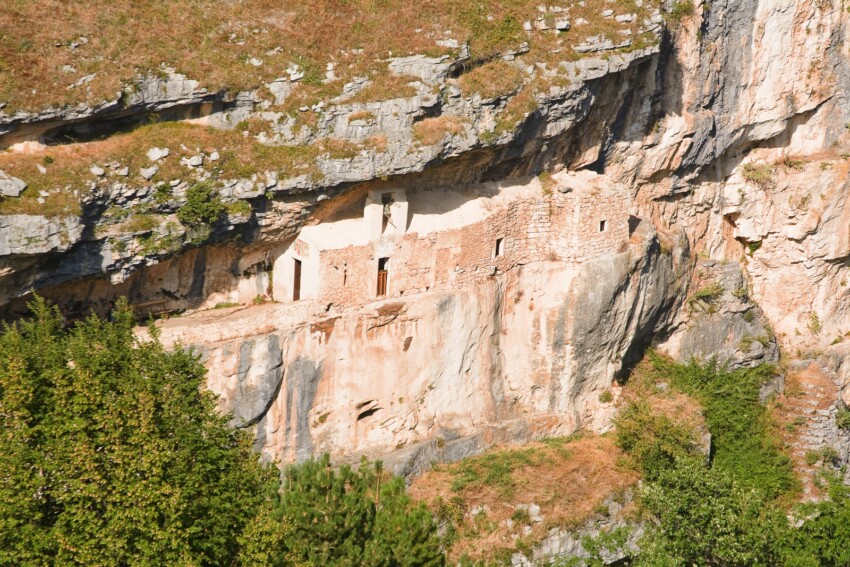
San Bartolomeo in Legio is a hermitage carved almost entirely from rock, apparently dating from the thirteenth century. Inside the building is a small spring known as the Water of Saint Bartolomeo, renowned for its purported healing properties.
The façade features two panels frescoed in the thirteenth century, whilst the altar dates from the sixteenth century, with a niche above it containing a nineteenth-century wooden statue of San Bartolomeo.
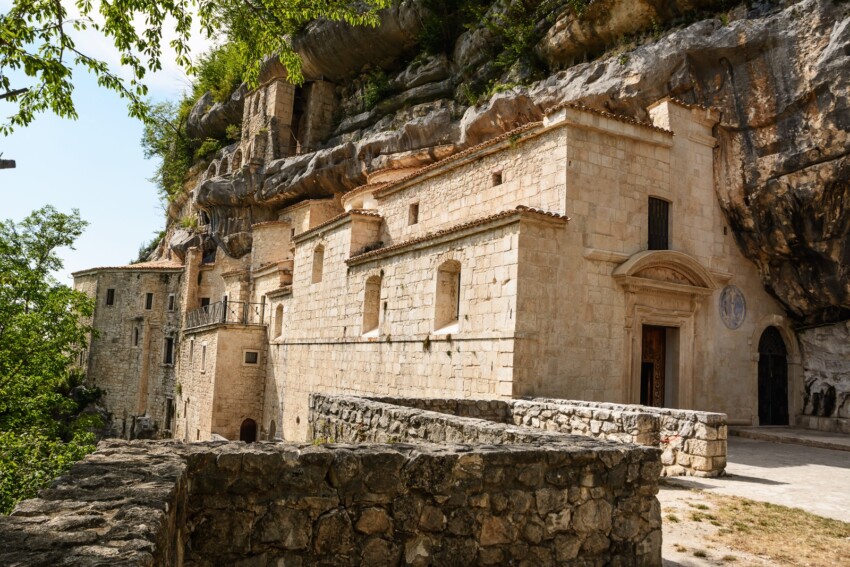
Founded by Friar Peter of Morrone in the thirteenth century, the Hermitage of Holy Spirit of Majella is a complex of several buildings nestled against a rocky cliff. The first section houses the church (rebuilt in the late sixteenth century), the sacristy and the hermitage, consisting of the Crucifix room where Friar Peter used to pray and five small cells for his companions.
A second section comprises the sixteenth-century monastery with service rooms on the ground floor and bedrooms on the upper levels. A third area consists of the guest house, also called the Prince’s House, erected in the seventeenth century by order of Marino IV Caracciolo.
Accessible via the Park Trail (P), the Brigands’ Table is believed to have been where brigands gathered in the nineteenth century to plan their raids. Located at the foot of Monte Cavallo, the Brigands’ Table consists of a large rocky slab inscribed with names, thoughts and writings left not only by brigands but also by shepherds, travellers and others who passed this way.
Undoubtedly one of the Park’s most evocative attractions, the Hermitage of San Giovanni is a place of prayer first documented in 1275 that long housed Friar Peter of Morrone. Carved from rock, it’s reached via a partially exposed path starting from Caramanico Terme.
Those wishing to visit inside must complete the final section by crawling. The hermitage comprises three very sparse rooms: an oratory with a small altar and tabernacle, a rectangular chamber with two niches and a small room with some storage spaces.
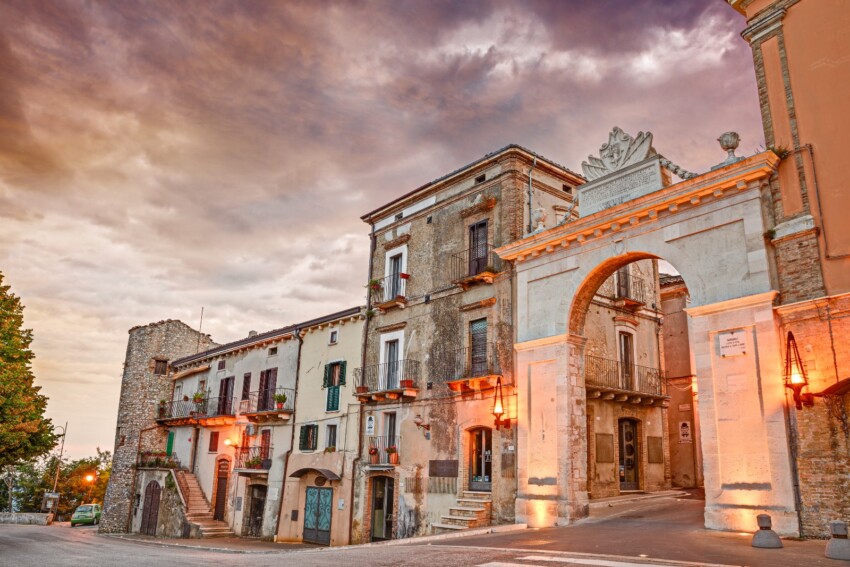
Although the village of Guardiagrele lies outside the Park, we recommend not missing it for a thorough exploration of the area. It’s renowned for its numerous workshops producing wrought iron, copper and gold, with artisans handcrafting diverse products over many years. The town also captivated Gabriele D’Annunzio, who in his work “The Triumph of Death” described Guardiagrele as “the noble city of Stone”.
Guardiagrele is part of the “Most Beautiful Villages in Italy” club, and walking through the streets of this small, enchanting town, past stone houses and artisan workshops, is a truly unique experience. The historic centre houses the Church of Santa Maria Maggiore with a façade in Maiella stone and a lateral portico containing a large fresco by Andrea De Litio. Also worth visiting is the San Francesco monumental complex, featuring a structure dating to the thirteenth century with many elements from the eighteenth century, and housing a splendid late-Renaissance fountain in white stone in its sacristy.
In the following map you can see the location of the main places of interest mentioned in this article.
The Maiella National Park operates an extensive network of facilities to assist its visitors. The visitor centres provide practical information about the Park and organise itineraries with guides and experts, whilst also hosting exhibitions and museums explaining the Park’s history and its natural, historical and cultural heritage.
These centres also stock informational materials and sell Park-related products, plus offer bicycle hire.
In the L’Aquila province, you’ll find centres at Campo di Giove and Cansano, which also hosts the Park’s Hiking Centre, and Pacentro, a stop on two major Park trails: the Celestine Way and the Hermitage Trail; other L’Aquila centres are Sulmona and San Valentino, which serves as the access point to the Park’s western sector.
In Pescara province, visitor centres are located in Bolognano, Lettomanoppello (considered an entry point to the Park’s north-western area), Sant’Eufemia a Maiella, Tocco da Casuria and Roccamorice, which offers the option to book guided tours and excursions with guides.
In Chieti province, you’ll find the centre at Fara San Martino, which houses a small Natural History Museum, Lama dei Peligni with an exhibition dedicated to the Apennine chamois, and Montenerodomo, home to both the Archaeological Museum and the Museum of Landscape History and Transformation. Finally, the Palena centre houses the Marsican Bear Museum, while the Pretoro visitor centre is the starting point for visiting the Apennine Wolf Fauna Area.
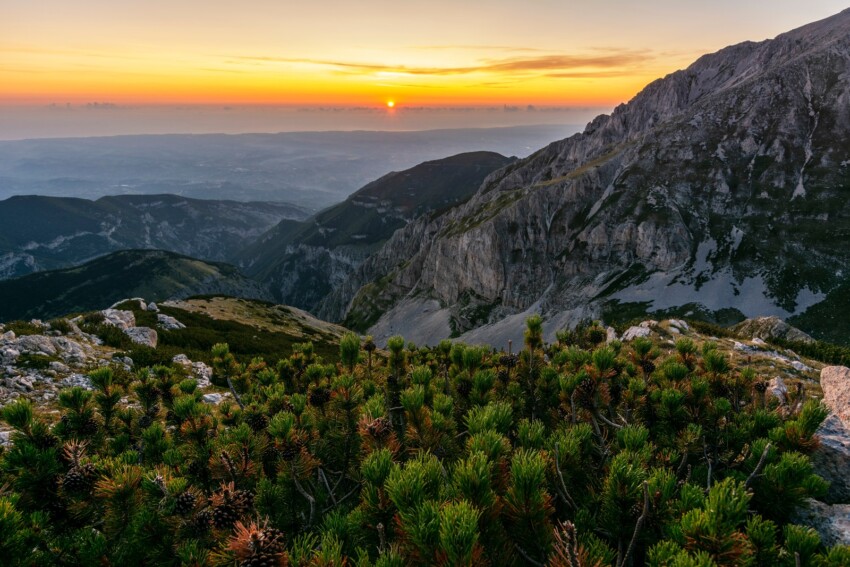
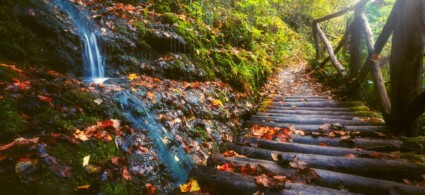
Maiella National Park boasts an extensive network of trails and routes spanning over 1,200 km of hiking paths and cross-country skiing courses. The itineraries vary in length and difficulty and can be followed on foot, by mountain bike or on horseback. Within the Park, trails are divided into hiking trails, thematic trails and family-friendly routes.
Some trails, owing to their cultural and environmental importance, are particularly noteworthy, such as the Park Trail, which runs from Popoli to Palena station, crossing the highest peaks of Monte Amaro and Porrara, or the Spirit Trail, which runs from Sulmona to Serramonacesca, passing many of Maiella and Morrone’s sacred sites, including hermitages frequented by Pope Celestine V.
Also noteworthy is the Freedom Trail, running from Sulmona to Palena, retracing the route taken by thousands of former prisoners, allies and partisans who fought for Italy’s liberation in 1943. The Stone Huts Trail, meanwhile, winds through various towns in the Pescara area and is characterised by agro-pastoral structures once used by Park shepherds.
The Maiella National Park offers numerous accommodation options for its visitors. From hotels to bed-and-breakfasts, from campsites to hostels, the Park has lodging of all types to suit diverse tourist needs. You’ll also find distinctive facilities such as Park Houses, guest lodges and mountain refuges – simple but functional premises nestled in nature.
Several villages within the Park – such as Pacentro, Sant’Eufemia alla Maiella, Campo di Giove and Caramanico Terme – offer small but equally welcoming accommodation, whilst larger towns like Sulmona provide an excellent base for exploring the Park and a wide choice of hotels.
Reaching the Park is straightforward thanks to excellent motorway connections. By car, if travelling from the north, you can take the A14 to Pescara and continue via the A25; from Rome, take the A24 followed by the A25. From Naples, take the A1 and then the A25. Directions may vary depending on which location within the Park you wish to reach.
The nearest airport is Pescara, while those wishing to reach the Park by train can do so via Sulmona railway station on the Rome–Sulmona–Pescara line, then take a coach connection to your chosen destination within the Park. Finally, it’s worth noting that several towns in Maiella Park are served by local bus routes.
The Maiella National Park covers an area of over 74,000 hectares across the provinces of L'Aquila, Pescara and Chieti. The park encompasses numerous municipalities and six Mountain Communities: Peligna, Alto Sangro e Altopiano delle Cinquemiglia, Majella e Morrone, Majelletta, Aventino-Medio Sangro, and Medio-Sangro.
 Hotel
Hotel 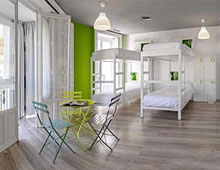 Budget accommodations
  Apartments
  Family Hotel
 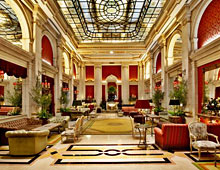 Luxury Hotel
 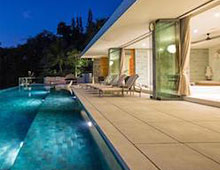 Resorts