La Casa Sù Le Dimore Del Borgo
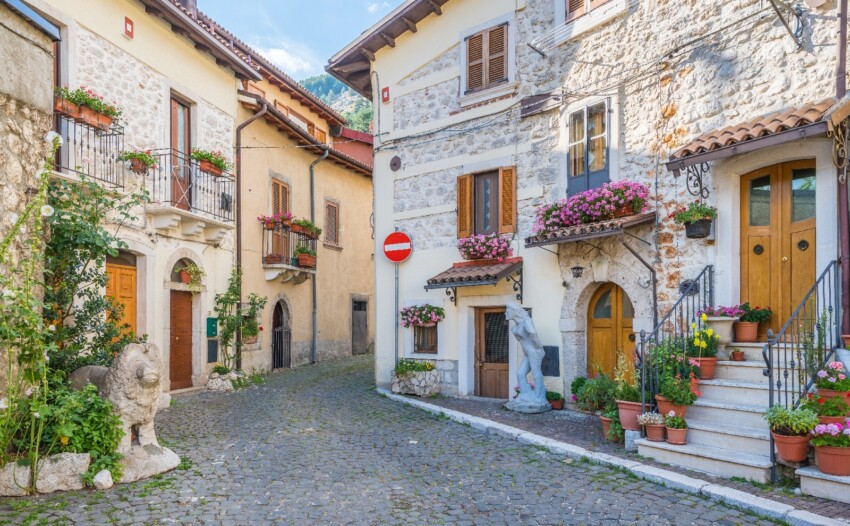
A region that safeguards magnificent parks, paradisiacal beaches and truly marvellous Apennine peaks, Abruzzo is also the land that preserves charming small villages with truly ancient histories. Many of Abruzzo’s villages are genuine pearls not to be missed during a trip to this splendid region, as they preserve a historical, architectural and cultural heritage that is truly unique and deserves both protection and promotion.
Those who decide to visit Abruzzo often focus on its coastal cities or famous winter resorts, but in fact the inland areas are equally fascinating. Nestled between the Apennines or surrounded by the green of the parks, Abruzzo’s villages are special places where time seems to have stood still and where you can still experience the ancient traditions of yesteryear.
For a truly special stay, we recommend the 10 most beautiful villages that you can include in your itinerary to discover the region. The list includes more well-known towns but also lesser-known gems that lie off the beaten tourist track.
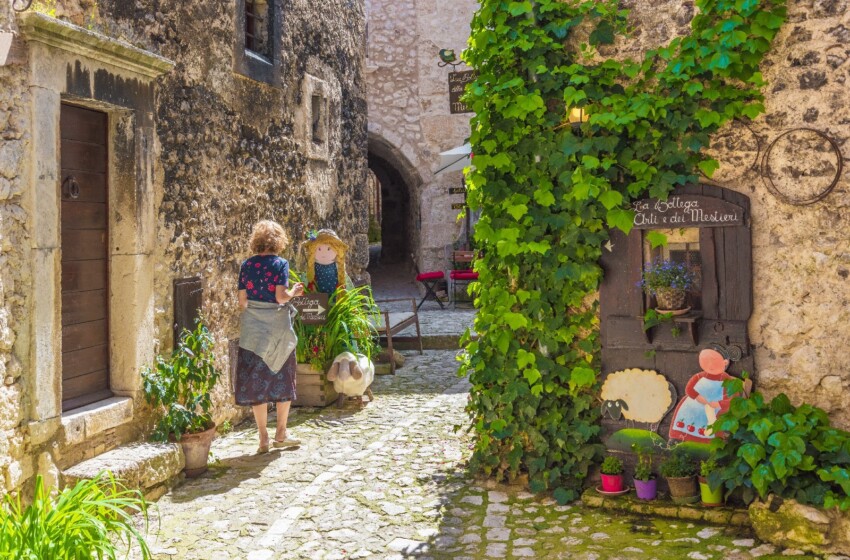
A fascinating medieval village situated at 1,250 metres altitude within the Gran Sasso and Monti della Laga National Park, Santo Stefano di Sessanio is undoubtedly a must-visit destination during a trip to Abruzzo. The town’s current urban layout dates back to the medieval period and forms part of a widespread trend in Abruzzo that saw the creation of small fortified towns built in hard-to-reach locations to defend against enemy invasions.
Walking through Santo Stefano di Sessanio, amongst houses and streets built of white limestone, it feels like taking a wonderful journey back in time. This village became internationally famous thanks to the initiative of Daniele Kihlgren, a Swedish entrepreneur who purchased abandoned dwellings in the historic centre and converted them into hotel structures whilst preserving the village’s aesthetic. This project became known as the “distributed hotel” and made Santo Stefano a highly sought-after destination.
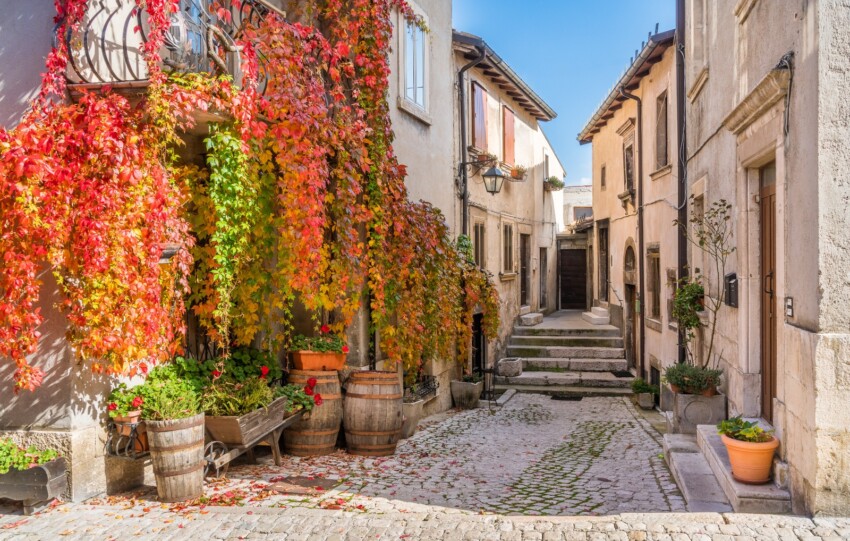
Located at 1,410 metres altitude within the Majella National Park, Pescocostanzo is a village of extraordinary beauty. The town boasts a truly unique architectural, historical and religious heritage dating back to the medieval period. The village is part of the “Most Beautiful Villages in Italy” club and walking through its streets you can admire masterpieces such as the Church of Jesus and Mary with its adjoining Franciscan convent, Palazzo Sabatini and the Collegiate Church of Santa Maria del Colle.
The town is also famous for its long tradition of creating handcrafted products such as carved wooden items and wrought iron work, jewellery and bobbin lace. Pescocostanzo is part, together with Roccaraso and Pescasseroli, of Abruzzo’s most important ski resort area, which attracts numerous winter sports enthusiasts every year.
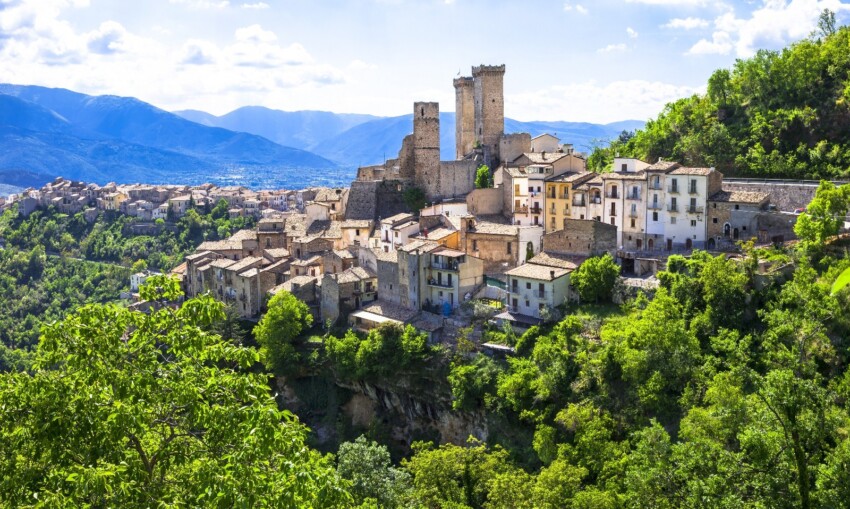
Pacentro, a village in the Peligna Valley located at 700 metres altitude, hosts Monte Amaro within its territory – at 2,800 metres, the highest peak of the Maiella range. This decidedly mountain village has managed to preserve a commendable historical and architectural heritage.
The town centre is rich in historic monuments and ancient buildings such as Castello Caldora dating back to the 10th century and the ancient Church of San Marcello. Best explored on foot, Pacentro offers charming vistas over the surrounding valley along its narrow streets. Several hiking trails depart from Pacentro allowing excursions and walks to spectacular locations, such as the Vallone waterfall or the San Leonardo pass.
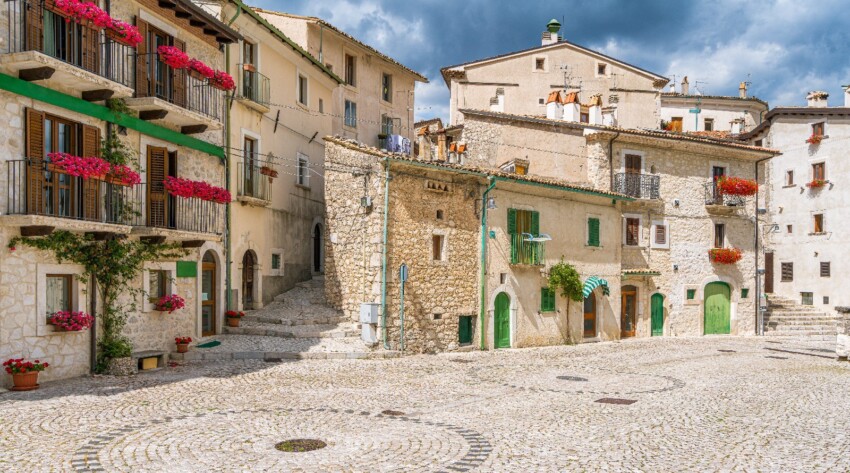
Civitella Alfedena is a highly characteristic village that stands in the Upper Sangro basin, within the Abruzzo, Lazio and Molise National Park. The village’s current structure appears to originate from the medieval period, and the settled area has managed to preserve the typical characteristics of Apennine villages of that era with narrow streets and fortified buildings designed to resist potential enemy attacks.
The oldest part of the village, the Borgo Vecchio, houses the cylindrical tower, the oldest building in Civitella, which appears to date back to the 1400s. This “tower house” is a typical medieval construction still used as a residence today. Other notable stops include the Church of San Nicola and the Saèttera Tower, an observation post that allowed defenders to spot approaching enemies and fire “saette” (arrows) through narrow loopholes.
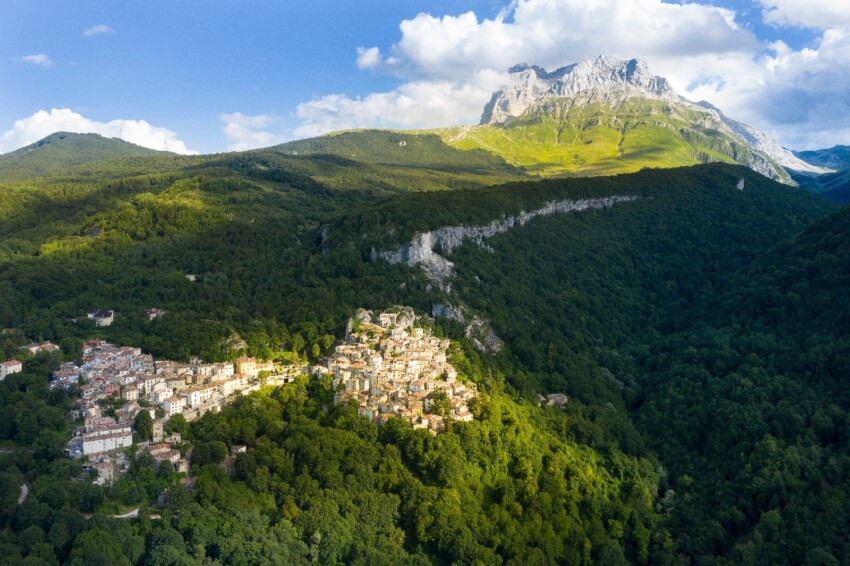
The small village of Pietracamela lies within the Gran Sasso and Monti della Laga National Park and stands at the foot of Corno Piccolo, one of the highest peaks within the Gran Sasso massif. This village, with buildings constructed in stone dating from the 15th and 16th centuries, is a location to discover for its simplicity and tranquillity.
Within the village stands the Church of San Giovanni dating from the 15th century, surrounded by buildings whose doorways bear dates ranging from 1471 to 1616. Near the church are Casa Signoretti and the small Church of San Rocco built in 1530. The village is famous for hosting the hamlet of Prati di Tivo, the best-known ski station in the Teramo area, which features 20 kilometres of downhill slopes and a cross-country trail. The area is also well known in summer for hiking opportunities.
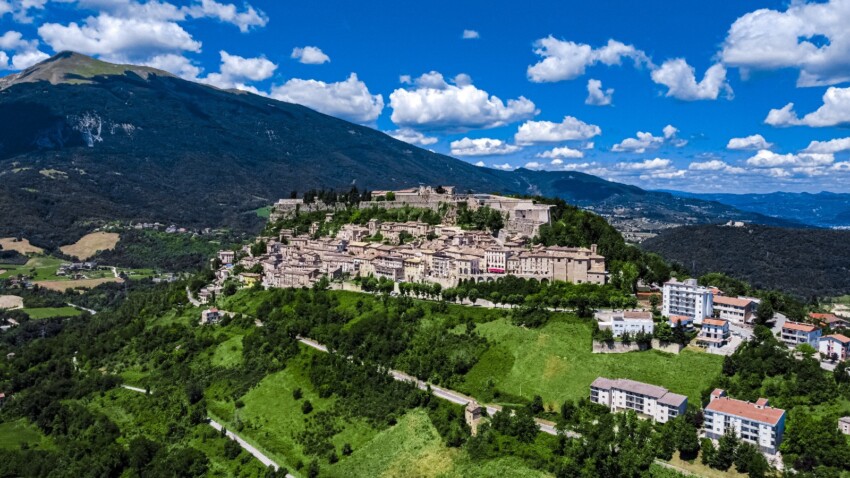
Situated almost on the border with the Marche region, Civitella del Tronto is famous for its majestic fortress built on a hilltop at 600 metres altitude, considered one of the largest and most important works of military engineering.
Erected in a strategic position with respect to the former border between the Viceregnum of Naples and the Papal States, the complex extends over an area of 25,000 square metres and from its heights offers stunning panoramic views stretching from the Gran Sasso massif to the Monti della Laga, from the Maiella to the Adriatic Sea.
Below the fortress the village of Civitella developed, characterised by stone buildings, staircases and narrow streets where sometimes only one person can pass at a time. Civitella is indeed home to the “Ruetta”, what is said to be Italy’s narrowest street. The town was built this way for defensive purposes, to hinder enemy advance. Outside the historic centre it is possible to undertake a beautiful excursion to the Salinello Gorges, a magnificent canyon surrounded by greenery.
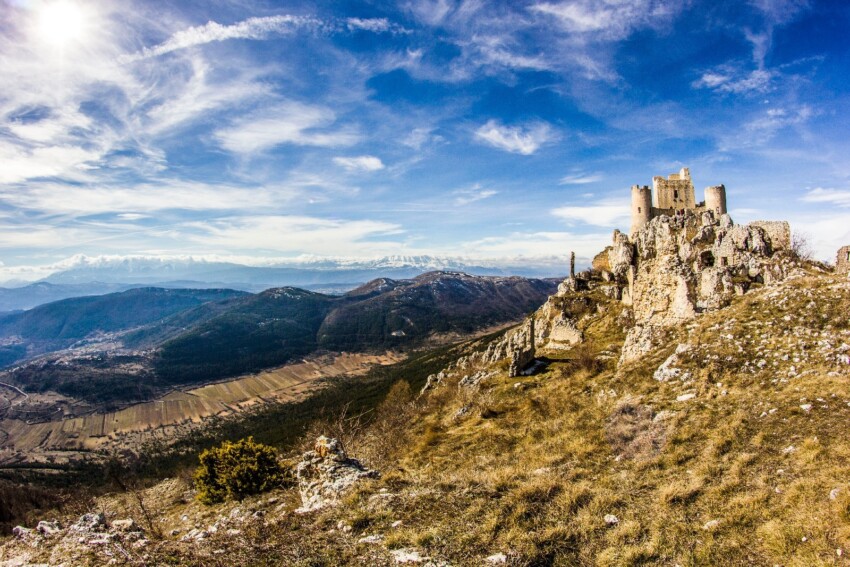
Located within the Gran Sasso and Monti della Laga National Park, Calascio is an internationally renowned destination famous for its dramatic fortress, also considered one of Abruzzo’s highest. Around the 11th century, a watch tower was built on the mountain overlooking Calascio’s territory, approximately four kilometres from the village, to anticipate potential enemy assaults. This place became known as Rocca Calascio.
Over time, the fortress grew increasingly important and various noble families such as the Carapelle, Piccolomini and Medici took control of it over the years, modifying and expanding its structure. The fortress’s significance led to the development of the small settlement of Rocca Calascio at its base.
Unfortunately, a terrible earthquake that struck the area prompted the village’s inhabitants to relocate to Calascio, the main centre, abandoning the Rocca. However, the beauty of the Rocca and its surrounding landscape have made this location a highly sought-after filming location for international film productions such as “The Name of the Rose” and “My Friends – Act II”.
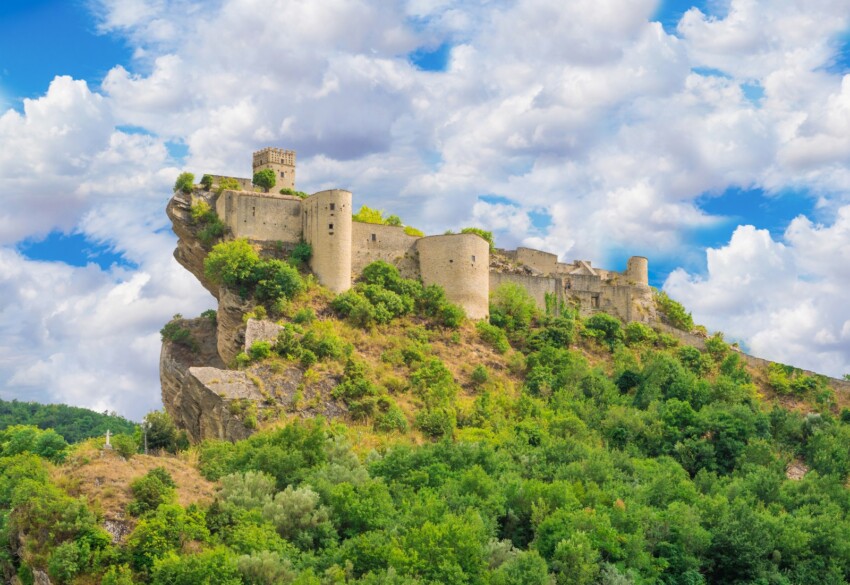
Awarded the Orange Flag by the Touring Club Italiano, Roccascalegna is one of the most spectacular villages in the region. The village’s symbol is undoubtedly the medieval castle of Roccascalegna, one of Abruzzo’s most imposing fortresses that dominates the village from atop a rocky outcrop.
The castle was built by the Lombards initially as a watch tower to defend the territory from invasions and later enlarged to become a true fortress. At the base of the rock lies the village, characterised by typical two-storey stone dwellings, narrow alleyways and ancient churches. Walking through the village streets you will encounter several viewpoints offering marvellous views over the Maiella.
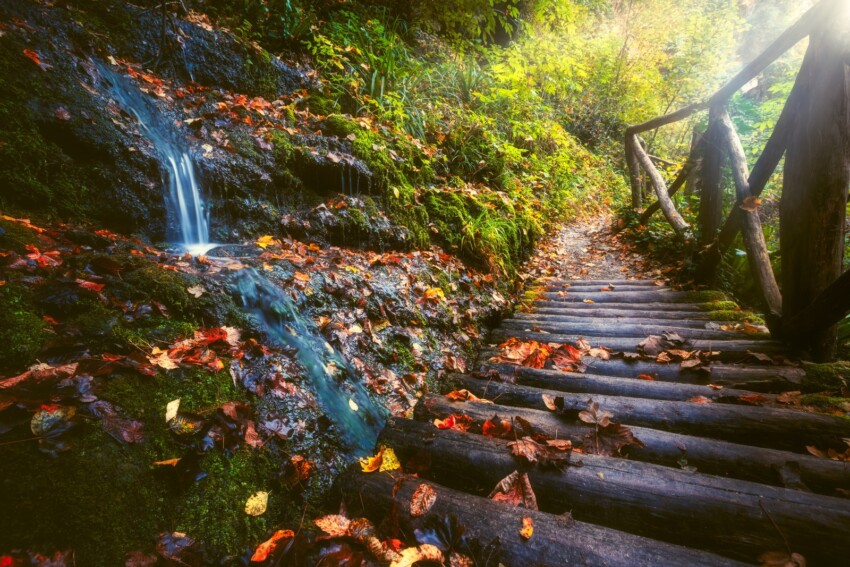
In the heart of the Majella National Park sits the town of Caramanico Terme, famous for hosting a truly state-of-the-art thermal spa centre. Located at approximately 650 metres altitude, Caramanico Terme is a highly sought-after thermal destination that boasts two special water sources: one sulphurous with anti-inflammatory properties and another oligomineral with diuretic properties.
The presence of these beneficial waters has led to the development of a thermal centre offering not only treatment and preventative care but also services dedicated to personal wellbeing. The town is not only ideal for a relaxation-focused holiday but is also a highly popular destination for hiking enthusiasts, as numerous trails depart from its historic centre allowing you to explore the Orfento Valley.
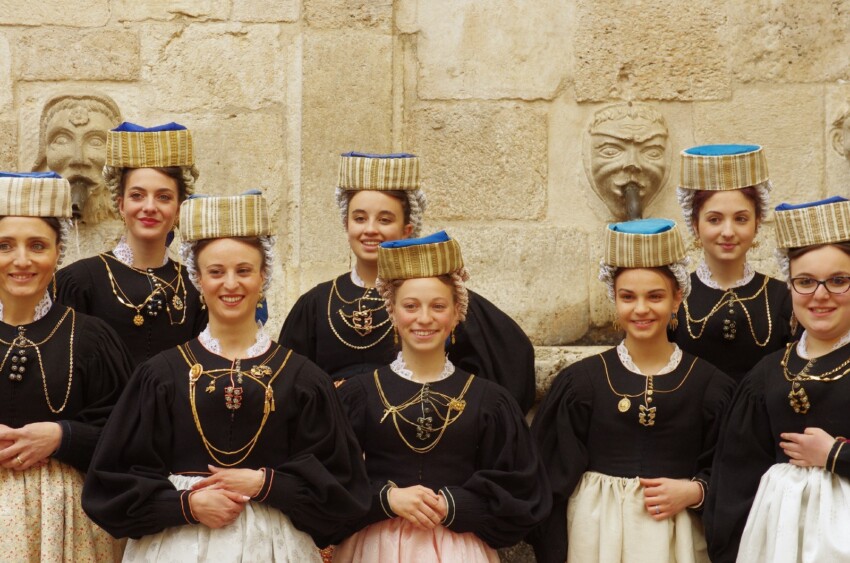
Scanno is considered the main centre of the Abruzzo National Park and is a town that not only has received the Orange Flag from Touring but also is included in the “Most Beautiful Villages in Italy” club.
The historic centre is a maze of streets hosting stone houses, ancient churches, noble palaces and elegantly decorated doorways. Walking through the village’s narrow lanes you can admire a perfect blend of medieval and communal era compositions and baroque buildings.
The town’s charm has attracted renowned photographers and artists over the years, such as Henry Cartier Bresson, Mario Giacomelli, Renzo Tortelli and many others who captured this village’s charming corners with their cameras. At the foot of the village lies Lake Scanno, a beautiful body of water surrounded by lush vegetation.
In the following map you can see the location of the main places of interest mentioned in this article.
 Hotel
Hotel  Budget accommodations
  Apartments
  Family Hotel
  Luxury Hotel
  Resorts